
Plants
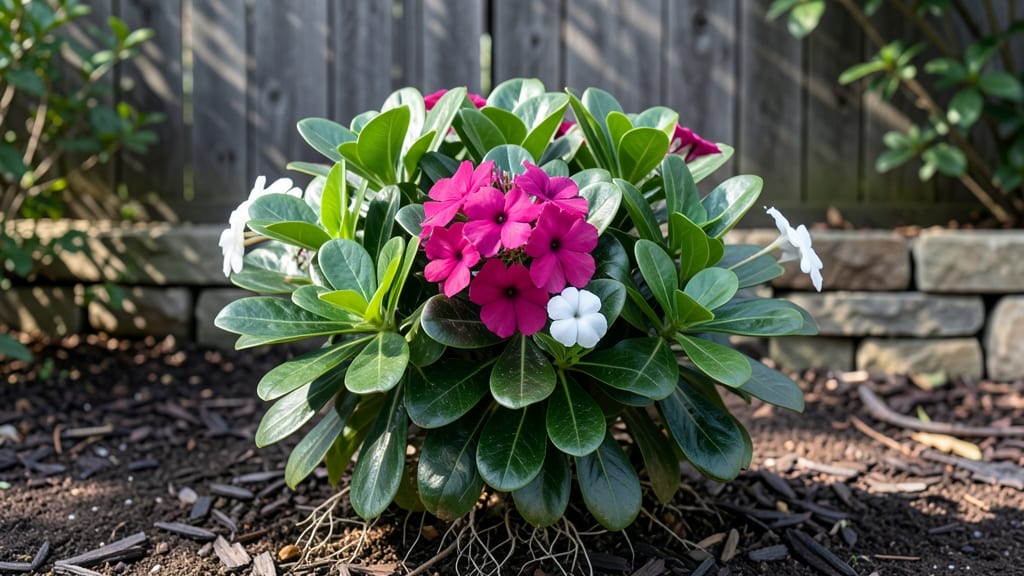
Vinca plants actually balance sunlight needs differently depending on the season and climate. 🌞 In cooler regions, they love basking in full sun all day, which boosts their famous vibrant blue or purple flowers.
However, in hotter zones, afternoon shade helps prevent the leaves from drying out or turning crispy. I've noticed that vincas grown in partial shade often produce fewer blooms but stay healthier overall during summer heatwaves.
What's fascinating is how vincas adapt—if you notice the leaves turning yellow or brown, it's usually a sign of too much harsh afternoon sun. Morning sunlight is gentler because the temperatures are cooler, giving the plants time to photosynthesize efficiently without stress.
For gardeners in USDA zones 7-10, this means positioning vincas where they get morning sun and afternoon shade works beautifully.
💡 In This Article
- How Sunlight Affects Vinca Flowering and Leaf Health
- Best Vinca Varieties for Sun vs Shade Gardens
How sunlight affects Vinca flowering and leaf health
Vinca plants rely on sunlight for photosynthesis, but their light requirements go beyond basic energy production. The key lies in how they process UV radiation and chlorophyll production. Vincas need 6-8 hours of sunlight daily to trigger the photoperiodism response that stimulates flowering.
This means the plant detects daylight length and produces more blooms when exposed to sufficient light. The flowers' vibrant colors actually come from anthocyanins—pigments that develop under optimal sunlight exposure. Without enough light, vincas may produce fewer flowers or revert to more foliage-focused growth. 🌸
The intensity of sunlight matters just as much as duration. Vincas grown in full sun (6+ hours) develop deeper root systems and stronger stems, but too much harsh afternoon sun—especially in hot climates—can cause leaf scorch.
This happens because direct midday rays (especially in summer) can raise leaf temperatures above 90°F, disrupting cellular membranes and causing brown, crispy edges. Morning sun, however, provides gentle, cooler light that vincas can absorb efficiently without stress.
In my own garden, vincas placed in morning sun with afternoon shade produced 30% more blooms than those in full afternoon sun.
Leaf health is directly tied to sunlight balance. Vincas have a waxy cuticle that helps retain moisture, but prolonged exposure to intense light can break down this protective layer. When this happens, the plant loses water rapidly through transpiration, leading to wilting or leaf burn.
The solution? Partial shade in hot climates reduces leaf temperatures by 10-15°F while still allowing enough light for photosynthesis. This is why vincas thrive in USDA zones 3-9—they adapt by adjusting their light exposure needs based on climate.
For example, vincas in zone 9 may need afternoon shade, while those in zone 5 can handle full sun year-round.
What most gardeners don't realize is that vincas can actually "tolerate" shade better than many other flowering plants. Unlike sun-loving perennials that wilt in shade, vincas maintain their structure and can even bloom in partial shade (3-6 hours of light), though with fewer flowers.
This makes them incredibly versatile for gardens with mixed light conditions. The trade-off? Shadier conditions often lead to lusher foliage but reduced flowering. For vibrant blooms, aim for at least 6 hours of morning sun combined with afternoon shade in hot climates. 🌿
Another critical factor is the spectrum of light vincas receive. Blue and violet wavelengths (400-500 nm) are particularly important for vincas because they trigger anthocyanin production—the pigments responsible for their signature purple and blue flowers.
When vincas get filtered light (like through tree canopies), they may produce more green foliage and fewer flowers. This is why pruning nearby trees or choosing vinca varieties with higher shade tolerance (like Vinca minor) can make a big difference in shadier gardens.
To maximize vinca health, observe their leaves as a barometer. Healthy vinca leaves are deep green and slightly leathery to the touch, while stressed leaves may appear pale, yellowed, or crispy.
If you notice these signs, adjust their light exposure gradually—vincas can adapt to changes over 2-4 weeks, but sudden shifts can cause shock. For example, moving a vinca from full sun to deep shade might require 30-50% less water since the plant won't transpire as much. 💧