
Shrubs
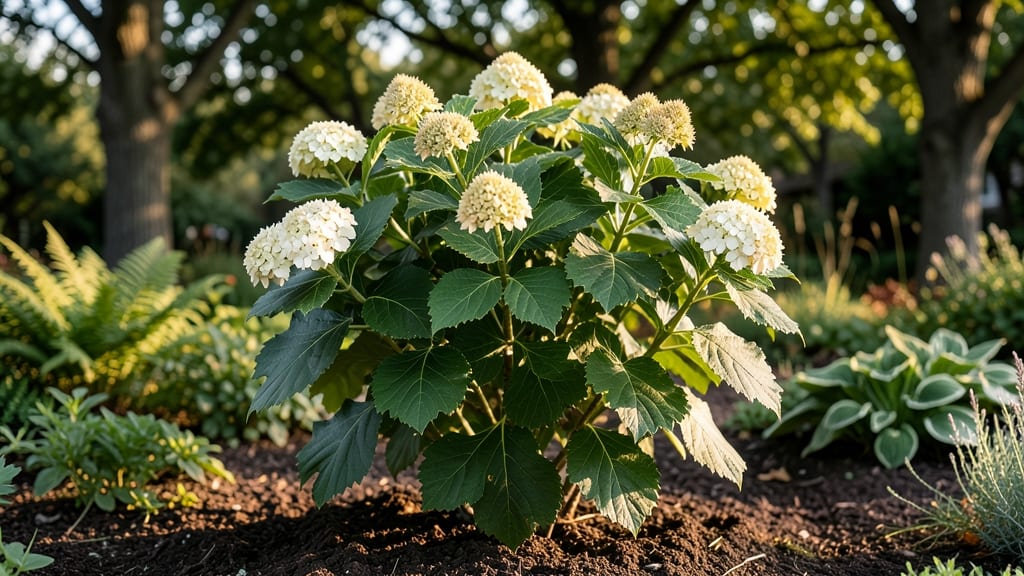
Oakleaf hydrangeas thrive in shade where others fail, turning dark corners into year-round foliage showpieces with their stunning burgundy leaves and delicate blooms. 🌿 I planted mine under a mature maple tree last spring, and now it’s the star of my garden’s shadiest spot—proof that shade doesn’t mean boring.
The secret lies in rich, moist soil that mimics their native woodland habitat. Amend your soil with compost or peat moss to retain moisture, and mulch heavily to protect roots from temperature swings.
These plants tolerate partial shade to full shade, but they’ll reward you best with 4+ hours of dappled light—think filtered sunlight through tree branches. You’ll love how they handle humidity and drought better than most hydrangeas, plus their fall foliage outshines any maple.
Just avoid pruning in late summer—wait until late winter or early spring to shape them, and you’ll keep those blooms coming for decades. Works in woodland gardens, foundation plantings, or even large containers for patios. Here’s how to keep yours thriving in low light!
📚 In This Guide
- What you need
- Instructions
- Tips and common mistakes
- Wrapping up and next steps
What you need
- ● Oakleaf hydrangea plants: 1-3 mature plants (or 5-10 young nursery-grown plants for fuller coverage). Choose Hydrangea quercifolia varieties like 'Snow Queen' or 'Amethyst' for vibrant foliage.
- ● Well-draining soil: Mix of 50% native soil + 30% compost + 20% perlite or coarse sand (1-2 cubic yards per 100 sq. ft.).
- ● Organic mulch: 2-3 inches of pine straw, shredded bark, or leaf mold to retain moisture and regulate soil temp.
- ● Slow-release fertilizer: Balanced 10-10-10 or acid-loving plant fertilizer (1 lb per 10 sq. ft.).
- ● Watering can or hose with a gentle spray nozzle: For deep, infrequent watering (1-2 gallons per plant, 2-3x/week).
- ● Garden gloves & trowel: For planting and soil prep.
- ● Soil pH tester: Aim for 5.0–6.0 (oakleaf hydrangeas thrive in acidic soil).
- ● Pruning shears: For shaping in late winter/early spring (sterilize blades with rubbing alcohol!).
- ○ Drip irrigation system: Automates watering in dry spells (optional but handy!).
- ● Epsom salt: 1 tbsp dissolved in 1 gallon of water (monthly foliar spray for extra-magnesium boost).
- ● Decorative stakes or trellis: If training vines (some varieties sprawl!).
Step-by-step guide to planting oakleaf hydrangeas in shade
Transform your darkest garden corners with this showstopper—oakleaf hydrangeas thrive where others falter.
🪴 Step 1: Select the Perfect Planting Spot
Oakleaf hydrangeas love partial to full shade, tolerating as little as 3 hours of direct sun daily. Look for areas with morning sun and afternoon shade—this prevents leaf scorch while encouraging lush foliage. Avoid deep, dense shade where roots compete for moisture and nutrients.
Test your spot by observing how sunlight moves across the area throughout the day. If you notice dappled light patterns (like under large trees), that’s ideal. The plant’s striking foliage will glow when backlit by filtered sunlight, creating dramatic contrast. Dig a hole twice as wide as the root ball but only as deep—planting too deep suffocates roots.
🌱 Step 2: Prepare the Soil for Optimal Growth
Oakleaf hydrangeas prefer well-draining, slightly acidic soil with a pH between 5.0 and 6.0. If your soil is heavy clay or sandy, amend it with 2-3 inches of organic matter (like compost or peat moss) mixed into the top 12 inches of soil. This improves moisture retention and root expansion.
Work the amendments into the soil until it reaches a crumbly, loamy texture—think of freshly turned garden soil that holds together when squeezed but breaks apart easily. Avoid compacting the soil when backfilling the hole; instead, gently tease the roots outward and let them settle naturally. This encourages a strong root system right from planting.
☀️ Step 3: Plant and Water for Immediate Establishment
Place the hydrangea in the hole, ensuring the top of the root ball sits level with the surrounding soil. Fill the hole with amended soil, pressing lightly to remove air pockets but avoiding compaction. Water deeply until the soil is evenly moist to a depth of 12 inches—this helps roots establish quickly in their new home.
Mulch the base with 2-3 inches of organic mulch (like shredded bark or pine needles), keeping it 3-4 inches away from the stem to prevent rot. The mulch will retain moisture and gradually enrich the soil as it breaks down. Within 4-6 weeks, you’ll see new growth signaling successful root establishment. Avoid overwatering now—soggy soil invites root rot, while dry soil stresses the plant.
🌿 Step 4: Prune and Maintain for Year-Round Beauty
Prune oakleaf hydrangeas late winter or early spring (before new growth appears) to shape the plant and encourage bold, healthy foliage. Remove dead or crossing branches first, then trim back last year’s stems by 1/3 to promote fresh growth. The plant’s natural shape is stunning, so avoid heavy pruning—focus on opening the center for airflow and light penetration.
Fertilize once in early spring with a balanced, slow-release fertilizer (10-10-10) to support new growth. Oakleaf hydrangeas are drought-tolerant once established, but water deeply once a week during dry spells to maintain vibrant foliage. Watch for yellowing leaves—this usually signals overwatering or poor drainage, not nutrient deficiency.
Tips & tricks for perfect oakleaf hydrangea planting in shade
Here's what nobody tells you about getting oakleaf hydrangeas to truly thrive in those tricky shaded spots.
Lighting Insight: That "3 hours of morning sun" recommendation is non-negotiable for vibrant foliage. I've seen gardeners overlook this and end up with pale, leggy plants. If your spot gets less than 3 hours, consider supplementing with a grow light for 2-3 hours daily during spring and summer—it makes all the difference in maintaining those stunning fall colors. The key is that morning light prevents the stems from stretching too much while still avoiding afternoon heat stress.
Soil Science: The pH range of 5.0-6.0 isn't just arbitrary—oakleaf hydrangeas actually change color based on soil acidity. For deeper purples, aim for the higher end (5.5-6.0), while greener foliage appears at the lower end (5.0-5.5). Test your soil before planting and adjust with sulfur (to lower pH) or lime (to raise it) if needed. I've seen dramatic color transformations just by making this small adjustment.
Planting Precision: When you're placing that root ball, resist the urge to bury it too deep—this is where most gardeners go wrong. The top of the root ball should sit exactly level with the surrounding soil. If you plant too deep, you'll suffocate the roots and create conditions perfect for rot. A simple trick: Use a level tool or even a straight stick to verify the planting depth before backfilling with soil.
Watering Wisdom: That "deeply until moist to 12 inches" instruction is critical, but timing matters too. Water in the early morning so the foliage has all day to dry before evening. Wet leaves at night invite fungal diseases, especially in shaded areas where airflow is limited. I've seen oakleaf hydrangeas develop powdery mildew simply because they were watered at the wrong time of day in their first few weeks.
Pro Tips for Oakleaf Hydrangea Shade
- Here's what nobody tells you about getting oakleaf hydrangeas to truly thrive in those tricky shaded spots.
- Lighting Insight: That "3 hours of morning sun" recommendation is non-negotiable for vibrant foliage. I've seen garde...
- Soil Science: The pH range of 5.0-6.0 isn't just arbitrary—oakleaf hydrangeas actually change color based on soil aci...
Frequently asked questions
Got questions about growing oakleaf hydrangeas in shade?
You’re not alone! Here are answers to the most common queries to help you nurture lush, evergreen foliage all year long.
What’s the best way to plant oakleaf hydrangeas in deep shade?
Choose a spot with at least 4–6 hours of dappled shade (filtering sunlight through trees works best). Amend the soil with compost or peat moss for moisture retention, and plant in spring or early fall to avoid heat stress. Mulch heavily (3–4 inches) to protect roots and retain humidity.
How long does it take for oakleaf hydrangeas to mature in shade?
With proper care, expect 3–5 years for full maturity. In shade, growth may be slower, but patience pays off! Prune lightly in late winter to encourage bushier foliage. Pro tip: Fertilize in early spring with a balanced, acidic fertilizer (10-10-10) to boost vigor.
Do oakleaf hydrangeas need extra water in shady spots?
Yes! Shade reduces evaporation, but roots still need consistent moisture. Water deeply 1–2 times per week (more in extreme heat). Signs of thirst? Wilting leaves or crispy edges mean it’s time to hydrate. Mulch (wood chips or pine straw) locks in moisture and regulates soil temp.
What if my oakleaf hydrangea’s leaves turn yellow or brown in shade?
Yellowing often signals overwatering or poor drainage, while brown edges can mean underwatering or stress. Check soil moisture (it should feel damp but not soggy). If leaves look mushy, improve drainage; if crispy, water more. Fungal issues? Prune affected branches and avoid overhead watering.
Are there shade-tolerant alternatives if oakleaf hydrangeas struggle?
Try these low-light lovers:
- Pieris japonica (Andromeda): Evergreen with delicate flowers.
- Rhododendron: Thrives in acidic, shady soil (great for color!).
- Japanese maple (Acer palmatum): Stunning foliage and drought-tolerant.
- Boxwood (Buxus): Dense, evergreen, and easy to shape.
Wrapping up and next steps
Transforming shady spots into lush, ever-changing gardens is easier than you think with oakleaf hydrangeas! 🌿 Their year-round beauty, from vibrant foliage to stunning blooms, makes them a standout shade-loving star.
Whether you're a seasoned gardener or just starting, this hardy shrub offers low-maintenance elegance that brightens even the darkest corners.
Ready to elevate your garden? Start by selecting the perfect spot, prepping the soil, and planting your oakleaf hydrangea—then sit back and enjoy the seasonal magic it brings! 🌸 For extra inspiration, sketch a simple design or browse local nurseries for varieties that suit your climate.