
Shrubs
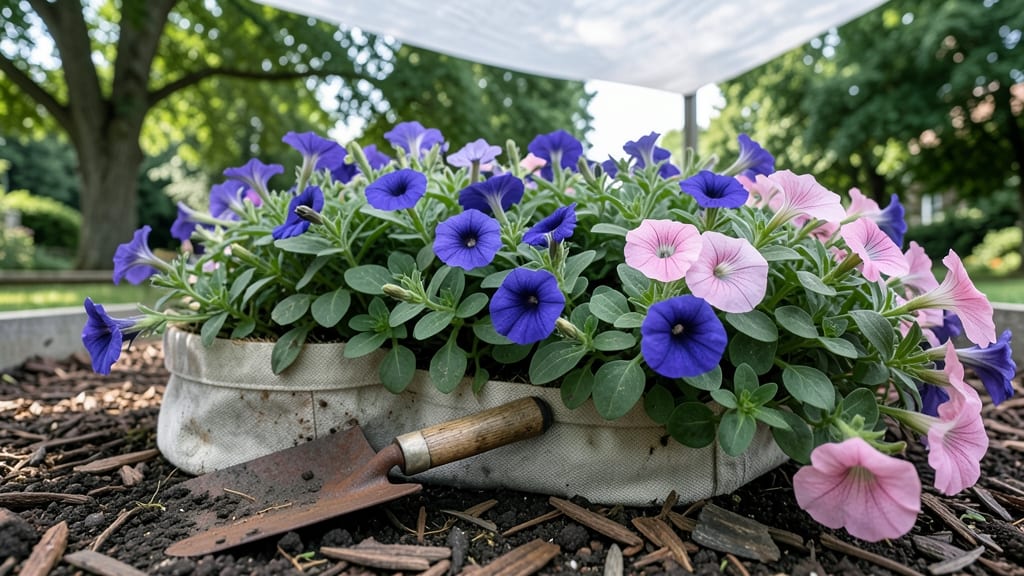
Petunias rely heavily on sunlight to produce energy through photosynthesis, which directly impacts their vibrant blooms and sturdy structure. 🌞 Without sufficient light, these plants stretch toward any available rays, creating a leggy appearance while reducing flower production.
Interestingly, some newer hybrid varieties like 'Wave' series petunias show better adaptability to partial shade, making them suitable for garden edges or containers near buildings where full sun isn't available.
For gardeners working with limited sunlight, choosing the right variety is key. Trailing petunias often perform better in partial shade than upright types, and pairing them with shade-tolerant companions like impatiens or fuchsias can create a more balanced garden display.
The secret lies in matching plant types to light conditions rather than forcing petunias into unsuitable environments.
💡 In This Article
- Why Petunias Struggle in Low-Light Conditions
- Best Petunia Varieties for Partial Shade Gardens
Why petunias struggle in low-light conditions
Petunias are sun-worshippers at their core, relying on photosynthesis to fuel their vibrant growth and prolific blooming.
When deprived of adequate light, their chlorophyll production drops dramatically, leading to weakened stems and sparse foliage. 🌱 The plant's energy reserves shift from producing flowers to simply surviving, which is why you'll often see petunias growing tall and spindly in shady spots—a condition called "etiolation."
This occurs because the plant stretches toward any available light, creating a structurally unstable stem that can't support heavy blooms.
Light exposure directly impacts petunias' flowering cycles too. These plants need 6-8 hours of direct sunlight daily to trigger the hormonal signals that promote bud formation. In shade, the phytochrome pigments responsible for detecting light levels get confused, delaying or preventing flowering altogether.
Compare this to shade-tolerant alternatives like impatiens, which can thrive with just 3-4 hours of light and still produce abundant blooms. The difference comes down to their evolutionary adaptations—petunias evolved in sunny South American grasslands, while impatiens hail from tropical understories where dappled light is the norm.
The chlorophyll content in petunia leaves drops by up to 40% in low-light conditions, turning leaves pale and reducing their ability to convert sunlight into energy.
This energy deficit forces the plant to prioritize basic metabolic functions over reproductive growth, which is why shade-grown petunias often produce only a fraction of the flowers their sun-loving counterparts do. 💡 The stems also become woody and brittle, unable to support the weight of blooms even if they do form.
This structural weakness is why gardeners often notice petunias flopping over in shady spots—it's not just about aesthetics, but about the plant's fundamental inability to maintain its upright form.
Even when petunias do manage to bloom in shade, the flowers tend to be smaller and less vibrant. The anthocyanin pigments responsible for their rich colors require sunlight to develop properly, resulting in washed-out blossoms.
This is particularly noticeable in dark-colored varieties like deep purples or velvety reds, which lose their intensity without adequate light exposure. The contrast with sun-grown petunias is striking—sunny plants develop blooms that can measure 2-3 inches across, while shade-grown flowers often stay under 1 inch in diameter.
For gardeners working with limited space, understanding this light dependency helps in making strategic planting choices. While petunias won't thrive in deep shade, they can perform reasonably well in partial shade conditions (3-6 hours of direct sunlight) if given the right variety.
The key is selecting hybrids bred for light tolerance, like the 'Wave' series, which have been genetically modified to handle lower light levels better than traditional varieties. These plants exhibit improved chlorophyll efficiency and more compact growth habits, making them ideal candidates for mixed-light garden areas.
Interestingly, petunias also respond to light quality, not just quantity. Blue light wavelengths (400-500nm) are particularly effective at promoting flowering, while red light (600-700nm) helps with vegetative growth. In shady conditions, the light spectrum often lacks these critical wavelengths, further inhibiting the plant's ability to produce flowers.
This scientific nuance explains why even partial shade can sometimes be better than full shade—some indirect light is better than none at all, especially if it contains the right light spectrum for petunia growth.