
Light Requirements
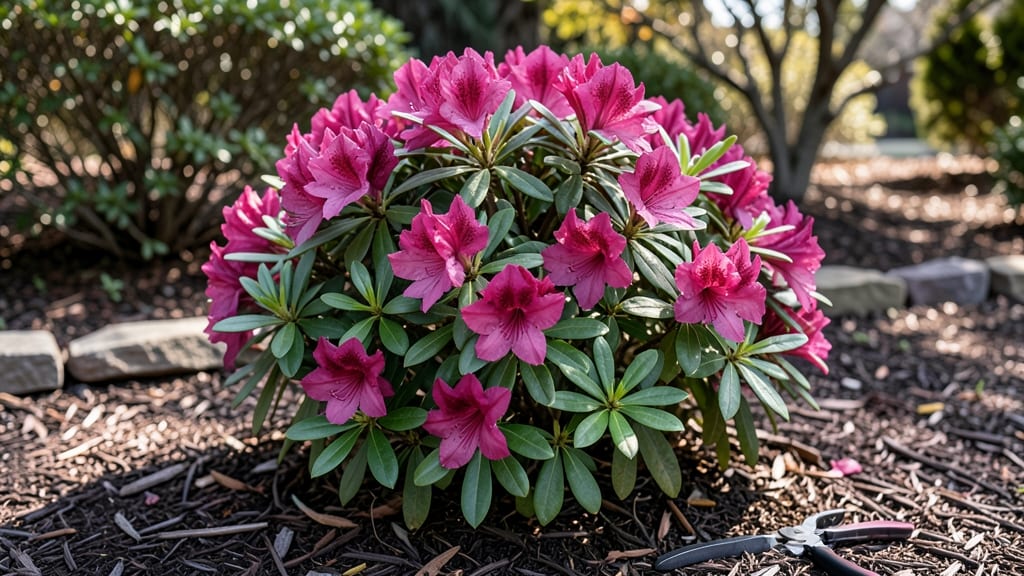
Growing azaleas in full shade works best with shade-tolerant varieties like Rhododendron 'Catawbiense' and Rhododendron 'Nova Zembla', which deliver stunning flowers even with minimal sunlight. These thrive when soil stays consistently moist and maintains an acidic pH (4.5-6.0). Opt for evergreen types to keep your garden vibrant year-round, and always use mulch to preserve moisture.
Not all azaleas need bright sunlight to shine—some varieties actually prefer the cooler, dappled conditions of full shade. 🌿 These hardy plants, like Rhododendron 'Roseum Elegans', adapt beautifully to low-light environments while still producing abundant blooms.
The key is matching the right variety to your garden's conditions, as even shade-loving azaleas can struggle if the soil becomes too dry or alkaline.
I've found that adding a thick layer of organic mulch helps maintain the ideal moisture and acidity levels, which is crucial for preventing leaf burn and encouraging healthy growth.
For best results, plant azaleas in well-draining, acidic soil and water them regularly to keep the roots hydrated without waterlogging.
A pH test kit can help you monitor soil acidity, and a slow-release acid-loving plant fertilizer applied in early spring will give them the nutrients they need to thrive in shady spots. With the right care, these shade-friendly azaleas can become the star of your woodland garden or understory planting.
💡 In This Article
- Best Low-Light Azalea Varieties for Shady Gardens
- Soil and Care Tips for Thriving Shade-Loving Azaleas
Best low-light azalea varieties for shady gardens
Not all azaleas require bright sunlight to flourish—some varieties actually thrive in deep shade, thanks to their natural adaptations. The key is selecting species that evolved in forest understories where they compete for light with towering trees.
For example, Rhododendron 'Catawbiense' (also called Catawba rhododendron) is a hardy evergreen that produces 6-inch-wide purple blooms in late spring, even in areas receiving less than 3 hours of direct sunlight daily. Its thick, leathery leaves help it conserve moisture while photosynthesis occurs efficiently in low light.
Another standout is Rhododendron 'Nova Zembla', a deciduous variety that bursts with deep pink flowers in early spring and tolerates full shade beautifully. This variety handles USDA Zones 4-7, making it ideal for northern gardens where sunlight is scarce.
For fragrance lovers, Rhododendron 'PJM' offers heavily perfumed white blooms and thrives in partial to full shade, with a spreading habit that reaches 6-8 feet wide. These varieties prove that shade isn't a limitation—it's an opportunity for azaleas to showcase their unique characteristics.
The science behind their shade tolerance lies in their leaf structure. Shade-loving azaleas have larger, thinner leaves with more chlorophyll, allowing them to capture limited light more efficiently.
Their roots also spread wider rather than deeper, accessing moisture from a larger soil volume—a critical adaptation for shaded areas where evaporation is slower. 🌿 When planting, choose locations with morning sun and afternoon shade to prevent leaf scorch while still providing some light for photosynthesis.
Color considerations matter too. Darker foliage varieties like Rhododendron 'Black Pearl' (with deep purple-black leaves) actually perform better in shade because their pigments absorb more light. Lighter-leaved varieties may develop sunburn spots if exposed to even brief afternoon sun.
For blooms, expect pink, purple, and white shades to dominate in shade conditions—these colors reflect less heat and are more common in understory plants.
Seasonal timing is another factor. Most shade-tolerant azaleas bloom in early to mid-spring when light levels are still moderate, then enter dormancy during summer's intense heat. This timing helps them avoid the stress of high temperatures combined with low light.
For example, Rhododendron 'Roseum Elegans' (with its pale pink flowers) typically blooms in April-May and handles full shade beautifully, making it perfect for woodland gardens.
When selecting varieties, consider your garden's microclimate. Northern exposures receive less intense light, while eastern exposures get gentle morning sun. Southern exposures, even in shade, can bake plants during summer afternoons.
Always test your site's light conditions by observing how nearby plants grow—if ferns and hostas thrive, your azaleas will too.