
Light Requirements
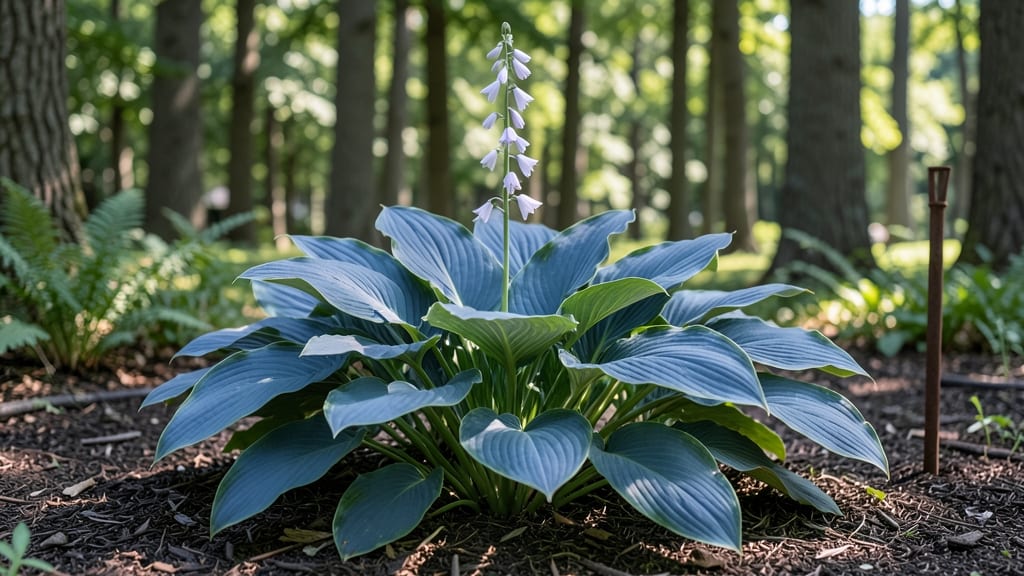
Partial shade means plants get 3 to 6 hours of direct sunlight daily, with the rest of the day in filtered or dappled light. This middle-ground lighting prevents scorching while still supporting healthy growth for many shade-tolerant species.
This lighting scenario creates the perfect compromise for plants that can't handle full sun but also need more light than deep shade provides. 🌿 Think of it as the "Goldilocks zone" for foliage—enough sunlight for photosynthesis without the risk of leaf burn.
I've seen hostas and ferns thrive in these conditions, especially when paired with well-draining soil that prevents moisture stress during occasional dry spells.
What makes partial shade unique is how the light quality changes throughout the day. Morning sun is typically cooler and less intense than afternoon rays, which is why many plants prefer this gradual exposure.
For example, astilbes often bloom more prolifically in partial shade because the filtered light prevents their delicate petals from wilting in harsh afternoon heat.
💡 In This Article
- How Partial Shade Differs From Full Shade and Sun
- Best Plants for Partial Shade Gardens
How partial shade differs from full shade and sun
Partial shade sits right in the middle of the light spectrum, creating a unique balance between full sun and deep shade.
While full sun delivers 6+ hours of direct rays (with UVB levels reaching 2-3 times higher than shade), partial shade offers just 3-6 hours of direct exposure, with the rest coming from filtered light that's been diffused through tree canopies or building structures.
This filtered light contains 50-70% of the UVB radiation found in full sun, which is enough for photosynthesis without causing leaf scorch.
The key difference lies in how plants process this light. In full sun, plants develop thicker cuticles and smaller leaves to reduce water loss, while in deep shade (3 hours or less), they stretch toward any available light, creating long, leggy growth.
Partial shade plants, however, maintain a moderate leaf size and chlorophyll density—ideal for species like Japanese maples or heucheras, which thrive without the stress of intense sunlight or the weak growth of deep shade.
The color temperature also shifts: full sun produces 5,500-6,000K light, while partial shade averages 4,500-5,000K, closer to the cooler tones of early morning or late afternoon.
What this means for growth patterns is fascinating. Plants in partial shade often develop more vibrant foliage colors because the reduced UV stress allows anthocyanins (the pigments responsible for reds and purples) to flourish.
Take coleus as an example—its leaves turn more vivid in partial shade compared to full sun, where they might bleach out. The root systems also adapt: partial shade encourages shallower but denser root networks since the plant doesn't need to reach deep for moisture like sun-loving species do.
This makes them more resilient in containers or urban gardens where soil depth is limited.
Seasonal variations add another layer of complexity. In spring and fall, when the sun sits lower in the sky, even eastern exposures might qualify as partial shade (with only 3-4 hours of direct light), while summer afternoons could push the same spot into full sun territory.
This is why hostas often show leaf burn in late summer if planted in what seemed like partial shade earlier in the year. The solution? Observe your garden's light patterns for a full season before committing to plant placements—especially in regions with longer summer daylight hours like the Southeast US.
Light quality also affects flowering patterns. Many shade-tolerant perennials, like astilbes or bleeding hearts, produce more abundant blooms in partial shade because the cooler light reduces heat stress on their delicate flower structures. The trade-off?
Some plants (like daylilies) may flower less prolifically in deep shade but thrive in partial shade with its balanced light intensity.
This is why gardeners often describe partial shade as the "sweet spot" for ornamental plants—it maximizes both foliage and floral displays without the compromises of full sun or deep shade.
For those tracking light scientifically, a simple light meter can reveal the differences: full sun reads 10,000-20,000 foot-candles, partial shade 1,000-10,000 foot-candles, and deep shade 100-1,000 foot-candles.
The photosynthetically active radiation (PAR) in partial shade (typically 400-700 nm wavelength range) is sufficient to drive photosynthesis while avoiding the photoinhibition that occurs in full sun when light exceeds a plant's capacity to process it.
This is why woodland plants like trilliums or foamflower evolved to thrive in these conditions—they've adapted to capitalize on partial shade's moderate light availability without the risk of damage.