
Plants
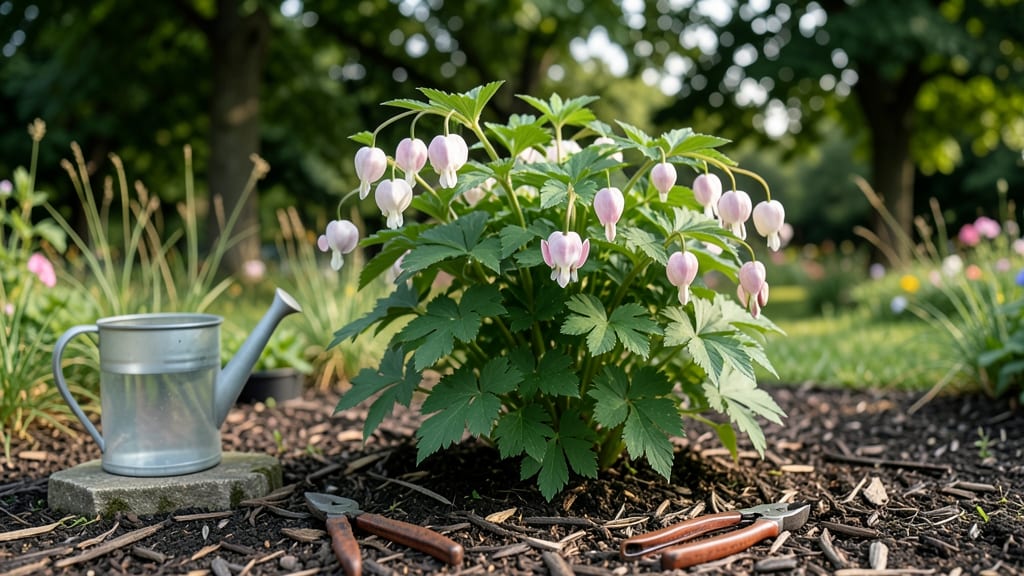
Bleeding hearts like shade over sun, thriving in dappled light where morning rays gently kiss their delicate leaves 💜 before retreating into cooler afternoon shade.
If your bleeding heart plants (Dicentra spectabilis) are struggling to bloom or look leggy, their light conditions might be the culprit.
Unlike sun-loving perennials, these shade-loving beauties need just 2-4 hours of filtered sunlight daily—too much direct sun scorches their foliage, while deep shade starves them of the energy for vibrant blooms.
In cooler zones like USDA 6a, they handle morning sun beautifully, but in hotter climates, even brief afternoon exposure can turn leaves crispy. The key is mimicking their native woodland understory—think dappled light through tall grasses or a north-facing window with sheer curtains.
Below, I’ll break down how to spot light stress (yellowing leaves, sparse flowers), regional tweaks for your climate, and the easiest ways to recreate their ideal growing conditions—whether you’re planting in the ground or a container.
 Best Window Placement
Ideal light conditions for bleeding hearts: sun vs shade requirements
Bleeding hearts (Dicentra spectabilis) are finicky about sunlight—too much scorches their delicate foliage, while too little makes them flop. These shade-loving perennials crave dappled sunlight or filtered light, ideally 2-4 hours daily. Morning sun is ideal, while afternoon shade protects them from harsh rays. Let’s break down their exact light needs to keep your plants thriving and blooming.
In cooler climates like the Pacific Northwest, bleeding hearts tolerate morning sun exposure (6 AM–10 AM) with afternoon shade. But in hotter regions (Zones 7–9), even morning sun can be too intense—opt for deep shade (e.g., under tall trees) or east-facing gardens where sunlight is gentler.
Regional adjustments are key to avoiding stress.
Here’s a quick reference for their light needs, including how to spot when they’re getting too much or too little sun:
For morning sun exposure, place bleeding hearts on the east side of your garden or near sheer curtains if container-grown. This gives them gentle light without the intensity of afternoon rays.
If your garden lacks natural shade, use lattice screens or lightweight fabric to diffuse sunlight during peak hours (12 PM–4 PM).
In hot climates, mulch heavily with organic matter (like shredded bark) to insulate roots and retain moisture. This mimics their natural woodland habitat, where dappled light filters through tree canopies. Avoid mulching too close to the stem—keep it 2–3 inches away to prevent rot.
Watch for yellowing leaves or brown leaf edges, which signal too much sun. Conversely, long, leggy stems with few blooms mean they’re not getting enough light. Adjust their placement gradually—move them incrementally to avoid shocking the plant. A north-facing window indoors or a shady patio works well for containers.
Pro tip: If your bleeding hearts flower sparingly, they might need slightly more light—but never full sun. Try moving them to a slightly sunnier spot for 1 extra hour of morning light. Pair them with tall grasses (like Carex) to create natural shade as they grow.
Remember, bleeding hearts are woodland natives, so they’re adapted to humid, shaded environments. Recreate these conditions in your garden, and you’ll reward yourself with vibrant blooms from late spring to early summer.
With the right light balance, these plants can thrive for decades—making them a low-maintenance, high-reward addition to any shade garden. 🌿
Signs your bleeding hearts are getting too much sun or not enough light
Bleeding hearts (Dicentra spectabilis) send distress signals when their light needs aren't met. Too much sun causes leaf scorch and crispy edges, while too little shade leads to leggy stems and sparse blooms. These delicate perennials prefer 2-4 hours of morning sun with afternoon shade protection—any deviation throws their growth off balance.
Start by checking your plants' foliage color. Healthy leaves should be deep green, but yellowing or brown patches often mean too much direct sunlight. On the flip side, pale, weak stems with few flowers signal they're stretching for light in shady spots.
Both extremes reduce blooming potential and weaken overall plant vigor.
🌱
⚠️ Common Light Mistakes
Bleeding hearts are often planted in full sun gardens or deep shade corners, both of which stress them. Southern exposures (hot afternoon sun) are particularly dangerous—even 3+ hours of direct sun can cause irreversible damage. In cool climates (Zones 3-5), they tolerate slightly more light, but always protect them from intense midday rays.
If your plants show leaf scorch (brown, crispy edges), move them to a shadier spot immediately. For afternoon shade, try planting near tall perennials like foxgloves or delphiniums, which naturally filter sunlight.
In containers, use whitewashed pots to reflect excess heat—this can buy you an extra 1-2 hours of safety in hot afternoons.
Leggy growth with fewer than 10 blooms per stem means they need more light. Gradually introduce morning sun by thinning nearby foliage or transplanting to a north-facing border.
Avoid sudden light increases—transition over 2-3 weeks to prevent shock. A south-facing window with sheer curtains works well for container-grown bleeding hearts.
Prune weak stems back by one-third in early spring to encourage bushier growth. This also helps redirect energy toward flower production rather than elongated stems. Pair pruning with a light mulch layer (1-2 inches of shredded bark) to retain moisture and regulate soil temperature—critical for shade-loving plants.
For faded blooms or premature wilting, check both light and watering habits. Overhead watering in full sun can cause sunburn-like damage, while underwatering in shade leads to floppy stems.
Water at soil level in the morning to keep foliage dry during peak sun hours. In hot climates, consider a lightweight shade cloth (30-50% coverage) for afternoon protection.