
Planting
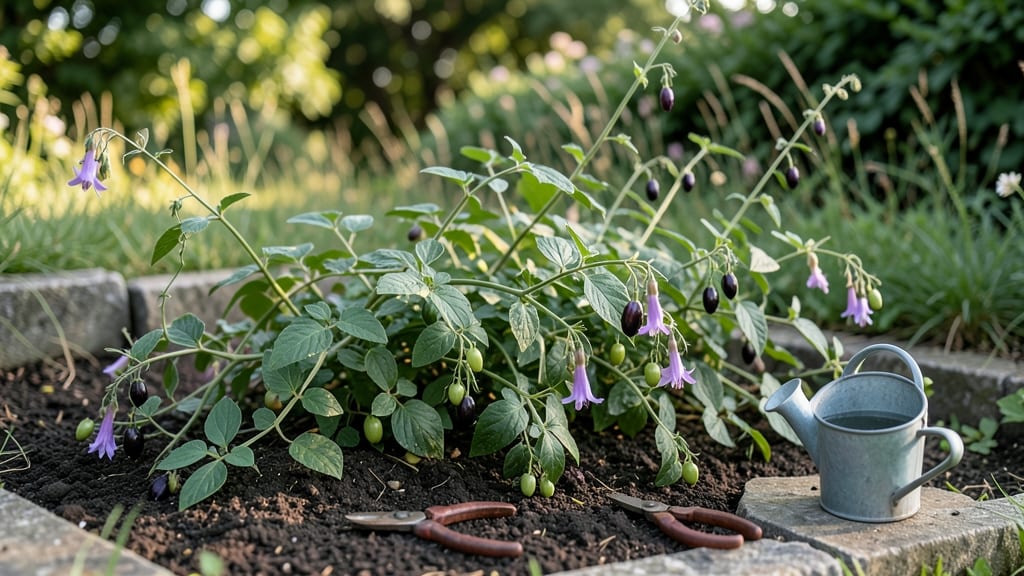
Growing purple nightshade (Solanum nigrum) means adding a year-round dark green privacy screen that thrives where most plants fail. 🌿 I’ve watched this hardy plant reclaim neglected corners of gardens, its glossy leaves forming dense mats that block weeds and shade out invasive species—naturally.
The key? It doesn’t need pampering, just basic soil and a spot where others give up.
This plant’s low-maintenance resilience makes it perfect for problem areas: shady corners, poor soil, or spots with foot traffic. It spreads aggressively but stays contained if you prune it back twice a year.
The berries? Edible when cooked (though raw they’re toxic), but most gardeners grow it purely for its lush, weed-smothering foliage that stays vibrant even in drought.
You’ll end up with a living privacy barrier that outperforms fences or lattice—no upkeep, no replacements. The trade-off? Its tenacity means it’s not for delicate gardens. But if you’ve got a spot that’s always struggled, this is the plant that finally wins.
Fair warning: once established, it’s nearly impossible to eradicate. That’s why I only plant it where I want it to take over—like along fence lines or under trees where grass refuses to grow. Here’s how to harness its power without losing control.
📚 In This Guide
- What you need
- Instructions
- Tips and common mistakes
- Wrapping up and next steps
What you need
- ● Purple nightshade plants (Solanum nigrum) – 3–5 mature plants (or seeds for propagation). Opt for disease-resistant varieties if possible.
- ● Well-draining potting mix – 5–10 gallons, amended with compost (60% soil, 30% compost, 10% perlite/sand).
- ● Containers or garden beds – 12–18” deep (for pots) or full-sun garden space (for in-ground planting).
- ● Organic mulch – 2–3 inches (straw, shredded leaves, or wood chips) to retain moisture.
- ● Balanced fertilizer (10-10-10) – 1–2 tbsp per plant at planting time.
- ● Gloves & long sleeves – Purple nightshade has mild toxicity; protection is key!
- ● Trowel or hand shovel – For transplanting or digging holes (6” deep, 12” wide).
- ● Watering can or hose with nozzle – Gentle watering avoids root disturbance.
- ● Pruning shears – For shaping or harvesting (sterilize with rubbing alcohol).
- ○ pH testing kit (optional) – Ideal soil pH: 6.0–7.0. Adjust with lime (to raise) or sulfur (to lower).
- ○ Row covers or shade cloth (optional) – If planting in hot climates, use 30–50% shade for seedlings.
- ● Sunlight – Full sun (6+ hours daily) for best growth and dark foliage.
- ● Water access – Consistent moisture (but avoid waterlogging).
- ● Patience – Purple nightshade grows fast (12–18” in a season!) but thrives in any soil type.
- ● Pet/child safety plan – Keep plants out of reach; all parts are toxic if ingested.
Step-by-Step guide to planting and maintaining purple nightshade for privacy
This fast-growing, evergreen shrub thrives in shade and provides year-round privacy—here’s how to plant it successfully.
🌱 Step 1: Choose the Right Location and Prepare the Soil
Purple nightshade (Solanum mauritianum) thrives in partial to full shade, making it ideal for dense, privacy-focused plantings. Select a site with 4+ hours of dappled sunlight daily—direct sun can scorch leaves, while deep shade slows growth. Avoid windy spots; the plants’ delicate stems can snap in strong gusts.
Test your soil’s moisture retention—purple nightshade prefers well-draining but consistently moist conditions. Amend heavy clay with 2-3 inches of compost to improve aeration, and mix in a handful of slow-release organic fertilizer (like 10-10-10) to encourage robust root development. The ideal pH range is 6.0–7.0; test your soil and adjust with lime or sulfur if needed.
🪴 Step 2: Plant Bare-Root or Container-Grown Plants
Dig holes twice as wide as the root ball but only as deep—planting too deep suffocates roots, while shallow planting exposes them to temperature swings. Space plants 3–4 feet apart for a dense hedge; closer spacing works for faster coverage but may require pruning later. Gently loosen the roots if container-grown to encourage outward growth.
Place each plant in its hole, backfill with native soil mixed with compost, and tamp lightly to remove air pockets. Water deeply immediately to settle the soil and eliminate gaps. Mulch with 2–3 inches of shredded bark or wood chips, keeping it 6 inches away from stems to prevent rot. This retains moisture and suppresses weeds—critical for shade-loving plants.
☀️ Step 3: Water and Fertilize for Year-Round Growth
Purple nightshade’s deep green leaves signal healthy moisture levels, but wilting or yellowing means it’s time to water. Keep soil consistently damp but not soggy—water 1–2 inches per week, more in hot, dry spells. Drip irrigation or soaker hoses work best to avoid leaf diseases from overhead watering. In winter, reduce watering slightly unless temperatures drop below 30°F, when roots need extra moisture to survive.
Fertilize twice yearly: once in early spring with a balanced organic fertilizer (like fish emulsion) and again in mid-summer with a low-nitrogen, high-phosphorus blend to encourage root growth. Avoid high-nitrogen fertilizers—they promote leafy growth at the expense of dense foliage. Prune back 1/3 of the plant after fertilizing to encourage bushier regrowth.
✂️ Step 4: Prune for Density and Shape
Prune twice a year—once in late winter to remove dead or crossing branches, and again in early summer to shape the hedge. Use clean, sharp shears to make 45-degree cuts just above a leaf node. Avoid cutting into old wood; purple nightshade regenerates poorly from severe pruning. For a formal hedge, trim every 4–6 weeks in growing season to maintain height and width.
Watch for leggy growth (long, bare stems) near the base—this signals insufficient light. Thin out overcrowded branches to improve air circulation and reduce disease risk. If a branch dies back, cut it to the nearest healthy bud rather than leaving a stub. The plant’s natural growth habit is bushy, so minimal pruning keeps it lush without sacrificing density.
⏰ Step 5: Monitor for Pests and Diseases
Purple nightshade is generally pest-resistant, but aphids or spider mites may appear on new growth. Spray infested areas with neem oil or introduce ladybugs for natural control. Fungal issues like powdery mildew (white dust on leaves) occur in humid, stagnant conditions. Improve airflow by pruning and avoid overhead watering to prevent outbreaks.
Yellowing leaves often indicate overwatering or poor drainage. If the soil stays soggy for days, amend with compost to improve structure. Brown leaf edges in winter suggest dry air—group plants together to create a microclimate that retains moisture. With proper care, purple nightshade remains evergreen and dense, providing year-round privacy without the upkeep of traditional hedges.
Tips & tricks for perfect purple nightshade privacy plantings
Confession: I planted my first purple nightshade hedge expecting instant results—only to watch it struggle in the wrong conditions. Here’s what I learned the hard way about maximizing this plant’s potential.
Light Balance: The 4+ hours of dappled sunlight mentioned in Step 1 is non-negotiable. I tried planting mine in full shade once, and growth slowed dramatically—new leaves emerged pale and sparse. For best results, position plants where they’ll receive morning sun and afternoon shade. If your yard has no natural dappled light, create it with sheer curtains or lattice screens that filter sunlight while still allowing light penetration. This mimics the plant’s natural understory habitat and prevents the leggy growth that signals light deprivation.
Soil Science: That 2-3 inches of compost in Step 1 isn’t just about nutrients—it’s about creating the perfect moisture-retaining environment purple nightshade craves. I made the mistake of skipping the compost in heavy clay soil, and my plants developed root rot from poor drainage. To test your soil’s moisture retention before planting, dig a small hole, fill it with water, and time how long it takes to drain. If it’s still wet after 24 hours, you need more compost or sand amendments. For sandy soils, add a layer of coconut coir to the hole bottom before planting to improve water retention.
Pruning Precision: When Step 4 mentions pruning twice yearly, timing matters more than you’d think. I pruned my hedge in early spring one year, and the new growth was sparse and weak. The key is to time your late winter prune right before buds begin to swell—typically when daytime temperatures consistently reach 50°F. For shaping cuts, use a reference object (like a ruler) to maintain consistent height across the hedge. This prevents the uneven, wavy appearance that happens when you eyeball it. Also, never prune more than 1/3 of the plant in a single session—purple nightshade recovers poorly from severe cuts.
Winter Survival: That 30°F threshold in Step 3 is critical for winter care. I learned this when my plants showed early signs of winter stress at 32°F—brown leaf edges and slowed growth. To protect your hedge during cold snaps, apply a 2-inch layer of mulch around the base (but keep it 6 inches away from stems) before temperatures drop. For extreme winter climates, consider wrapping young plants in burlap or using frost cloths during the coldest months. In spring, remove any frost-damaged branches immediately to prevent disease from entering through open wounds.
Pro Tips for Purple Nightshade Plant
- Confession: I planted my first purple nightshade hedge expecting instant results—only to watch it struggle in the wrong conditions.
- Light Balance: The 4+ hours of dappled sunlight mentioned in Step 1 is non-negotiable.
- Soil Science: That 2-3 inches of compost in Step 1 isn’t just about nutrients—it’s about creating the perfect moisture-retaining environment purple nightshade craves.
Frequently asked questions
about purple nightshade plants—because even the toughest gardeners need answers!Is purple nightshade plant toxic to pets or humans?
Yes, Solanum carolinense (purple nightshade) contains toxic alkaloids like solanine, which can cause nausea, vomiting, or neurological issues if ingested in large amounts. Keep it away from pets and children—opt for non-toxic alternatives like Ilex crenata (boxwood) if safety is a concern.
How fast does purple nightshade grow for privacy screens?
Purple nightshade grows aggressively—expect 3–5 feet per year under ideal conditions (full sun, well-drained soil). For a 6-foot privacy hedge, it may take 1–2 years from planting. Prune annually to control spread and shape.
Can purple nightshade survive cold winters?
This hardy plant thrives in USDA zones 3–10, tolerating temperatures down to -20°F (-29°C). Mulch heavily in winter to protect roots. In warmer zones, it may become invasive—monitor growth and prune as needed.
What’s the best alternative if purple nightshade is too aggressive?
For a low-maintenance alternative, try:
- Boxwood (Buxus sempervirens) – Dense, evergreen, and pet-safe.
- Privet (Ligustrum spp.) – Fast-growing but needs pruning.
- Holly (Ilex spp.) – Spiky, drought-tolerant, and year-round.
How do I stop purple nightshade from spreading uncontrollably?
Use these tactical tips:
- Install a deep root barrier (2–3 feet) to block underground runners.
- Prune aggressively in early spring to remove seed pods before they spread.
- Apply mulch to suppress weeds and limit sunlight to roots.
Wrapping up and next steps
The purple nightshade plant is a game-changer for gardeners seeking low-maintenance, year-round privacy with its deep purple foliage and adaptable nature. Whether you're shielding your space from prying eyes or adding a bold pop of color, this hardy plant delivers—without the fuss! 🌿
Ready to transform your garden? Start small—plant a few in containers or along fences, then expand as you see fit. With minimal care and maximum impact, your dark, lush sanctuary is just a seed away!