
Shrubs
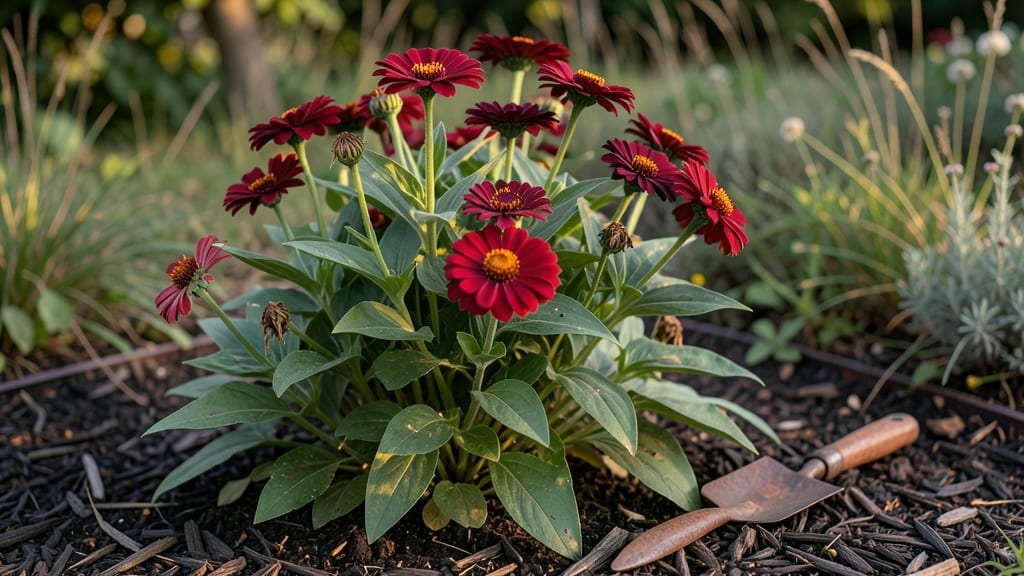
Growing zinnias in shade requires shade-tolerant varieties like 'Benary’s Giant' or 'Thumbelina' that handle 4-6 hours of indirect light daily, though blooms will be less abundant than in full sun. Opt for dwarf types and ensure soil drains well to support healthier growth.
Shade-loving zinnias rely on their ability to adapt to lower light by developing broader leaves to capture more sunlight. 🌿 While they won't bloom as prolifically as sun-loving varieties, choosing compact types like 'Crystal' series can help maximize flower production.
These plants also benefit from consistent moisture and occasional fertilizer to compensate for reduced photosynthesis. The key is balancing shade tolerance with proper care to keep them thriving.
For best results, pair shade zinnias with taller plants that won't block their limited light needs. Mulching helps maintain soil moisture and temperature, while regular deadheading encourages sporadic blooming. Remember, even shade zinnias need some light—plant them near east or north-facing windows or under dappled tree canopies for optimal conditions.
💡 In This Article
- How Light Affects Zinnia Growth in Shady Gardens
- Best Low-Light Zinnia Varieties for Shade Gardens
How light affects zinnia growth in shady gardens
Zinnias rely on photosynthesis to convert light into energy, but their efficiency drops significantly in low-light conditions. In full sun, these plants develop dense chlorophyll structures that maximize light absorption, producing vibrant blooms.
However, in shade, zinnias compensate by growing broader leaves—up to 30% wider—to capture scattered sunlight, though this reduces their overall energy production. 🌿 The result? Fewer blooms and slower growth compared to sun-exposed zinnias, which can produce 50% more flowers under ideal conditions.
Shade also triggers a physiological shift in zinnia stems. Without sufficient light, plants allocate more energy to leaf and stem development rather than flowering, often resulting in leggier, weaker stems that may require staking.
Varieties like 'Benary’s Giant' adapt better because their thicker stems naturally support extra foliage, while delicate types like 'Zahara' may flop under shade stress. The trade-off? Shade zinnias prioritize survival over reproduction, which is why they bloom sporadically unless given extra care.
Light quality matters too. Indirect light from east-facing windows or dappled shade (like under deciduous trees) provides better conditions than deep, dense shade. These environments offer a mix of blue and red light wavelengths, which zinnias need for optimal photosynthesis.
In contrast, dark shade (e.g., under evergreens) blocks most light, forcing zinnias into a "starvation mode" where growth stalls entirely. 💡 This is why partial shade—4-6 hours of filtered light daily—is the sweet spot for shade zinnias.
Another factor is temperature. Shady spots often stay cooler, slowing photosynthesis further. Zinnias thrive in 70-75°F soil temps, but shade can keep roots 10°F cooler, reducing nutrient uptake. To counteract this, use mulch to insulate soil and improve moisture retention, which helps zinnias maintain energy levels despite limited light.
Without these adjustments, shade zinnias may struggle to grow taller than 12-18 inches, even with ideal care.
Genetics play a role in shade tolerance. Some zinnias, like the 'Crystal' series, evolved with broader leaves and shorter internodes (spaces between leaves), making them better suited for low-light conditions. Their leaf structure resembles that of shade-tolerant plants like impatiens, with a higher surface area-to-volume ratio.
This adaptation allows them to absorb more diffuse light, though they still require at least 4 hours of indirect light daily to avoid stunted growth.
For gardeners, this means choosing varieties with proven shade resilience and supplementing with care techniques like regular watering and balanced fertilization. Even shade zinnias need 0.5-1 inch of water weekly to support their broader leaves, which transpire more moisture than sun-adapted types.
Without proper hydration, their leaves yellow and growth slows dramatically. 🌱