
Shrubs
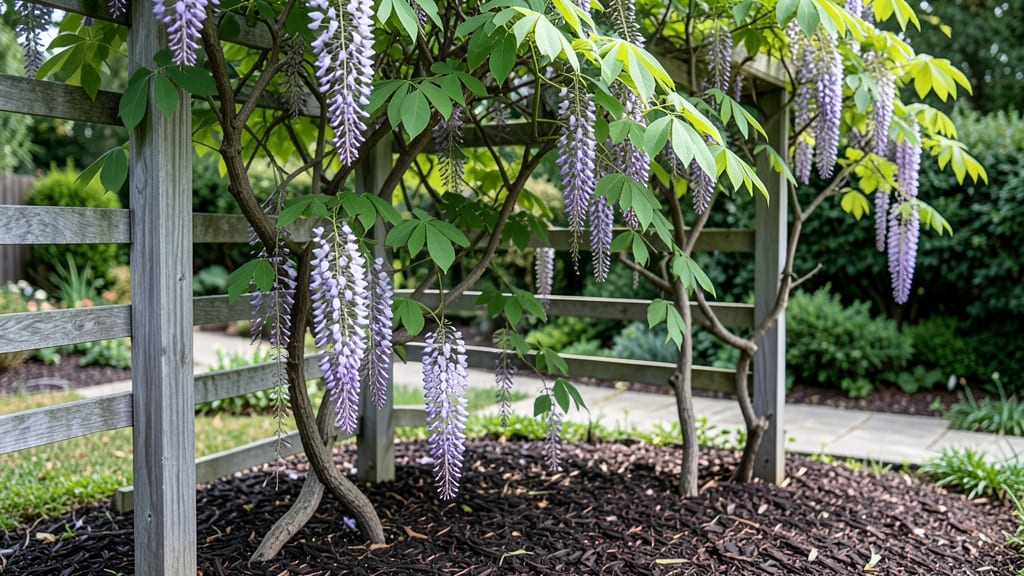
Growing wisteria in shade isn't just possible—it can create a lush, fragrant living tapestry where others fail. 🌿 I've nurtured shade-loving varieties that still produce cascades of blooms, proving this vine thrives when others retreat.
The key lies in choosing the right cultivar and understanding its unique needs in lower light.
Start with shade-tolerant varieties like 'Amethyst Falls' or 'Prolific'—they handle dappled light better than sun-hungry types. Your soil needs to drain well but stay consistently moist, so amend with compost and consider a raised bed if drainage is poor.
Water deeply twice weekly once established, as wisteria roots run deep but need steady hydration.
Pruning becomes your secret weapon for maximizing blooms in low light. Cut back one-third of old growth in late winter to encourage new shoots, which produce more flowers.
In shaded spots, growth will be slower, but with patient pruning, you'll still get vibrant purple clusters that perfume the air by spring.
Expect slower initial growth compared to full-sun plants, but with proper care, your wisteria will reward you with years of fragrant beauty. The trade-off? Fewer pests and less maintenance than sun-loving varieties. Here's how to make it work in your shady corner.
📚 In This Guide
- What you need
- Instructions
- Tips and common mistakes
- Wrapping up and next steps
What you need
- ● Wisteria plant: 1-3 Chinese wisteria (Wisteria sinensis) or Japanese wisteria (Wisteria floribunda)—choose a shade-tolerant variety like 'Amethyst Falls' or 'Black Dragon'.
- ○ Optional: Pre-grown 1-2 gallon container plants for faster blooms.
- ● Soil amendments: 5-10 lbs well-draining potting mix (or garden soil + 30% compost).
- ● 1 cup perlite or coarse sand (to prevent root rot).
- ○ 1 tbsp slow-release fertilizer (10-10-10) (optional but helpful for young plants).
- ● Support structure: A 6-10 ft tall trellis, arbor, or sturdy fence (wisteria needs vertical space to climb!).
- ○ Optional: Strong garden twine or wire (for securing vines during early growth).
- ● Digging tools: 1 garden trowel (for small plants).
- ● 1 shovel or spade (for larger holes, ~18" wide x 24" deep).
- ● Planting supplies: 2-3 mulch chips or straw (2-3 inches thick to retain moisture).
- ● 1 watering can or hose with gentle nozzle (wisteria loves consistent moisture!).
- ○ Safety gear (optional but wise):strong> 1 pair gloves (wisteria thorns can be sharp!).
- ● 1 pruning shears (for trimming later).
- ● ✅ Light: Partial shade (4-6 hours of dappled sunlight) or full shade (for northern climates).
- ● ✅ Climate: USDA Zones 5-9 (hardy to -20°F/-29°C).
- ● ✅ Space: Minimum 10 ft wide x 15 ft tall (wisteria spreads aggressively!).
How to grow wisteria successfully in shady spots
Wisteria thrives where most vines fail—here's how to coax those fragrant blooms in lower light.
🌱 Step 1: Select the Right Shade-Tolerant Variety
Not all wisteria adapts to shade equally. For partial shade (4-6 hours of dappled light), choose Amethyst Falls or Royal Purple—both bloom reliably with morning sun. For full shade (under trees or north-facing walls), Prolific or Black Dragon handle the conditions better than their sun-loving cousins.
I always check the plant tag for "shade-tolerant" labels—some nurseries mislabel varieties. Avoid Chinese wisteria in deep shade; it demands more light to flower. Instead, opt for Japanese varieties bred for resilience. The key is selecting a cultivar that matches your light conditions from day one.
🪴 Step 2: Plant in Well-Draining, Moist Soil
Wisteria roots need rich, slightly acidic soil (pH 6.0-7.0) with excellent drainage—even in shade. Amend your native soil with 3 inches of compost and 20% perlite to prevent root rot. I dig a hole twice as wide as the root ball but only as deep as the container's base—planting too deep suffocates the crown.
Position the plant where the top of the root ball sits level with the soil surface. Tap the sides gently to remove air pockets, then water deeply until moisture reaches 12 inches down. In shade, soil stays damp longer, so avoid waterlogged spots by ensuring the planting area slopes slightly away from the vine.
☀️ Step 3: Provide Support and Prune for Airflow
Wisteria needs a strong trellis, arbor, or pergola—even in shade, it grows 10-20 feet annually. Install support at planting to avoid damaging roots later. I use powder-coated metal cables for durability, spacing them 3-4 feet apart to distribute weight. Avoid plastic trellises; they bend under the vine's weight.
Prune immediately after flowering to shape the vine and encourage next year's blooms. Cut back one-third of the oldest stems to the first strong lateral bud. In shade, wisteria grows slower, so aggressive pruning isn’t needed—just remove dead wood and crossing branches. This prevents disease and improves airflow, critical for preventing fungal issues in humid shade.
💧 Step 4: Water Deeply and Fertilize Strategically
Keep the soil consistently moist but not soggy—shade means less evaporation, so water every 5-7 days until the top 6 inches feel dry. I use a soaker hose to deliver water slowly at the base, avoiding wetting the leaves (which invites powdery mildew). Mulch with 3 inches of wood chips to retain moisture and regulate temperature.
Fertilize twice a year: in early spring with 10-10-10 (½ cup per plant) and in mid-summer with 5-10-10 (¼ cup per plant). Too much nitrogen in shade leads to leafy growth at the expense of flowers. I always follow up with a balanced organic fertilizer in fall to build soil health for next season.
✂️ Step 5: Winter Care for Shade-Grown Wisteria
Shade protects wisteria from winter sunburn, but hard freezes still stress the plant. In Zone 5-6, mound 6 inches of mulch around the base before the first frost. In Zone 7+, a light burlap wrap around the trellis protects tender new growth. I avoid heavy blankets—they trap moisture and rot the wood.
Prune dormant stems in late winter to remove dead or weak growth. Look for brown, brittle branches—these won’t recover. Cut just above a bud facing outward to encourage an open, airy structure. This is the best time to train young vines along the trellis, as new growth will cling naturally in spring.
Tips & tricks for thriving shade-loving wisteria
Mastering wisteria in shade requires a few strategic adjustments—here's how to ensure those cascading blooms shine even when sunlight is scarce.
Variety Verification: Always verify your wisteria's label at purchase, as nurseries sometimes mislabel shade-tolerant varieties. I've seen "Chinese wisteria" labeled as shade-friendly when it actually needs full sun. For true shade success, focus on Japanese cultivars like Prolific or Black Dragon—they're specifically bred to thrive where others fail. The 4-6 hours of partial shade mentioned in Step 1 should ideally include morning sun, as this gives the plant just enough energy for robust growth.
Soil Science: The pH 6.0-7.0 range mentioned in Step 2 is crucial—test your soil before planting. If it's too alkaline, amend with sulfur or peat moss. I've found that wisteria in shade often suffers from compacted soil, so the 20% perlite recommendation is non-negotiable. Pro tip: Mix in 1/4 cup of bone meal during planting for an extra phosphorus boost, which encourages stronger root development in low-light conditions.
Pruning Precision: When pruning in Step 3, focus on maintaining an open structure rather than aggressive thinning. In shade, wisteria grows more slowly, so removing one-third of oldest stems is plenty. I use sharp bypass pruners to make clean cuts just above outward-facing buds—this prevents disease and encourages new growth toward the trellis. The 3-4 feet spacing between trellis cables is perfect for distributing the vine's weight evenly, especially important in shade where growth is more vertical.
Winter Protection: The 6 inches of mulch in Zone 5-6 is essential, but don't let it touch the stems—keep it 2 inches away to prevent rot. For Zone 7+, I've found that wrapping trellises with burlap only on the north side (facing cold winds) provides enough protection without trapping excess moisture. This targeted approach mimics the natural shade protection while preventing winter damage.
Pro Tips for Wisteria For Shade
- Mastering wisteria in shade requires a few strategic adjustments—here's how to ensure those cascading blooms shine even when sunlight is scarce.
- Variety Verification: Always verify your wisteria's label at purchase, as nurseries sometimes mislabel shade-tolerant varieties.
- Soil Science: The pH 6.0-7.0 range mentioned in Step 2 is crucial—test your soil before planting.
Frequently asked questions
Got questions about growing wisteria in shady spots? Here are answers to the most common concerns—so you can enjoy those fragrant blooms without the stress!
Can wisteria really thrive in shade, or is it just tolerating it?
Wisteria can grow in shade, but its performance depends on the type and light conditions. Japanese wisteria (Wisteria floribunda) handles partial shade best, while Chinese wisteria (Wisteria sinensis) prefers more sun. In deep shade (less than 3 hours of sunlight), expect fewer blooms and slower growth. Aim for dappled or filtered shade (like under tall trees) for the best results.
How long does it take for wisteria to bloom in shady conditions?
Patience is key! Wisteria grown in shade may take 3–5 years longer to bloom than those in full sun. Some varieties (like Amethyst Falls) are bred for shade tolerance and may flower sooner (2–4 years). Prune lightly in early spring to encourage air circulation and reduce stress, which can speed up flowering once conditions improve.
What’s the best shade-tolerant wisteria variety for my yard?
Not all wisteria is equal in low light. Top picks for shade include:
- Amethyst Falls: Compact, fragrant, and blooms reliably in partial shade.
- Black Dragon: Deep purple blooms; tolerates morning sun + afternoon shade.
- Royal Purple: Hardy and adaptable to filtered light (e.g., near evergreens).
My wisteria leaves are yellowing in shade—what’s wrong?
Yellow leaves in shade are often a sign of nutrient deficiency or poor air circulation. Check these fixes:
- Test soil pH (wisteria prefers 6.0–7.0; amend with lime if too acidic).
- Fertilize in early spring with a balanced, slow-release fertilizer (e.g., 10-10-10).
- Prune to improve airflow—thin out dense growth to prevent fungal issues.
- Check for pests (aphids, spider mites) that thrive in shaded, humid conditions.
Are there shade-friendly alternatives to wisteria with similar beauty?
If wisteria feels too high-maintenance for your shade garden, try these low-light climbers:
Plant
Shade Tolerance
Why It’s Great
Clematis (e.g., 'Jackmanii', 'Niobe')
(partial to full shade)
Vigorous blooms, easy to train; some varieties thrive in deep shade.
Honeysuckle (e.g., 'Annabelle', 'Gold Cup')
(full to partial shade)
Fragrant, fast-growing, and attracts pollinators—perfect for trellises.
Star Jasmine (Trachelospermum jasminoides)
(full shade)
Evergreen, highly fragrant, and drought-tolerant once established.
Wrapping up and next steps
Wisteria thrives in shade, offering stunning blooms and lush foliage with minimal sunlight—perfect for transforming dull corners into vibrant retreats! 🌿 Whether you’re a seasoned gardener or just starting, this versatile vine is a game-changer for low-light spaces.
Ready to elevate your garden? Start by selecting the right variety (like Wisteria sinensis or Wisteria floribunda) and prepare your trellis or arbor—then watch your shade garden come alive with cascading beauty!