
Size
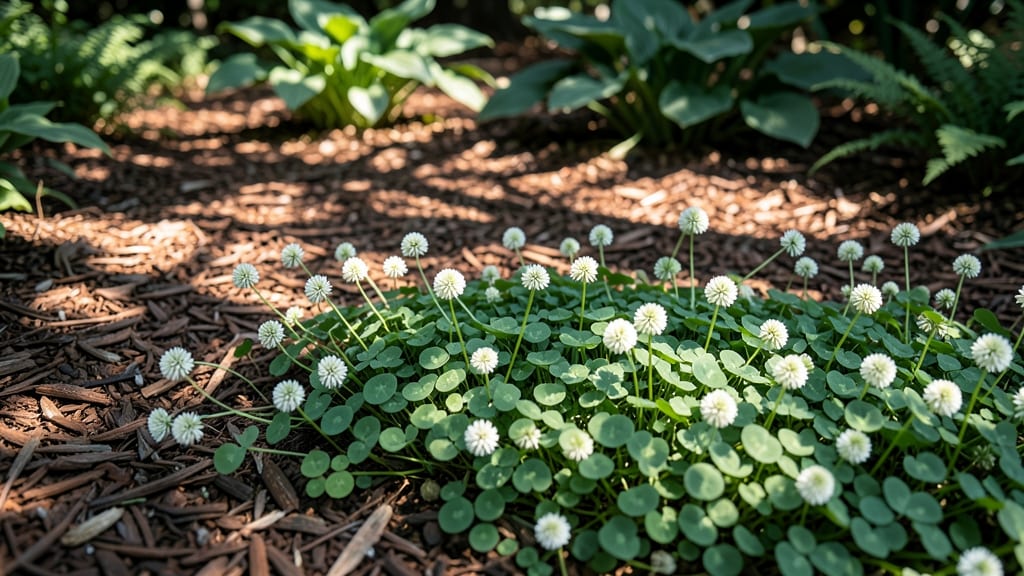
Clover grows in shade, but your success depends on the variety—white clover and compact types like Dutch clover handle low-light conditions better than sun-loving red clover. For best results, select shade-adapted species and prioritize well-draining soil.
Not all clover varieties are created equal when it comes to shade tolerance. 🌿 White clover, for instance, thrives in partial shade thanks to its broad leaves that capture scattered sunlight efficiently.
Dutch clover, with its low-growing habit, also performs well in dappled light, making it ideal for under trees or along north-facing walls. The key difference lies in their root structures—shade-tolerant types develop deeper roots to access moisture and nutrients in lower-light environments.
When planting in shady areas, focus on soil preparation first. Amend heavy clay with compost to improve drainage, as waterlogged roots spell trouble for even the hardiest clover varieties. I've found that mulching with straw helps maintain consistent moisture levels without smothering young plants.
For maximum coverage, mix clover seeds with a shade-friendly grass like fine fescue—this combo creates a lush, low-maintenance ground cover that outcompetes weeds naturally.
💡 In This Article
- Shade-Tolerant Clover Varieties and Their Growth Conditions
- Tips for Planting and Maintaining Clover in Shady Gardens
Shade-tolerant clover varieties and their growth conditions
Clover's ability to grow in shade comes down to its leaf structure and root development. Shade-tolerant varieties like white clover (Trifolium repens) have broader leaves that capture more diffuse light through a process called "light interception."
These leaves contain more chlorophyll per unit area, allowing them to photosynthesize efficiently even with only 20-30% of full sunlight. In contrast, red clover (Trifolium pratense) has narrower leaves optimized for direct sunlight, making it less effective in low-light conditions.
The root systems also differ dramatically. White clover develops a dense, shallow root network that spreads horizontally, accessing moisture and nutrients near the surface where light penetration is minimal.
Dutch clover (Trifolium hybridum), another shade-tolerant type, grows even closer to the ground (6-12 inches tall) with roots that penetrate 12-18 inches deep, perfect for dappled shade environments.
Micro clover varieties, like those used in lawn mixes, have even finer foliage that thrives with just 1-2 hours of direct sunlight per day, making them ideal for heavily shaded areas.
Soil conditions play a crucial role in shade success. Clover prefers slightly acidic to neutral soil (pH 6.0-7.0) with good organic matter content. In shady spots, organic material breaks down more slowly, so amending with compost before planting gives clover the nitrogen boost it needs to establish.
The soil should also drain well—waterlogged conditions cause root rot, even in shade-tolerant varieties. I've seen Dutch clover struggle in heavy clay soils unless amended with 3-4 inches of compost mixed into the top 6 inches of soil.
Moisture requirements vary by variety and shade level. White clover maintains better moisture retention in its leaves, reducing water loss in low-light conditions. Dutch clover, however, needs consistent moisture—drought stress shows as yellowing between leaf veins.
In deep shade, water evaporates more slowly, so you might only need to water once every 10-14 days unless you're experiencing prolonged dry spells. For best results, water deeply 1-2 times per week during establishment to encourage deep root growth.
Consider these key differences when selecting clover for shade:
- White clover: Best for partial shade (30-50% sunlight), spreads aggressively, ideal for ground cover
- Dutch clover: Thrives in dappled shade (10-30% sunlight), grows taller (12-18"), great for erosion control
- Micro clover: Handles heavy shade (1-2 hours sunlight), perfect for lawns under trees
- Red clover: Needs full sun (6+ hours), will struggle in any shade
What most gardeners don't realize is that clover's shade tolerance improves when planted in combination with other ground covers. For instance, pairing white clover with creeping thyme creates a living mulch that maintains soil moisture while allowing light to filter through.
This combination works particularly well in woodland gardens where dappled light creates shifting patterns throughout the day. 🌿