
Size
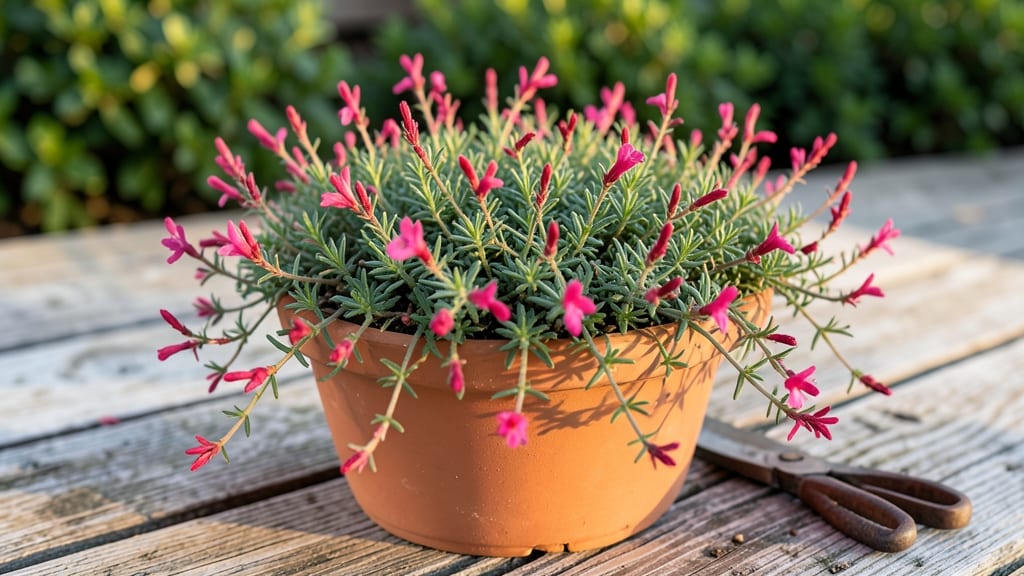
Red creeping thyme's signature color and growth habit depend heavily on sunlight exposure. 🌿 Without adequate light, the plant's chlorophyll production weakens, leading to pale foliage and reduced vigor. I've noticed that even partial shade can dull the red hues, making the plant look more greenish over time.
For gardeners with shady spots, choosing a location with morning sun or filtered light can help maintain some growth, though it won't match full-sun performance.
When light levels drop below 4 hours daily, red creeping thyme often becomes leggy and sparse, losing its dense ground-cover appearance. The good news? This hardy perennial can still survive in shade, but its ornamental value suffers significantly.
If you're committed to growing it in low-light areas, consider pairing it with taller plants that won't compete for light, and use well-draining soil to prevent root stress.
💡 In This Article
- Light Requirements for Optimal Red Creeping Thyme Growth
- Shade-Adaptive Gardening: Maximizing Thyme in Low-Light Areas
Light requirements for optimal red creeping thyme growth
Red creeping thyme's vibrant hue comes from anthocyanin pigments that thrive under strong sunlight. These pigments aren't just for show—they act as natural sunscreens, protecting the plant's delicate leaves from UV damage while enhancing its photosynthetic efficiency.
In full sun (6+ hours daily), chlorophyll production peaks, giving the plant the energy to produce dense, aromatic foliage. Without sufficient light, the plant shifts resources away from pigment production, resulting in pale, greenish stems that lack the signature red color.
The difference in growth between full sun and shade is dramatic. Under ideal conditions (full sun with 6-8 hours daily), red creeping thyme spreads aggressively, forming a lush carpet that can reach 6-12 inches wide annually.
In partial shade (3-6 hours of sunlight), growth slows to about 3-6 inches per year, and the plant becomes more sparse, with stems stretching upward in search of light—a condition called etiolation.
Deep shade (less than 3 hours) can reduce spread to just 1-3 inches annually, making it nearly useless as a ground cover.
What's happening scientifically? Shade reduces the plant's ability to perform photosynthesis efficiently. Thyme leaves contain 10-15% more chlorophyll when grown in full sun compared to shade, which directly impacts energy production. The red pigments (anthocyanins) also require high light intensity to maintain their vibrant color—they're essentially light-activated.
Without adequate sunlight, these pigments break down, leaving you with a plant that's more functional than ornamental.
For gardeners, this means placement matters. A south-facing window or a spot near a building's southern wall can provide the 4-6 hours of sunlight needed for moderate growth.
If you're working with deep shade, consider using red creeping thyme as an accent plant rather than a ground cover—its survival instincts will kick in, but its ornamental qualities will diminish significantly. 🌿 The trade-off is worth it if you're prioritizing fragrance over color, but for vibrant red foliage, light is non-negotiable.
Another factor to consider is temperature. Thyme thrives in USDA Zones 5-9, but even within these zones, shade can create microclimates where temperatures remain cooler. Cooler temperatures slow photosynthesis further, compounding the effects of low light.
This is why many gardeners report that their red creeping thyme looks healthier in full sun during summer months, even if it's planted in a partially shaded area—it's getting more light during peak growing season.
If you're committed to growing red creeping thyme in shade, focus on the 3-6 hour range for partial shade. This gives the plant enough light to maintain some of its red pigmentation while still allowing it to spread moderately.
The key is to avoid deep shade entirely—once light drops below 3 hours daily, the plant's growth and color will suffer dramatically, regardless of soil quality or care.