
Vegetables
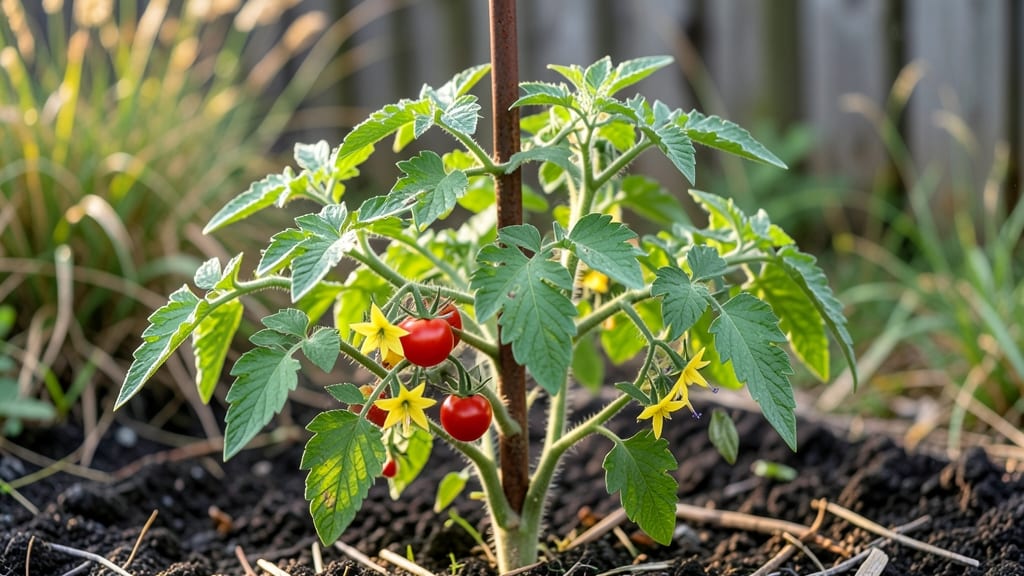
Tomatoes belong to the nightshade family, scientifically called Solanaceae, which also includes peppers, eggplants, and potatoes. These plants share key traits like compound leaves, green stems, and vulnerability to similar pests and diseases, though their edible parts and growth patterns differ significantly.
Nightshade family members are united by their botanical structure, but tomatoes stand out for their vibrant red fruits and sprawling vines. 🌱 Unlike potatoes (which grow underground) or eggplants (with deep purple skins), tomatoes thrive as annuals with sprawling or determinate growth habits.
This family also shares a love for warm climates and well-draining soil, though tomatoes specifically need consistent moisture to develop their signature sweetness.
What makes this classification important for gardeners is the shared pest susceptibility—aphids, spider mites, and tomato hornworms often target all nightshades. However, tomatoes' unique leaf structure (deeply lobed) helps identify them quickly in mixed plantings.
The family's shared traits create both challenges (like disease spread) and opportunities (like companion planting strategies that work across all members).
💡 In This Article
- Botanical Traits of Nightshade Tomatoes
- Garden Planning for Nightshade Family Crops
Botanical traits of nightshade tomatoes
Nightshade family plants, including tomatoes, share distinctive botanical features that set them apart from other vegetables. Tomatoes specifically exhibit deeply lobed, compound leaves with 5-9 pointed sections, while their stems remain green even when mature—unlike many other plants that develop woody textures.
The flowers, which grow in clusters, have a unique star-shaped corolla with five petals, often yellow or purple, that later develop into the fruit we harvest.
The fruit itself is a berry containing multiple seeds, though we typically refer to tomatoes as vegetables in culinary contexts. This classification stems from their high water content (95% in ripe varieties) and the presence of lycopene, the pigment responsible for their red color.
Unlike peppers (which develop from flowers with fused petals) or eggplants (with spiky fruit surfaces), tomatoes grow on sprawling vines that can reach 6-10 feet in indeterminate varieties, while determinate types stay more compact.
What makes tomatoes unique within Solanaceae is their fruit development pattern. The ovary wall (pericarp) thickens as the fruit matures, creating the firm texture we associate with ripe tomatoes.
This contrasts with potatoes, where the edible part is actually a modified stem (tuber), or eggplants, whose fruit develops from a single ovary. The green stems shared across nightshades contain solanine—a natural toxin that deters pests but becomes concentrated in green (unripe) tomato parts.
Gardeners can identify nightshade family members by their shared flower structure: all produce flowers with five petals and a superior ovary (where the ovary sits above the attachment point of other floral parts).
Tomatoes' flowers also have a distinctive feature—they're self-pollinating, meaning they don't require bees to produce fruit, though cross-pollination can occur between different varieties. This trait explains why tomatoes often set fruit even in protected environments like greenhouses.
Another key distinction lies in their root systems. Tomatoes develop a fibrous root network that spreads widely but doesn't penetrate deeply, making them more susceptible to drought stress than potatoes (which have thick, fleshy storage roots).
The leaves' pubescent (hairy) texture also helps identify them—these tiny hairs serve as a defense mechanism against herbivores while creating a slightly rough surface that contrasts with smoother-leaved vegetables.
Understanding these botanical traits helps explain why tomatoes share vulnerabilities with other nightshades, like susceptibility to early blight (caused by Alternaria solani) or verticillium wilt. The family's shared characteristics create both gardening challenges (like disease spread) and opportunities (like using marigolds as a universal deterrent). 🌿