
Shrubs
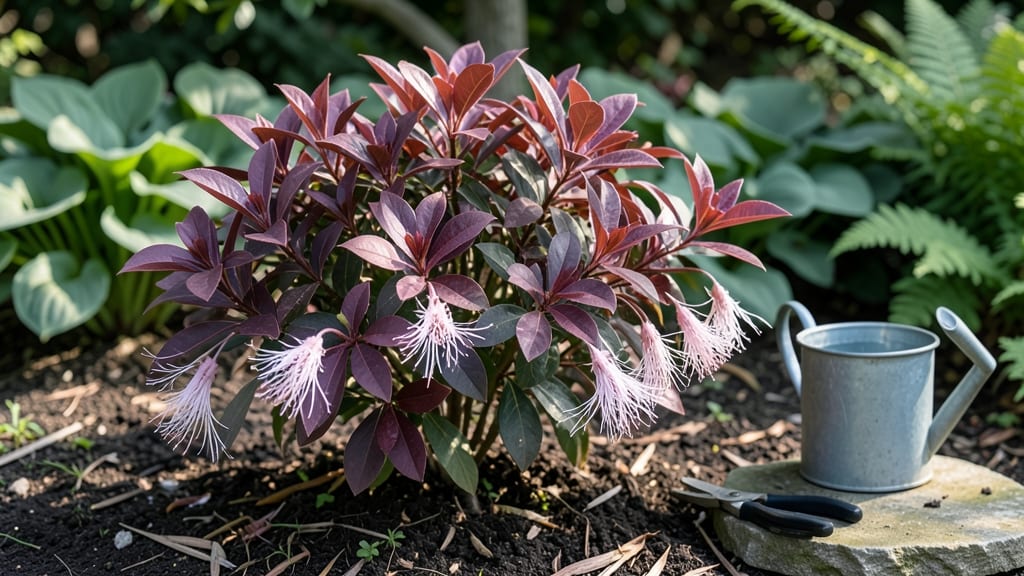
Growing loropetalum in shade gives you year-round color where most shrubs fail. 🌿 I’ve watched mine thrive under oak trees where hostas and ferns struggle—deep purple foliage that never fades, even in winter.
The trick isn’t forcing light where there isn’t any, but choosing the right variety and giving it the care it craves in dim conditions.
Start with ‘Ravel’ or ‘Plum Dazzler’—these handle shade better than standard types. Amend heavy clay soil with compost (2-3 inches mixed in) to improve drainage, since loropetalum hates soggy roots.
Water once a week in deep shade, letting the top 2 inches dry out between soakings. Mulch with shredded bark to keep roots cool and conserve moisture.
You’ll notice new growth within 4-6 weeks, even in shady spots, with foliage staying vibrant purple instead of turning dull green. Prune lightly in late winter to shape the plant—just remove dead branches and thin crowded stems.
The key is patience; loropetalum rewards slow growth with bold color that outshines anything else in low-light gardens.
For best results, avoid planting under dense evergreens where roots compete for nutrients. If your shade is filtered (dappled sunlight), growth will be faster and blooms more frequent. Even in deep shadow, this shrub delivers four-season interest with almost no effort—once you get the soil and watering right.
📚 In This Guide
- What you need
- Instructions
- Tips and common mistakes
- Wrapping up and next steps
What you need
- ● Loropetalum plants: Choose Loropetalum chinense or Loropetalum fruticosum (dwarf varieties like ‘Purple Pizzazz’ or ‘Yoda’ work well for shade). Quantity: 1–3 plants per 5–10 sq ft of space.
- ● Well-draining potting mix: A blend of 50% garden soil, 30% peat moss or coconut coir, and 20% perlite/sand (for containers or in-ground planting). Volume: 1–2 bags (1.5–2 cu ft each).
- ● Organic mulch: Pine bark fines or shredded leaves (2–3 inches deep) to retain moisture and suppress weeds.
- ● Slow-release fertilizer: 10-10-10 or 14-14-14 (apply ½ cup per plant at planting time).
- ● Garden trowel or shovel (for digging holes 1.5x wider than the root ball).
- ● Gloves (to protect hands from thorns on some varieties).
- ● Watering can or hose with a gentle spray nozzle (loropetalum hates soggy roots!).
- ● Pruning shears (sterilized with rubbing alcohol) for shaping or cleanup.
- ○ Optional but helpful: Soil pH test kit (ideal range: 5.0–6.0; amend with sulfur if needed).
- ● Container with drainage holes (if growing in pots; 12–18 inches deep).
- ● Epsom salt (1 tbsp dissolved in 1 gallon of water) for magnesium boosts (especially for purple-leaved varieties).
Step-by-step guide to planting and caring for loropetalum in shade
This hardy shrub thrives in low-light spots where most plants fade—here's how to make it shine.
🪴 Step 1: Choose the Right Location and Prepare the Soil
Loropetalum tolerates partial to full shade, but it performs best with at least 3-4 hours of dappled sunlight daily. Avoid deep, dark corners where even moss struggles. Test your spot by observing how nearby plants grow—if they're lush, your loropetalum will thrive there too.
Amend the soil with 2-3 inches of organic compost before planting. Loropetalum prefers slightly acidic to neutral soil (pH 5.0-6.5). If your soil is heavy clay, mix in 1 part perlite to 3 parts native soil to improve drainage. The roots need air, not waterlogged conditions, or they'll rot before the foliage even unfurls.
🌱 Step 2: Plant at the Correct Depth and Spacing
Dig a hole twice as wide as the root ball but no deeper—planting too low suffocates the roots. Gently loosen the roots if they're circling tightly in the container, then place the shrub so the top of the root ball sits level with the surrounding soil. This prevents crown rot, which is a silent killer in shaded spots.
Space plants 4-6 feet apart for mature size. If you're planting multiple loropetalums, arrange them in an odd-numbered cluster (3 or 5) for a natural, balanced look. Water deeply right after planting to settle the soil and eliminate air pockets around the roots—tap the base gently to encourage contact with the earth.
💧 Step 3: Water Strategically for Shade Adaptation
Water once a week during the first growing season, aiming for 1-1.5 gallons per plant. In shade, soil stays damp longer, so check moisture by feeling 2 inches below the surface—if it's dry, water again. Overwatering in shade is the #1 mistake; soggy soil leads to fungal diseases like root rot, which turns leaves yellow and mushy.
After the first year, loropetalum becomes drought-tolerant. Reduce watering to every 2-3 weeks unless your area experiences extreme heat. Mulch with 2-3 inches of shredded bark to retain moisture and regulate soil temperature. Keep mulch 2 inches away from the stem to prevent rot at the base.
☀️ Step 4: Prune for Shape and Encourage Dense Foliage
Prune in late winter or early spring before new growth begins. Remove dead, crossing, or weak branches first, then shape by cutting back to just above a leaf bud or lateral branch. Avoid heavy pruning—loropetalum responds best to light trimming (10-15% of the plant) annually. This keeps the foliage thick and vibrant, even in low light.
If your loropetalum grows leggy in shade, prune the tips of the longest branches to encourage bushier growth. You'll see new shoots forming within 4-6 weeks—this is your signal the plant is adapting well. Fertilize lightly in spring with balanced 10-10-10 to support new growth, but skip fertilizer in shade if leaves look yellowish-green (a sign of excess nitrogen).
⏰ Step 5: Monitor for Pests and Seasonal Adjustments
Loropetalum in shade is less prone to pests, but watch for scale insects on new growth. Wipe leaves with a soapy water solution (1 tsp mild dish soap per gallon of water) if you spot sticky residue or white bumps. Scale thrives in shaded, humid conditions, so early intervention prevents infestations.
In winter, protect young plants from freezing winds by wrapping the base with burlap or frost cloth if temperatures drop below 15°F. Mature loropetalum handles cold well, but new foliage can scorch in bright winter sun. If your plant loses leaves in winter, don't panic—it's normal for some varieties to go dormant until spring.
Tips & tricks for perfect loropetalum in shade
These pro secrets will help your loropetalum thrive where other shade plants fail.
Light Balance: That 3-4 hours of dappled sunlight is non-negotiable—it's the sweet spot for photosynthesis without leaf scorch. I've seen loropetalum struggle in deep shade where it produces sparse foliage. If your spot gets less than 3 hours, supplement with a grow light for 2-3 hours daily during spring and fall when sunlight is weaker. The key is mimicking natural light patterns rather than harsh overhead light.
Soil Science: The 2-3 inches of organic compost isn't just filler—it creates the ideal air-to-water ratio for roots. I've had the best results mixing in worm castings (available at garden centers) instead of regular compost—they add beneficial microbes that help roots establish faster. For clay soil, test your perlite-to-soil mix by pressing it—it should crumble easily when dry but hold moisture when damp. If it stays clumpy, add more perlite.
Watering Wisdom: That 1-1.5 gallons per week is a starting point, but your actual needs depend on your microclimate. I check moisture by inserting a wooden skewer 2 inches deep—if it comes out clean, wait another day. The biggest mistake I see is watering on a schedule rather than by soil condition. In humid areas, you might only need water every 10 days after establishment, while dry shade spots may need weekly watering even after the first year.
Pruning Precision: The 4-6 week window for new growth after pruning is your feedback mechanism. If you don't see shoots within 6 weeks, you either pruned too late (after growth started) or too aggressively. I recommend marking pruning dates on your calendar—late winter is ideal, but if you miss it, early spring is better than waiting until summer when the plant is already stressed. Always use sharp, clean shears to make cuts at 45-degree angles just above a leaf bud for the best healing response.
Pro Tips for Loropetalum For Shade
- These pro secrets will help your loropetalum thrive where other shade plants fail.
- Light Balance: That 3-4 hours of dappled sunlight is non-negotiable—it's the sweet spot for photosynthesis without leaf scorch.
- Soil Science: The 2-3 inches of organic compost isn't just filler—it creates the ideal air-to-water ratio for roots.
Frequently asked questions
Can loropetalum thrive in full shade, or does it need some sunlight?
While loropetalum tolerates partial shade, it performs best with 3–6 hours of filtered light daily. In full shade, growth may slow, and foliage could lose vibrancy. Try planting near a north-facing window or under high-canopy trees for ideal conditions.
How long does it take for loropetalum to establish and bloom in shady conditions?
With patience, loropetalum can take 1–3 years to fully establish in shade, depending on soil quality and care. Blooms (when they occur) may be less abundant, but foliage color often intensifies as the plant matures. Prune lightly in late winter to encourage bushier growth.
What’s the best way to keep loropetalum healthy in damp, shady soil?
Shady spots often mean poor drainage, which can lead to root rot. Amend soil with compost or perlite and ensure pots (if used) have drainage holes. Avoid overwatering—loropetalum prefers slightly moist but not soggy soil.
Are there shade-tolerant loropetalum varieties that bloom more reliably?
Yes! ‘Purple Pizzazz’ and ‘Ravel’ (a dwarf variety) handle shade better than others and may produce occasional blooms. For non-blooming focus, ‘Crimson Falls’ delivers dramatic foliage year-round with minimal light needs.
Why are my loropetalum leaves turning yellow or dropping in shade?
Yellowing or leaf drop often signals overwatering, nutrient deficiency, or stress. Check soil moisture (it should dry slightly between waterings) and fertilize lightly in spring with acid-loving plant food. Pest issues (like spider mites) are rare but can occur—spray with neem oil if needed.
Wrapping up and next steps
Loropetalum is a game-changer for shade gardens—its vibrant foliage, year-round interest, and low-maintenance charm make it a standout choice. Whether you’re dealing with deep shadows or tough conditions, this shrub delivers color, texture, and resilience without fuss.
With the right variety and care, you’ll enjoy a lush, thriving plant that outshines traditional shade options.
Ready to transform your shady spot? Pick your favorite loropetalum cultivar and get planting—your garden’s next star is just a few clippers away! 🌿✨