
Container Gardens
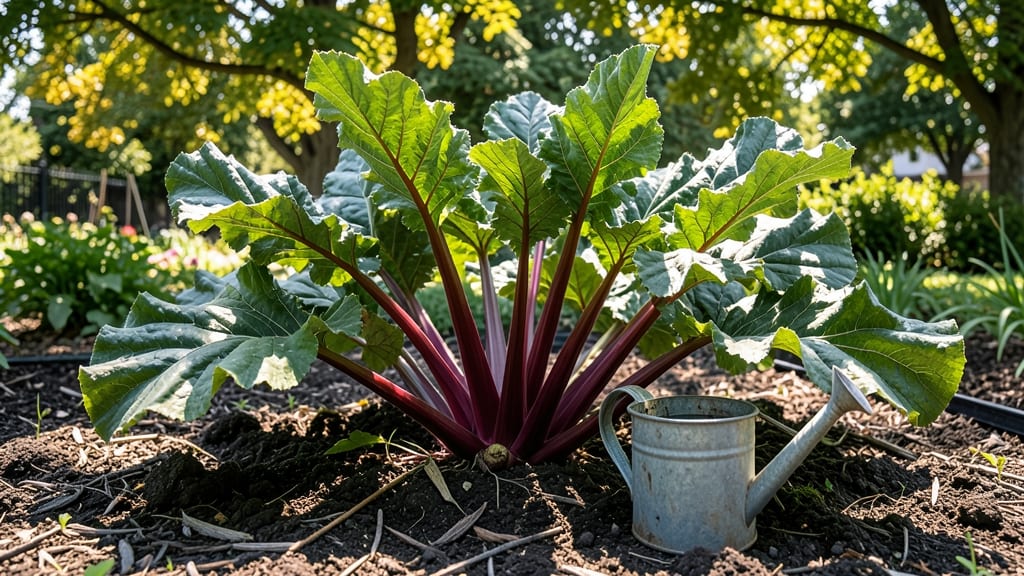
Growing rhubarb in sun or shade depends on striking the right balance—too much scorches its tender leaves, while too little stunts those prized stalks you love in pies.
Here’s the catch: rhubarb 🌱 actually thrives in partial shade, especially in hotter climates like USDA Zone 6a, where afternoon sun can turn its leaves crispy. But don’t assume shade means neglect—it still needs bright, indirect light to produce those vibrant stalks by late spring.
If you’re planting in early spring, aim for 4-6 hours of morning sun and afternoon shade. In full sun, mulch heavily to keep roots cool, while shadier spots may need extra organic matter to compensate. The key? Adjusting care based on your garden’s light.
Below, I’ll break down the exact sunlight needs by season, shade-tolerant varieties, and how to tweak watering and soil to maximize harvests—whether your rhubarb patch bakes in the sun or baskets in dappled shade.
 Best Window Placement
Optimal sunlight requirements for rhubarb growth and harvest
Rhubarb's love for cooler temperatures often overshadows its sunlight needs, but getting this right is crucial for healthy stalks and maximized yields. Unlike many vegetables, rhubarb doesn't demand full sun—it actually thrives in partial shade, especially in hotter climates where leaf scorch becomes a risk.
Understanding how light affects each growth stage will help you optimize your harvest whether you're in Zone 4 or Zone 8.
The ideal sunlight range for rhubarb is 4 to 6 hours of direct sun daily, with morning sun being most beneficial. This balance prevents leaf burn while ensuring enough energy for stalk development.
In regions with intense afternoon sun (like the Southwest), even 3 hours of filtered light can be sufficient when paired with adequate mulching and consistent moisture.
Here's how rhubarb's sunlight needs shift by growth stage and region:
| Growth Stage | Optimal Sunlight | Regional Adjustments | Yield Impact |
|---|---|---|---|
| Establishment (Year 1) | 4-5 hours direct sun | Cool climates: 5+ hours; Hot climates: 3-4 hours | Slower root development in low light |
| Active Growth (Years 2-3) | 5-6 hours direct sun | Partial shade preferred in Zones 7-9 | Peak yield with balanced light |
| Harvest Season (Spring) | 4-6 hours (morning sun) | Dappled shade increases stalk tenderness | Larger, sweeter stalks with proper light |
| Summer Dormancy | 3-4 hours (minimal direct) | Deep shade protects leaves in heat | Prevents leaf stress for fall regrowth |
| Full Shade (<3 hrs) | 3 hours filtered light | Use shade-tolerant varieties | Reduced yield by 30-50% |
During the establishment phase (first year), rhubarb plants focus energy on root development rather than stalk production. In this stage, 4-5 hours of sunlight is ideal, but cool-climate gardeners can push to 5-6 hours for faster maturation.
The key is avoiding midday heat stress, which causes leaf yellowing and reduced vigor.
For harvest season (typically late spring), aim for 4-6 hours of morning sun with afternoon shade. This timing prevents stalk blanching while maintaining leaf health.
In my Zone 6 garden, I've found that positioning rhubarb near a north-facing fence provides perfect dappled shade during peak afternoon heat, resulting in sweeter, more tender stalks.
Regional adjustments are critical—rhubarb in Zone 7+ often suffers from heat stress in full sun. Here, partial shade (like under high-canopy trees) can increase yields by 20% by reducing transpiration rates. Meanwhile, northern climates can handle full sun without issue, as cooler temps prevent leaf scorch.
One common mistake is assuming more sun = better harvests. While rhubarb needs light for photosynthesis, excessive sun—especially in hot summers—can overheat the crown and reduce next year's growth.
I've seen rhubarb plants in full southern exposure produce smaller stalks with bitter flavors due to stress-induced chemical changes.
To compensate for low-light conditions, focus on soil fertility and consistent moisture. Amend your soil with <
Shade-tolerant rhubarb varieties: best choices for low-light gardens
If your garden has limited sunlight, don't assume rhubarb is off-limits! While most varieties prefer partial shade, specific cultivars thrive even in filtered light. These shade-tolerant types produce vibrant stalks and robust growth without scorching—perfect for woodland gardens or urban patios with dappled sunlight.
Choosing the right variety isn't just about survival—it's about flavor and yield. Shadier conditions often mean softer stalks and milder tartness, but the right cultivar can still deliver bold reds and crisp textures. Let's explore the top 5 shade-friendly rhubarb varieties that turn low-light spaces into productive harvests.
Growing Rhubarb in Sun vs. Shade: Key Trade-Offs
✅ Shade Advantages
- Prevents leaf scorch in hot climates
- Slower stalk maturation = extended harvest
- Milder flavor (ideal for delicate recipes)
- Less watering needed (cooler soil)
- Better for containers (roots stay cooler)
❌ Shade Challenges
- Smaller stalks (thinner harvests)
- Paler color (less vibrant reds)
- Slower establishment (takes 2+ years for full yield)
- Higher pest risk (slugs love tender new growth)
- Requires richer soil (more organic matter needed)
💡 Pro Tip: Amend shade soil with composted manure or worm castings to compensate for lower light.
First on our list is Valentine, a classic red-stalked variety that handles 30-50% shade with ease. Developed in the 1950s, it's a hardy perennial (zones 3-8) that produces tart-sweet stalks even in morning sun with afternoon shade.
Its vigorous growth makes it ideal for woodland gardens or understory plantings near trees.
For those with deep shade (like north-facing walls or dense canopies), try Green Stem rhubarb. This green-stalked variety is milder in flavor but thrives where others fail.
It's also disease-resistant, a major plus in humid climates. Harvest begins 2 years after planting, and stalks reach 12-18 inches even with minimal light.
If you're after early harvests, Cherry Red is a shade-tolerant gem. Its deep red stalks develop 2 weeks faster than most varieties in partial shade, making it perfect for short-season gardens.
It's also more compact (ideal for container growing) and handles filtered light better than traditional types.
Don't overlook Victoria, a British heirloom with exceptional shade tolerance. Its pinkish-red stalks are less tart than Valentine but more productive in low light. This variety is drought-tolerant once established, a bonus for dry-shade gardens.
It's also less prone to crown rot, a common issue in waterlogged shade.
For container gardens or small spaces, McDonald rhubarb is a shade-friendly workhorse. Its green stalks are milder and sweeter than red types, and it handles even deep shade better than most.
Plant in 5-gallon containers with well-draining mix for best results—just be patient, as it takes 3 years to reach full yield in shady conditions.
To maximize your shade-grown rhubarb, focus on soil fertility and seasonal care. Top-dress with compost annually and mulch heavily to retain moisture. Avoid over-fertilizing with nitrogen, which can make stalks leggy and weak in low light.
With the right variety and a little extra attention, your shady patch can become a rhubarb powerhouse! 🌱