
Tools
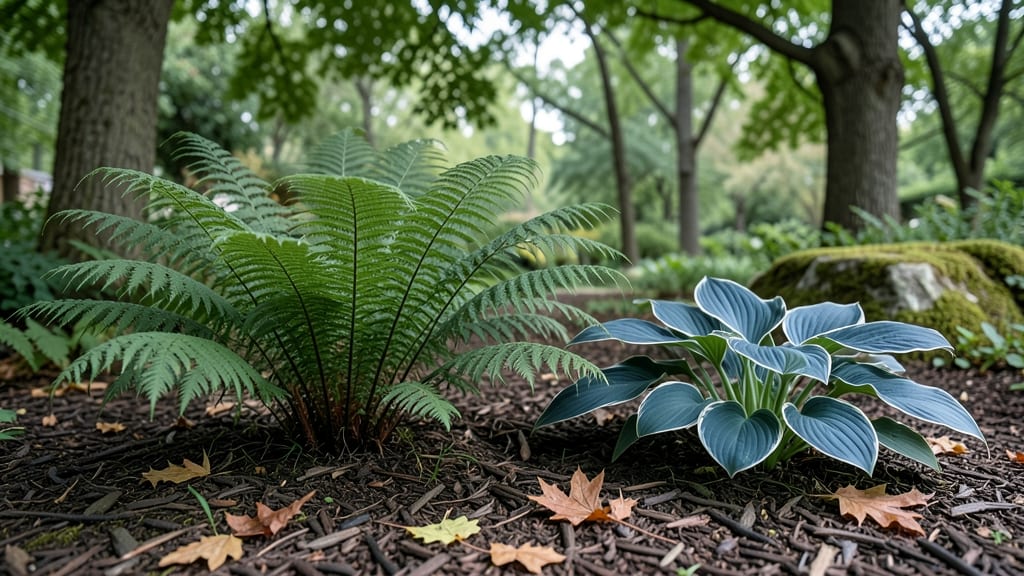
A fern and hosta shade garden transforms dark corners into lush, evergreen drama. 🌿 I planted mine under a mature oak where nothing else would grow, and now it’s the most vibrant spot in the yard—no sunlight required.
The secret lies in pairing textures, heights, and colors that play off each other while keeping maintenance simple.
Start with hostas as your foundation—their broad leaves create bold statements, while ferns add delicate movement and year-round interest. Layer in shade-loving companions like heucheras (for color), astilbes (for plumes), and foamflower (for early spring blooms).
The key? Mulch heavily with shredded bark to retain moisture and suppress weeds, since shade gardens can get damp and sluggy.
By early summer, your garden will feel like a secret woodland retreat—velvety hosta leaves contrasting with feathery fern fronds, all thriving without a single wilted leaf. The best part? Once established, these plants need minimal care beyond occasional watering and dividing every few years to keep them vigorous.
This design works for any shady spot, from under trees to north-facing walls. The only rule? Mix textures and heights—tall ferns behind hostas, low-growing ground covers in front—to create depth and movement that catches the eye from every angle.
📚 In This Guide
- What you need
- Instructions
- Tips and common mistakes
- Wrapping up and next steps
What you need
- ● Shade-tolerant plants: Fern varieties (e.g., Matteuccia struthiopteris, Dryopteris erythrosora) – 5-10 plants (depending on garden size)
- ● Hosta varieties (e.g., Hosta 'Blue Angel', Hosta 'Francee') – 3-8 plants (mix sizes for texture)
- ● Soil amendments: Peat moss or coconut coir – 2-3 bags (2 cu. ft. each)
- ● Compost (well-aged) – 1-2 bags (40 lb. each)
- ● Organic mulch (e.g., shredded bark) – 2-3 bags (2 cu. ft. each)
- ● Tools: Garden trowel – 1 (for transplanting)
- ● Garden fork – 1 (for amending soil)
- ● Pruners – 1 pair (for trimming)
- ● Wheelbarrow – 1 (for hauling materials)
- ● Garden hose with spray nozzle – 1 (for watering)
- ● Prerequisites: A shaded area (dappled or full shade, )
- ● Well-draining soil (amend if clay-heavy)
- ● Access to water (drip irrigation or hose)
- ● Decorative stones or gravel – 1-2 bags (for pathways or borders)
- ● Garden stakes or labels – 5-10 (for plant identification)
- ● Slow-release fertilizer (e.g., Osmocote) – 1 bag (for nutrient boost)
- ● Ground cover plants (e.g., Ajuga or Lamium) – 3-5 plants (for filling gaps)
- ● Watering can with rose attachment – 1 (for gentle hydration)
Step-by-step instructions for designing a fern and hosta shade garden
Here's how to create a lush, evergreen shade garden that thrives without sunlight.
🌿 Step 1: Select the Right Shade Conditions
First, assess your shade levels—hostas and ferns tolerate partial to full shade, but performance varies. Deep shade (less than 2 hours of sunMatteuccia struthiopteris and Dryopteris filix-mas, while hostas need 3-4 hours of dappled light for vibrant foliage. Walk your space hourly to track light patterns; you'll notice some areas stay dim all day while others get brief sunbreaks.
Test soil moisture by digging a 6-inch hole—if water pools or drains slowly, amend with 2-3 inches of compost to improve drainage. Hostas and ferns dislike soggy roots but also can't handle dry, compacted soil. Aim for soil that feels like a damp sponge when squeezed—it should hold shape but not drip.
🪴 Step 2: Plan Your Plant Placement and Spacing
Design your garden in layers: place taller ferns (3-4 feet) like Osmunda cinnamomea at the back, mid-height hostas (1-2 feet) in the middle, and low-growing ferns (Asplenium spp.) or hostas like Hosta 'Blue Angel' (6-8 inches) in the front. Space hostas 18-24 inches apart and ferns 12-18 inches apart—crowding leads to disease and stunted growth.
Group plants with similar water needs together. Ferns like Polystichum prefer consistently moist soil, while hostas like Hosta 'Halcyon' tolerate slightly drier conditions. Sketch your layout on graph paper, labeling each plant's mature size—this prevents future overcrowding and makes maintenance easier.
☀️ Step 3: Prepare the Soil and Plant with Care
Loosen soil to a depth of 12 inches with a garden fork, breaking up compacted layers. Mix in 3-4 inches of organic matter (compost or well-rotted leaf mold) to enrich the soil without overwhelming it. Hostas and ferns thrive in slightly acidic to neutral soil (pH 6.0-7.5); test your soil with a kit if unsure—amend with sulfur or lime as needed.
Dig holes twice as wide as the root ball but only as deep as the container. Gently remove plants from pots, tease apart roots if circling, and place them in the hole so the crown sits 1 inch below soil level. Backfill with native soil mixed with compost, pressing lightly to eliminate air pockets. Water deeply to settle the soil and encourage root contact.
💧 Step 4: Mulch and Maintain for Long-Term Success
Apply a 2-3 inch layer of mulch (shredded bark or leaf mold) around plants, keeping it 2 inches away from stems to prevent rot. Mulch conserves moisture, regulates soil temperature, and suppresses weeds—critical in shade gardens where grass struggles to grow. Replenish mulch annually in early spring to maintain coverage.
Water deeply once a week during the first growing season, aiming for 1 inch of water per week. Let soil dry slightly between waterings—hostas and ferns signal thirst by drooping or developing crispy leaf edges. Fertilize lightly in early spring with a balanced, slow-release fertilizer (10-10-10) to support new growth without encouraging leggy stems.
✂️ Step 5: Prune and Divide for Health and Beauty
Remove dead or yellowed fronds from ferns in early spring before new growth emerges. For hostas, cut back brown foliage to the ground in late winter or early spring, but leave any healthy leaves that persist—this protects emerging shoots from frost. Prune hostas after flowering to redirect energy into root and foliage growth for the next season.
Divide hostas every 3-4 years in early spring or fall when plants become overcrowded. Dig up the clump, separate into smaller sections with 3-5 leaves each, and replant immediately. Ferns rarely need dividing but can be split in early spring if they outgrow their space—simply separate the rhizomes and replant, ensuring each section has healthy roots.
Tips & tricks for perfect fern and hosta shade gardens
Between us, these evergreen plants are forgiving but finicky—here's how to turn your shade garden into a thriving showcase.
Layering Like a Pro: The 3-4 foot height difference between your tallest ferns and shortest hostas isn't just aesthetic—it creates microclimates. Place taller varieties like Osmunda cinnamomea where morning light might reach, as they'll cast beneficial shade on more delicate species below. I've seen Hosta 'Blue Angel' struggle when planted directly under dense ferns that block all light, so plan those sun-loving varieties toward the edges where they might catch brief sunbreaks.
Soil Test Secret: That 6-inch hole test reveals more than just drainage—press the soil firmly with your thumb. If it springs back slowly (like a wet sponge), your soil's perfect. If it stays indented, add 1 part perlite to 3 parts compost to the 2-3 inches of organic matter called for. I learned this the hard way after watching hostas develop yellowing leaves from compacted soil that couldn't breathe.
Planting Precision: The "twice as wide but only as deep" rule prevents root stress. When teasing apart circling roots, focus on the outer edges—inner roots are already established. For hostas, bury the crown 1 inch below soil level to prevent rot while ensuring it's not too deep, which can smother new growth. I use a small wooden stake to mark the proper depth before backfilling.
Mulch Maintenance: That 2-3 inch layer of mulch should look like a cozy blanket—not a suffocating quilt. Refresh it annually in early spring before new growth emerges, but never pile it against stems. I've seen fern fronds develop rot simply because mulch was touching the crown. A 2-inch buffer around stems keeps everything healthy while maintaining moisture.
Pro Tips for Fern And Hosta Shade Garden
- Between us, these evergreen plants are forgiving but finicky—here's how to turn your shade garden into a thriving showcase.
- Layering Like a Pro: The 3-4 foot height difference between your tallest ferns and shortest hostas isn't just aesthetic—it creates microclimates.
- Soil Test Secret: That 6-inch hole test reveals more than just drainage—press the soil firmly with your thumb.
Frequently asked questions
about creating a fern and hosta shade garden—because even the shadiest spots deserve drama! Here are answers to the most common queries to help you grow with confidence.What’s the best time of year to plant ferns and hostas?
Spring or early fall are ideal! Plant in spring (after the last frost) for a head start, or in early fall (6-8 weeks before the first frost) to let roots establish before winter. Avoid extreme heat or cold—both stress tender foliage.
How often should I water my shade garden?
Water deeply 1-2 times per week (more in extreme heat). Ferns and hostas prefer consistent moisture but hate soggy soil. Mulch (2-3 inches) retains humidity and suppresses weeds—just avoid piling it against stems.
Can I mix ferns and hostas with other shade plants?
Pair them with heucheras, astilbes, or lungworts for texture. Avoid sun-lovers like daylilies or lavender. For height, try Japanese painted ferns or Hosta ‘Blue Angel’—just ensure all plants thrive in low to no light.
Why are my hosta leaves turning yellow or slimy?
Yellowing leaves often signal overwatering or slugs. Check soil moisture (it should be damp, not drenched). For slugs, use organic barriers (copper tape) or diatomaceous earth. Brown edges? Likely underwatering or salt buildup—flush soil with rainwater.
Will my shade garden survive under a large tree?
Yes, but watch for root competition. Choose slow-growing hostas (like ‘Halcyon’) or ferns (e.g., Matteuccia struthiopteris). Amend soil with compost to improve drainage. If roots are invasive, plant away from the trunk (3+ feet out).
Pro Tip:
Label your plants! Hostas and ferns look similar at a glance, but varieties vary wildly in size, color, and care. A simple wooden stake or plant marker saves headaches later.
Wrapping up and next steps
Creating a fern and hosta shade garden is all about embracing the beauty of low-light spaces—no sunlight required! 🌿 With the right plants, soil prep, and a little creativity, you’ve got a thriving, evergreen oasis that’s easy to maintain.
Whether you’re a seasoned gardener or just starting out, this garden brings drama, texture, and tranquility to your outdoor space.
Ready to dive in? Start small—pick a shady corner, gather your materials, and let your green thumb shine! Before you know it, you’ll have a lush, low-maintenance retreat that’s the envy of the neighborhood. Happy planting! 🌱