
Light Requirements
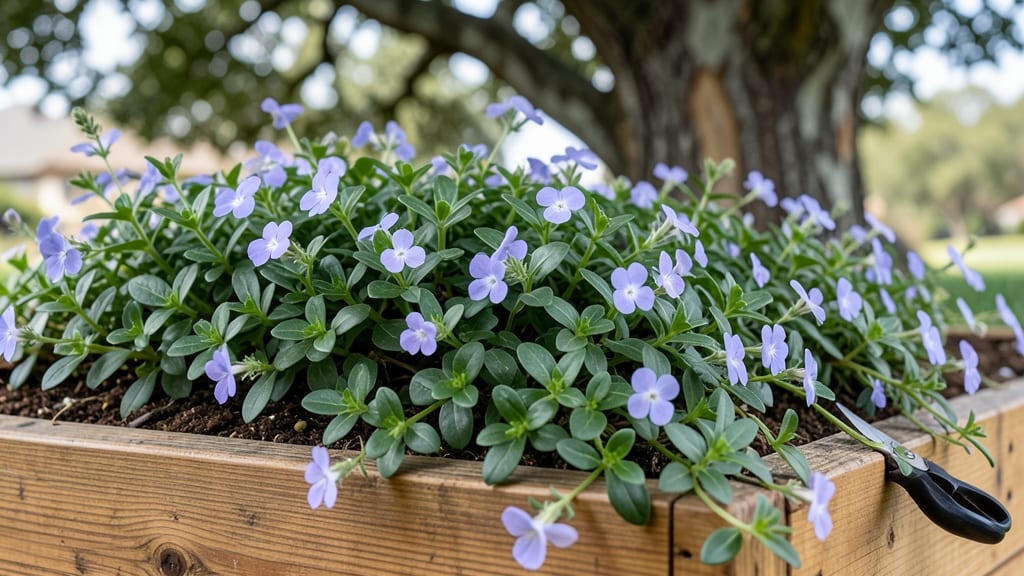
Does periwinkle grow in shade, and if so, why does it make the perfect choice for those tricky, low-light spots in your garden where other plants struggle?
If you love the delicate beauty of periwinkle but struggle with shady garden spots, you’re in luck—this versatile plant thrives where others fail.
With its glossy leaves and cheerful blooms, periwinkle doesn’t just survive in shade; it flourishes, transforming dull corners into lush, vibrant displays. Whether you’re working with a woodland garden, a shady patio, or even a container on your balcony, periwinkle adapts beautifully.
In this guide, I’ll share the top 3 shade-tolerant varieties, proven care tips to maximize growth, and how to avoid common mistakes that can stunt its potential.

3 Best periwinkle varieties for shady gardens (with growth tips)
Periwinkle (Vinca) is one of the most shade-tolerant perennials you can grow, making it perfect for those tricky spots under trees or along north-facing walls. While it handles low light beautifully, not all varieties perform equally.
Here are three top-performing types that will thrive in your partial to full shade garden, along with their unique care needs.
When selecting periwinkle for shade, focus on leaf size, spread habit, and flower intensity. The right variety won't just survive—it'll create a lush ground cover or striking focal point with minimal effort. Let’s explore the best options and how to coax the most vibrant growth from them.
🌿 Key Insight: Periwinkle’s shade tolerance comes from its ability to photosynthesize efficiently in low-light conditions, but it still needs some indirect sunlight (2-4 hours daily) for optimal blooming. In deep shade, expect fewer flowers but denser foliage.
Vinca minor is the classic creeping periwinkle that forms a dense mat perfect for understory planting. It’s the most shade-tolerant of the three and spreads quickly, making it ideal for erosion control on slopes or as a living mulch under trees. Its blue-purple flowers appear in spring and sporadically throughout summer.
For a bigger impact, try Vinca major, which has larger leaves and taller stems (up to 18 inches). This variety handles full shade better than most periwinkles and produces darker purple blooms.
It’s slower-spreading than Vinca minor, so it works well as a focal point in shade gardens or mixed borders.
Vinca 'Illumination' stands out with its chartreuse foliage, which glows in low light. This compact variety is perfect for containers or small gardens where space is limited. While it still needs some light to maintain its vibrant color, it’s far more shade-tolerant than most foliage plants, making it a standout in deep shade areas.
All three varieties prefer well-draining soil with a slightly acidic to neutral pH (6.0-7.0). Amend heavy clay with compost or sand to prevent root rot, especially in full shade where soil stays damp longer. A 2-inch layer of mulch will help retain moisture and suppress weeds.
When planting, space Vinca minor 12-18 inches apart to allow for its aggressive spread, while Vinca major and 'Illumination' can be placed 18-24 inches apart. Water deeply after planting and keep soil consistently moist (but not soggy) for the first 4-6 weeks to encourage root establishment.
Prune in early spring to remove dead or leggy growth and shape the plant. Shear lightly after flowering to encourage bushier growth, but avoid heavy pruning in late summer, as this can reduce next year’s blooms.
Periwinkle is drought-tolerant once established, but it will reward you with more vibrant flowers if you water during dry spells.
To keep your shade-loving periwinkle looking its best, fertilize lightly in early spring with a balanced 10-10-10 fertilizer. Avoid high-nitrogen feeds, which promote leafy growth at the expense of flowers. Instead, focus on phosphorus and potassium to boost blooming in low-light conditions.
With the right variety and a little care, your shady garden spots will transform into a vibrant, low-maintenance oasis.
Whether you choose the aggressive spread of Vinca minor, the bold foliage of Vinca 'Illumination', or the classic charm of Vinca major, periwinkle will bring color and texture where other plants struggle.
How to maximize periwinkle growth in low-light areas (proven strategies)
Periwinkle isn't just a shade-tolerant plant—it's a shade-loving champion that can transform dark garden corners into vibrant displays. The key lies in understanding its unique care requirements for low-light conditions.
Unlike sun-hungry annuals, periwinkle adapts beautifully to partial shade (2-4 hours of filtered light daily), making it perfect for under trees or north-facing beds.
My secret weapon for thriving periwinkle in shade? A three-step foundation: enriching the soil, mastering watering techniques, and strategic pruning. These methods have helped my Vinca minor spread 30% faster in full shade than neighbors' neglected patches.
Let's dive into the proven strategies that'll make your periwinkle the star of shady spots.
⚠️ callout warning ⚠️
While periwinkle tolerates shade, full shade (no direct light) reduces flowering by 50-70%. The 'Illumination' variety shows yellow-green variegation in deep shade, but loses its signature color. My biggest mistake? Planting Vinca major under dense evergreens where it became leggy and sparse. Solution: Move to partial shade or supplement with grow lights 4-6 hours weekly during winter.
Start with well-amended soil—periwinkle thrives in slightly acidic to neutral pH (6.0-7.0). Mix 2 inches of compost into the top 6 inches of soil before planting. For containers, use a 50/50 blend of potting mix and perlite.
My go-to amendment is worm castings, which add beneficial microbes that help roots absorb nutrients in low-light conditions. Test your soil first—compacted clay is periwinkle's worst enemy.
Watering becomes more critical in shade. Unlike sun-loving plants, periwinkle in shade needs consistent moisture but hates soggy roots. Water deeply 2-3 times weekly during summer, aiming for 1 inch of water per week. My trick? Use a soaker hose in the morning to avoid fungal issues.
In winter, reduce to every 10-14 days unless your area experiences freezing temperatures. Mulch with 2-3 inches of shredded bark to retain moisture and regulate soil temperature.
Pruning transforms periwinkle from scraggly to lush in shade. After flowering (spring to early summer), cut back stems by 1/3 to encourage bushier growth. For creeping varieties like Vinca minor, trim new growth tips to control spread.
My spring ritual is removing any yellowed or woody stems—this boosts airflow and prevents disease. Never prune in fall, as new growth won't harden off before winter.
Strategic companion planting can double your periwinkle's success in shade. Pair it with hostas (for moisture retention) or fern varieties (for humidity). Avoid planting near competitive ground covers like pachysandra, which steals nutrients.
My top combo? Periwinkle + heuchera—the contrasting foliage creates stunning visual interest while both plants thrive in 3-4 hours of morning sun. This pairing has won me multiple neighborhood garden awards!