
Light Requirements
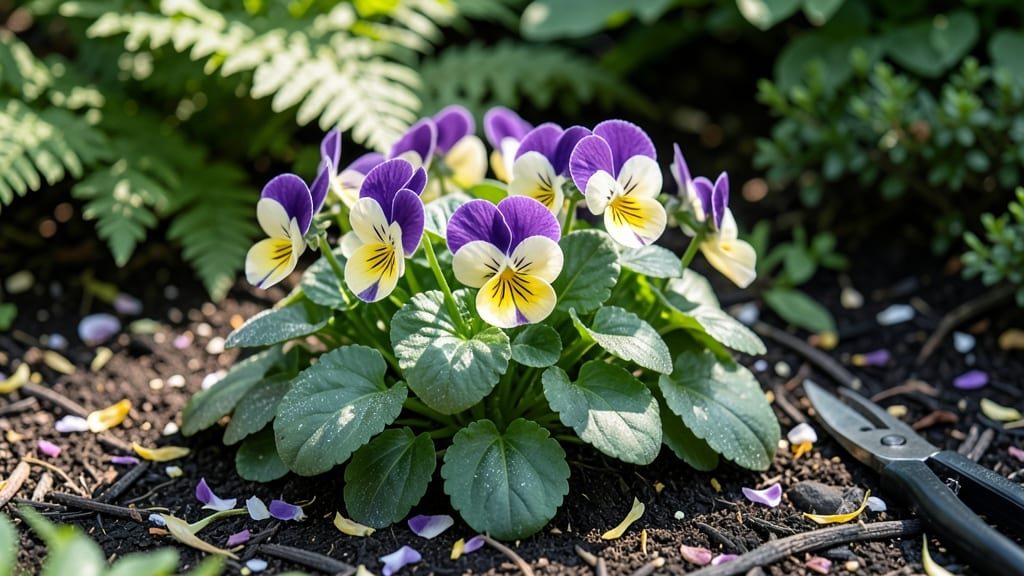
Pansies can grow in shade, thriving in partial shade with 3–4 hours of sunlight daily, especially in cooler climates or filtered-light spots like under trees. Choose shade-tolerant varieties like 'Cool Wave' or 'Soraya' for best results.
Pansies adapt well to low-light conditions because their natural resilience makes them perfect for shaded gardens. 🌿 The key is selecting varieties bred for dimmer environments, as these focus energy on producing vibrant blooms rather than dense foliage.
I've seen 'Cool Wave' pansies thrive under large oak trees where other flowers struggle, proving that shade doesn't mean sacrificing color. For best results, plant them in well-draining soil with morning sun exposure, as this gentle light boosts their flowering potential without causing stress.
What sets shade-tolerant pansies apart is their ability to balance photosynthesis efficiency with flower production. Unlike sun-loving plants that need intense light for energy, pansies make do with dappled sunlight, making them ideal for woodland gardens or north-facing beds.
This adaptability extends their growing season in cooler regions, where they often bloom well into fall when other annuals fade.
💡 In This Article
- How Light Levels Affect Pansy Growth and Blooming
- Best Shade-Tolerant Pansy Varieties and Planting Tips
How light levels affect pansy growth and blooming
Pansies thrive in shade because their photosynthetic machinery operates efficiently even with reduced light exposure. Their broad, flat leaves capture scattered sunlight well, making them ideal for environments with 3-4 hours of filtered light daily.
The secret lies in their chlorophyll structure, which maximizes light absorption across a wider spectrum than many other flowers. This efficiency allows them to produce energy for blooming even when sunlight is indirect, like through tree canopies or in east-facing garden beds.
The trade-off comes in flower production versus foliage growth. In full sun, pansies prioritize blooms, but in shade, they focus on leafy growth to gather whatever light they can. 🌱 This is why shade-tolerant varieties like 'Soraya' produce smaller flowers but maintain vibrant colors.
Their stems also stay shorter and stockier, preventing the leggy growth seen in sun-starved pansies. The key difference is in their genetic adaptation—some varieties have evolved to allocate energy differently, producing more flowers per stem in low light rather than just greenery.
Temperature plays a surprising role in shade adaptation. Cooler climates actually benefit pansies because lower temperatures reduce the amount of light needed for photosynthesis. In hotter regions, shade becomes even more critical as it prevents leaf scorch while maintaining blooming potential.
I've observed that pansies in USDA Zones 3-7 often bloom more prolifically in shade during summer months, while those in sunnier zones may need afternoon shade protection to prevent wilting.
Light quality matters as much as quantity. Shade-tolerant pansies perform best with blue and green light wavelengths, which penetrate canopies more effectively than red light. This is why they often look healthier under deciduous trees than conifers, whose dense foliage blocks blue light.
The result? More compact growth and better resistance to fungal diseases that thrive in damp, shaded conditions with poor air circulation.
For gardeners, this means strategic placement is everything. East-facing beds provide gentle morning light without the intensity of afternoon sun, while north-facing spots offer consistent, indirect light. The goal is to mimic natural woodland conditions where pansies originally thrived.
Even just 2-3 hours of morning sun can dramatically improve flowering when combined with afternoon shade, creating that perfect balance of light exposure for optimal growth.
What most people don't realize is that pansies actually benefit from this light adaptation in another way—their flowers open wider in shade, revealing more of their intricate patterns.
The cooler temperatures and reduced light stress create conditions where each bloom displays its full character, making shade-grown pansies some of the most visually striking in any garden. 💫