
Size
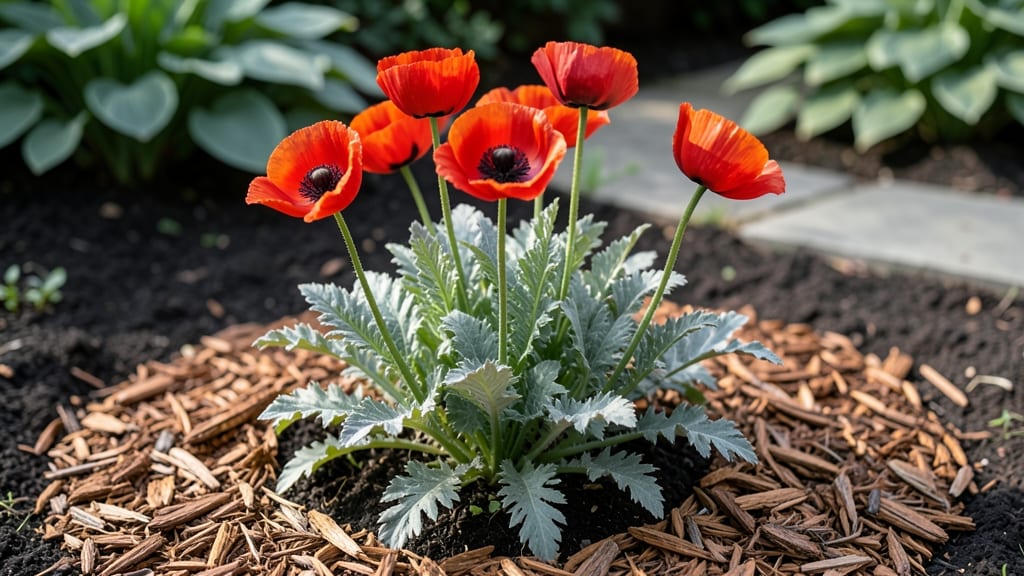
Poppies grow in shade only in partial shade conditions, thriving best with 3-6 hours of indirect sunlight daily. Oriental poppies tolerate low light better than California poppies, while Iceland poppies adapt to dappled shade but may produce fewer blooms. Deep shade stunts growth and reduces flowering.
While poppies are often associated with sunny meadows, some varieties can thrive in shadier conditions—though they'll never match their full-sun potential. 🌿 The key lies in their natural habitats: Oriental poppies, for example, evolved in regions with cooler climates and partial shade, while California poppies (like the iconic golden poppy) demand bright light.
Iceland poppies, though hardy, will still produce more blooms when they get morning sun and afternoon shade. If you're working with limited light, focus on soil drainage and moisture control—poppies hate soggy roots, even in shade.
For best results, position your shade-tolerant poppies near east-facing windows or under deciduous trees where they'll catch gentle morning light. Mulching with compost helps retain moisture while preventing root rot, a common issue in shady spots.
Remember that even the hardiest poppies will struggle in deep, dense shade—think dappled light from a canopy rather than the dark corners of your garden.
💡 In This Article
- How Light Affects Poppy Growth and Flowering
- Best Shade-Tolerant Poppy Varieties for Low-Light Gardens
How light affects poppy growth and flowering
Poppies rely on photosynthesis to convert light into energy, but their efficiency drops dramatically in deep shade. The chlorophyll in poppy leaves absorbs light most effectively in the blue (400-500 nm) and red (600-700 nm) wavelengths—both of which are limited in shady conditions.
When poppies receive less than 3 hours of indirect light daily, their chlorophyll production slows, leading to pale, weak stems and sparse foliage.
This is why full-sun poppies like California poppies (Eschscholzia californica) grow leggy and flop over in low light—without sufficient light, their stems can't develop the lignin needed for structural support.
The intensity of shade matters just as much as duration. Dappled shade (light filtering through tree leaves) provides intermittent light, which poppies can tolerate better than dense shade (like under evergreens).
For example, Iceland poppies (Papaver nudicaule) can handle 4-5 hours of dappled light but will produce only 30-50% of their usual blooms in deep shade. The reason? Shade reduces the plant's ability to synthesize anthocyanins, the pigments responsible for vibrant flower colors.
Without enough light, poppies may produce pale, underdeveloped blooms—or none at all. 🌸
Even shade-tolerant varieties like Oriental poppies (Papaver orientalis) need strategic placement. Their deep roots store energy, allowing them to survive in partial shade (3-6 hours of indirect light), but their flowering cycle is triggered by light exposure.
In full shade, these poppies may still grow leaves but often skip flowering entirely. The trade-off? Their foliage becomes broader and more lush, but the trade-off is a lack of the dramatic blooms gardeners love.
For instance, a Papaver orientale planted under a 50% shade canopy might reach 18-24 inches tall with dense leaves but produce only 10-15 blooms per stem instead of the usual 20-30.
Soil moisture plays a critical role in shade-grown poppies. Without sufficient light, poppies can't regulate water uptake efficiently, leading to root rot in damp conditions. This is why well-draining soil is non-negotiable—even shade-loving poppies need their roots to breathe.
For example, Iceland poppies in clay-heavy soil with poor drainage will wilt within 2-3 weeks of planting, regardless of light conditions. The solution? Amend soil with sand or perlite to improve aeration, and mulch with gravel or bark chips to prevent moisture buildup.
Temperature also interacts with light to affect poppy growth. Shade-cooled soil stays 5-10°F cooler than full-sun areas, slowing metabolic processes. This is why Oriental poppies, which prefer cool climates, thrive in partial shade—they avoid the stress of 90°F+ temperatures that full-sun poppies endure.
In contrast, California poppies (native to arid regions) wilt in shade because their roots can't compensate for the lack of light with adequate heat. The ideal balance? Morning sun and afternoon shade in moderate climates, where temperatures stay between 60-75°F.
Here’s what happens when you push the limits: In deep shade (less than 2 hours of light), poppies may survive for 1-2 years but become stunted, with stems reaching only 6-12 inches tall and leaves turning yellowish-green. Their energy goes into basic survival rather than reproduction.
For comparison, the same poppy in full sun can grow 2-3 feet tall with bold, dark green leaves and abundant blooms. The difference? Sunlight fuels photosystem II in chloroplasts, which is 3-4x more efficient in poppies than in shade-adapted plants like ferns.
Pro tip: If you’re growing poppies in shade, supplement with a reflective surface (like white gravel or a mirror) to bounce extra light onto the plants. This can boost growth by 15-25% without direct sun exposure. Just avoid overhead shade structures—poppies need light from multiple angles to thrive. 🌿