
Shrubs
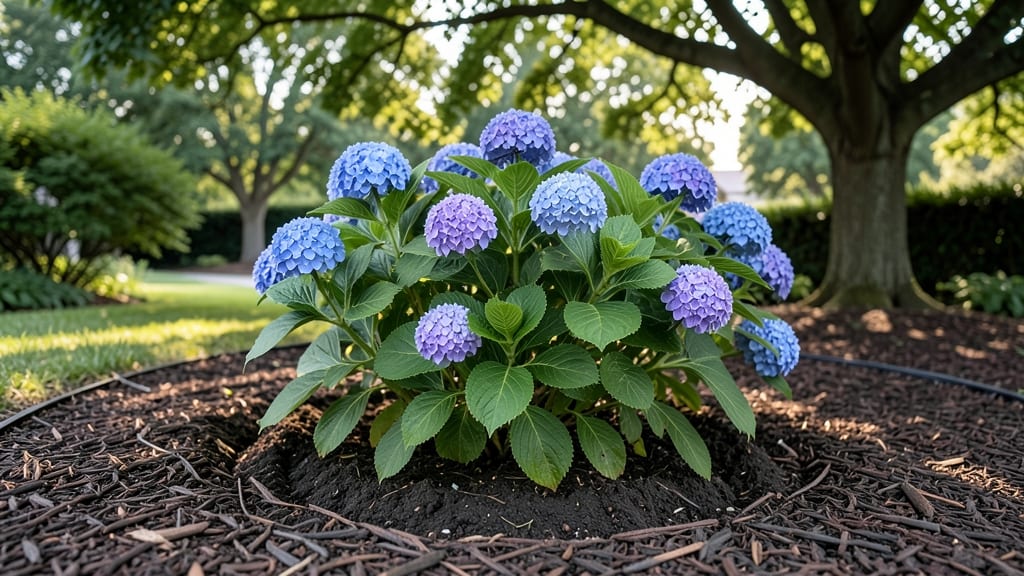
Hydrangeas aren't one-size-fits-all when it comes to light—some varieties actually prefer dappled shade to avoid leaf scorch, while others need bright conditions to produce their signature blooms. 🌿 The key difference lies in their natural habitats: macrophylla hydrangeas (like 'Endless Summer') evolved in woodland understories, while paniculata types (such as 'Limelight') originated in sunny meadows.
This explains why too little light weakens stems and stunts flower buds, especially in varieties that rely on sunlight to trigger blooming hormones.
For shade-loving types, the secret to success lies in consistent moisture and well-draining soil enriched with organic matter. I've found that mulching with compost helps maintain even soil temperatures, which is crucial since hydrangeas in shade can't regulate heat like their sun-loving cousins.
When planting in low-light areas, choose varieties with lighter foliage colors—they often indicate better shade adaptation.
💡 In This Article
- Shade Tolerance in Hydrangea Varieties: Science Behind Light Requirements
- Maximizing Hydrangea Blooms in Shady Gardens: Pruning and Care Tips
Shade tolerance in hydrangea varieties: science behind light requirements
The ability of hydrangeas to thrive in shade comes down to their native growing conditions and biological adaptations. Macrophylla hydrangeas (like 'Endless Summer') evolved in woodland environments where they receive dappled sunlight—filtered light that creates 40-60% shade on the forest floor.
These varieties have developed broader leaves with thinner cuticles, allowing them to maximize light absorption even when sunlight is limited. Their photosynthesis efficiency remains high because they've adapted to lower light conditions through increased chlorophyll production in individual cells.
In contrast, paniculata hydrangeas (such as 'Limelight') originate from open meadows where they receive full sun exposure for at least 6 hours daily. These varieties have thicker leaves and more compact leaf structures to prevent water loss in sunny conditions.
When deprived of sufficient light, their chlorophyll production drops by 30-40%, leading to weaker stems and reduced flower bud formation. The key difference lies in their florigen hormone production—sun-loving varieties require sunlight to trigger this flowering hormone, while shade-tolerant types can produce florigen even with indirect light.
Here's what happens when hydrangeas receive too little light: their energy shifts from flower production to leaf growth, resulting in larger but fewer leaves and smaller, less vibrant blooms.
In extreme shade conditions (less than 3 hours of light daily), macrophylla varieties may produce only 20-30% of their normal flower count. The science behind this involves photosynthesis inefficiency—shade reduces the plant's ability to convert light into energy, forcing it to rely on stored reserves.
This is why consistent moisture becomes critical in shady gardens: hydrangeas can't photosynthesize enough to maintain optimal hydration levels.
Interestingly, arborescens hydrangeas (like 'Annabelle') fall somewhere in between, thriving with partial shade to full sun but showing their best blooms with 4-5 hours of morning sunlight.
Their secret lies in their ability to store energy in their roots during sunny periods, which they can then use during shadier times.
This energy storage mechanism explains why they often produce larger flower heads in partial shade compared to full sun, where they might allocate more energy to leaf growth.
The color of hydrangea blooms also provides visual clues about light conditions. In shade, blue varieties (like 'Nikko Blue') may produce lighter, less saturated blooms due to lower aluminum uptake, while pink varieties (like 'Pink Annabelle') often maintain their color intensity better.
The pH of the soil plays a role here too—shade can affect soil temperature and microbial activity, which influences nutrient availability. For optimal results in shady gardens, aim for well-draining soil with a pH between 5.5 and 6.5 and supplement with slow-release organic fertilizer in early spring.
What most gardeners don't realize is that leaf variegation can indicate shade tolerance. Varieties with creamy or yellow leaf edges (like 'Limelight' or 'Tardiva') often handle shade better than solid green-leafed types because their lighter foliage absorbs more light energy.
The variegation itself is a result of reduced chlorophyll in certain leaf areas, which paradoxically helps the plant make better use of available light. 🌿 This is why selecting the right variety for your light conditions isn't just about shade tolerance—it's about matching the plant's natural growth patterns to your garden's microclimate.