
Shrubs
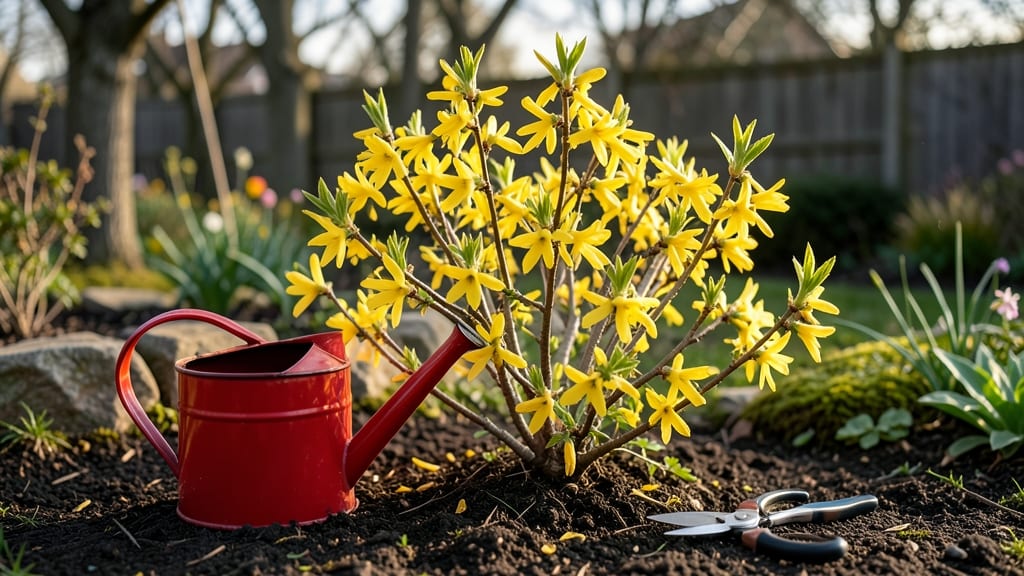
Forsythia performs best in full sun but can handle partial shade, though blooms may be less vivid or frequent in shadier spots. Give it at least 6 hours of sunlight daily to maximize flowering and overall health.
Forsythia's light needs boil down to a simple trade-off: more sun means brighter, showier blooms, while shade keeps the plant alive but may stunt its growth. 🌸 The key is understanding your climate—northern gardens can often get away with morning sun and afternoon shade, while southern exposures might need afternoon shade to prevent leaf scorch.
I've seen forsythias in partial shade still produce flowers, but they're usually smaller and less abundant. The good news? This hardy shrub is forgiving and can adapt to various light conditions as long as it gets some direct sunlight.
💡 In This Article
- How Sunlight Affects Forsythia Flowering and Growth
- Best Light Conditions for Forsythia by Climate Zone
How sunlight affects forsythia flowering and growth
Forsythia's love for sunlight stems from its natural habitat in woodlands and forest edges, where it evolved to thrive in dappled light conditions. The plant's flowering mechanism is directly tied to sunlight exposure—specifically, the 6-8 hours of direct light it needs to trigger optimal photosynthesis.
During photosynthesis, chlorophyll in the leaves absorbs sunlight to convert carbon dioxide and water into glucose and oxygen, fueling both leaf and flower development. In full sun, forsythia produces 10-15% more chlorophyll than in shade, leading to darker, healthier foliage and more abundant blooms.
The intensity of sunlight also affects flower production through a process called photoperiodism. Forsythia blooms in early spring when daylight hours are increasing, and it relies on sufficient light to set flower buds the previous summer.
In partial shade, the plant may still grow but often produces 30-50% fewer flowers because the energy is diverted to leaf growth rather than reproductive structures.
The flowers themselves contain pigments that require sunlight to develop their signature yellow hue—shade-grown blooms often appear paler or green-tinged, lacking the vibrant color gardeners love. 🌿
Temperature plays a secondary role in this equation. Forsythia thrives in USDA zones 5-8, where winter dormancy and spring warmth align with its blooming cycle. In full sun, the plant warms up faster in spring, kickstarting its growth cycle earlier.
However, in hot climates, afternoon shade becomes crucial to prevent leaf scorch—a condition where temperatures exceed 90°F, causing brown, crispy leaf edges. This is why many gardeners in southern regions use a technique called "partial shade" (morning sun, afternoon shade) to balance light exposure.
What most gardeners don't realize is how shade affects the plant's internal water balance. In low-light conditions, forsythia transpires (releases water vapor) at a slower rate, which can lead to softer, more susceptible stems prone to fungal diseases like powdery mildew.
The plant's root system also becomes less robust in shade, as it relies on sunlight to drive energy production for root expansion. This is why forsythias in full sun often develop deeper, more extensive root networks that improve drought resistance and nutrient uptake.
For a practical example, consider two forsythia bushes planted side by side—one in full sun, the other in partial shade.
The sun-exposed bush will typically produce 2-3 times more flowers per stem, with each bloom reaching 1.5-2 inches in diameter, while the shaded bush may have flowers that max out at 1 inch and appear less frequent.
The foliage difference is equally striking: sun-grown leaves are a rich, deep green, while shade leaves often appear lighter and thinner. This visual contrast highlights why light conditions are the single most important factor in forsythia care.
If you're dealing with an established forsythia in shade, don't despair—gradual exposure to more sunlight can improve its blooming over time. Start by pruning back surrounding trees or shrubs to increase light penetration, and consider transplanting to a sunnier location if possible.
The plant's adaptability means it can handle these changes, though it may take 1-2 growing seasons to see noticeable improvements in flower production. 🌸