
Light Requirements
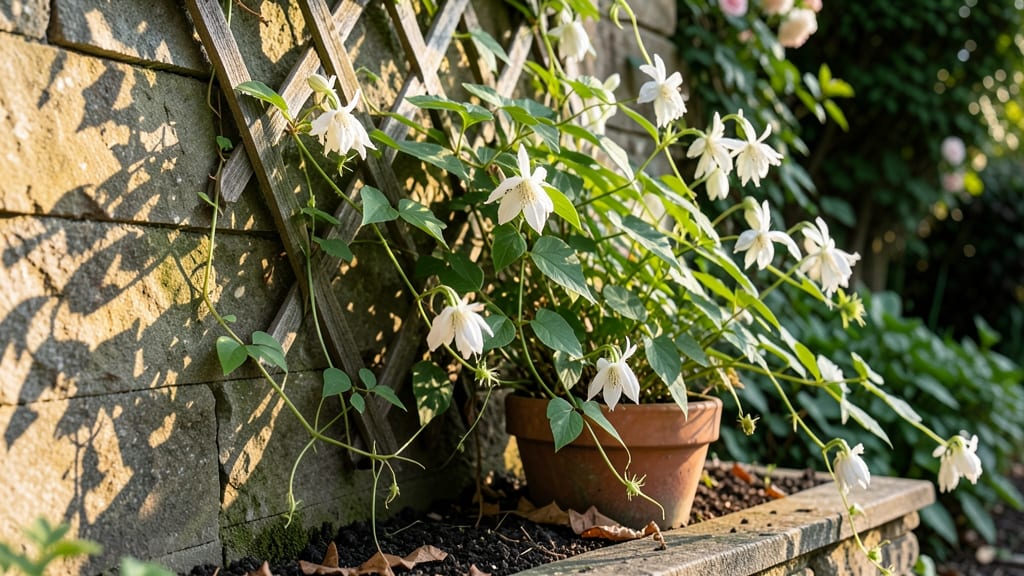
Do clematis like shade—or do they actually prefer it more than you think? My own clematis flourishes under morning sun and afternoon shade, producing lush blooms without the stress of scorching heat.
Most varieties tolerate 3-6 hours of direct sun daily, especially in hotter climates where afternoon shade prevents leaf scorch. Dwarf clematis like 'Jackmanii' handle even less light, while large-flowered types need slightly more.
The key is positioning: plant them near trees or structures that provide filtered light, keeping the base shaded to protect tender roots.
You'll notice healthier foliage and more consistent blooming when you match light to variety. A simple trick is to stake your vine near a north-facing wall or under a deciduous tree—this gives young plants the shade they crave while still letting them soak up winter sun.
Just avoid deep, dense shade where they'll struggle to flower at all.
For shaded spots, choose shade-tolerant varieties like 'Nelly Moser' or 'Vyvyan Pennell'—they'll reward you with vibrant blooms even where others fail. The secret? Well-draining soil and regular feeding to compensate for lower light. Your clematis will thank you with stronger growth and more flowers than you'd expect in partial shade.
Root Causes Of Light Struggles
Clematis plants may appear to "like shade" when they’re actually suffering from suboptimal light conditions—not just full shade itself. Understanding the science behind their light needs helps diagnose why they might be struggling and how to fix it. Here’s why clematis often underperform in low-light spots:
Clematis thrive in partial shade to full sun because their leaves rely on photosynthesis to produce energy. When deprived of adequate light:
- Chlorophyll breakdown: Low light reduces chlorophyll production, causing pale, yellowing leaves (chlorosis). Without enough sunlight, the plant can’t convert CO₂ and water into glucose efficiently.
- Weak stems: Photosynthesis fuels stem strength. In shade, clematis produce long, leggy, and weak vines because they stretch toward any available light, a phenomenon called etiolation.
- Stunted blooms: Flower buds form in response to light exposure. In deep shade, the plant prioritizes leaf growth over blooming, leading to sparse or no flowers.
Actionable fix: Ensure your clematis gets at least 4–6 hours of direct sunlight daily, especially in the morning or late afternoon. If shade is unavoidable, choose a light, airy spot (e.g., under deciduous trees that provide dappled shade in summer but allow sun in winter).
Clematis are cool-season plants that often struggle in hot, humid shade because:
- Heat stress: Shady areas can trap moisture and heat, creating a microclimate that encourages fungal diseases (like powdery mildew) and bacterial infections. Clematis leaves wilt or develop brown patches when overheated in stagnant air.
- Poor air circulation: Dense shade reduces airflow, trapping humidity against the foliage. This is a breeding ground for Botrytis blight, a common clematis killer.
- Root zone issues: Shady spots often have cooler, wetter soil, which can lead to root rot if drainage is poor. Clematis roots need well-draining, slightly acidic soil (pH 6.0–7.0) to thrive.
Actionable fix:
- ✅ Mulch properly: Use organic mulch (3–4 inches) like shredded bark or straw to regulate soil temperature and retain moisture without suffocating roots.
- ✅ Prune for airflow: Trim back overgrown neighboring plants or vines to improve circulation around your clematis.
- ✅ Choose the right location: Avoid south-facing walls in hot climates—opt for east or north-facing spots that offer indirect light.
Clematis are heavy feeders and compete aggressively for nutrients in shaded environments. Here’s why they often fail:
- Limited nutrient uptake: In low light, roots grow slower and absorb fewer essential nutrients (like phosphorus and potassium), which are critical for flowering and vine strength.
- Weed and grass suppression: Shady gardens often host weeds or ground covers that outcompete clematis for water and nutrients. Their shallow root systems can’t penetrate compacted or nutrient-poor soil.
- Slow decomposition: Organic matter breaks down slower in cool, shaded soil, leading to a nutrient deficit over time.
Actionable fix:
- 💡 Fertilize strategically: Use a balanced, slow-release fertilizer (10-10-10 or 12-12-12) in early spring and again after flowering. Add a phosphorus boost (5-10-10) to encourage blooming.
- 💡 Improve soil health: Amend the soil with compost or worm castings before planting. Clematis love loamy, well-aerated soil—avoid clay or sandy spots.
- 💡 Mulch with nutrient-rich materials: Use leaf mold or well-rotted manure to enrich the soil gradually.
Not all clematis are created equal! Some varieties are naturally shade-tolerant, while others require full sun to perform well. Misjudging your plant’s needs leads to frustration:
- Large-flowered hybrids (e.g., 'Jackmanii', 'Nelly Moser'): These need full sun (6+ hours) to produce vibrant blooms. In shade, they may flower poorly or revert to green, leafy growth.
- Viticella and Montana types (e.g., 'Vyvyan Bowles', 'Montana Purple'): These are more shade-tolerant (4–6 hours of light) and can handle dappled shade better than their large-flowered cousins.
- Wrong hardiness zone: Some clematis varieties (like Clematis montana) thrive in USDA Zones 4–9 but may struggle in hot, humid shade if not given proper airflow.
Actionable fix:
- 🔍 Match the plant to the spot: If your garden is shady, choose Clematis armandii, viticella, or Montana types. For sunny areas, opt for large-flowered hybrids.
- 📝 Check the tag: Always verify the light requirements on the nursery tag or plant label before purchasing.
- 🌍 Consider microclimates: Even a north-facing wall can provide enough light for shade-tolerant clematis—test the spot for 4+ hours of indirect light before planting.
Reviving Your Clematis in Low Light
Clematis may love the sun, but with the right adjustments, you can help them thrive even in partial shade. Whether your garden has dappled sunlight or deep shade, these solutions will keep your vines happy and blooming. Let’s tackle common issues and turn them into opportunities for lush growth!
If your clematis is struggling with weak stems and sparse blooms, it’s likely craving more light. Here’s how to give it a boost:
🔥 Step 1: Assess Your Light Conditions
- Check sunlight hours: Clematis needs at least 4–6 hours of sunlight daily for optimal growth. Use a light meter or observe shadows in your garden.
- Identify obstructions: Trees, buildings, or tall plants might be blocking sunlight. Trim overhanging branches or relocate the clematis if possible.
🍳 Step 2: Optimize Light Exposure
- Prune nearby foliage: Thin out dense branches or leaves that cast heavy shade. Aim for partial shade with filtered light—think dappled sunlight through trees.
- Choose the right location: If moving isn’t an option, place the clematis near a south- or west-facing wall to maximize reflected light.
👨🍳 Step 3: Boost Nutrients for Low-Light Growth
- Use a balanced fertilizer: A 10-10-10 or 20-20-20 formula encourages leafy growth in shadier spots. Apply in early spring and mid-summer.
- Add compost or worm castings: Improves soil drainage and nutrient uptake, helping the plant make the most of available light.
⏰ Prevention Tip: Plant clematis in early spring when sunlight is strongest, giving it a head start before summer shade sets in.
Partial shade can limit flowers, but these tweaks will coax more blooms out of your clematis:
🌡️ Step 1: Pick the Right Variety Not all clematis are equal! Some varieties tolerate shade better:
- ‘Nelly Moser’ (purple blooms, early to mid-season)
- ‘Jackmanii’ (deep red, thrives in partial shade)
- ‘Vyvyan Pennell’ (blue, great for dappled light)
🎯 Step 2: Prune for Flowering Success
- Group 1 (Early bloomers): Prune right after flowering to avoid cutting off next year’s buds.
- Group 2 (Large-flowered): Prune in early spring to encourage new growth and blooms.
- Group 3 (Late bloomers): Prune in early spring to shape and promote airflow.
✨ Pro Tip: Deadhead spent blooms to redirect energy into new flowers, even in low light.
Yellow leaves often signal stress. Here’s how to revive your clematis:
💡 Step 1: Check for Overwatering
- Test soil moisture: Stick your finger 2 inches deep—if it’s soggy, reduce watering. Clematis in shade needs well-draining soil to prevent root rot.
- Improve drainage: Mix in perlite or sand if your soil is heavy clay.
🔪 Step 2: Adjust Care for Shade
- Reduce fertilizer: Too much nitrogen in low light leads to leafy growth but fewer blooms. Switch to a low-nitrogen, high-phosphorus fertilizer (e.g., 5-10-10).
- Mulch properly: Use 2–3 inches of organic mulch (like wood chips) to retain moisture and regulate soil temperature.
🌡️ Prevention Tip: Water deeply but less frequently—clematis in shade stays moist longer, so avoid daily sprinkling.
With these adjustments, your clematis can adapt to partial shade while still putting on a stunning show. Patience and the right care will make all the difference!
Frequently asked questions
Can clematis grow at all in full shade?
Most clematis varieties struggle in full shade and may produce only sparse foliage with little to no blooms. However, a few shade-tolerant types like Clematis armandii or Clematis montana can survive with 2-3 hours of indirect light daily. For best results, choose these varieties if your garden is heavily shaded.
How do I know if my clematis is getting enough light?
Check for these signs: healthy vines should have dark green leaves and strong stems. If leaves appear pale, yellow, or the plant stretches excessively toward light, it needs more sun. A simple test is to observe your clematis for 4-6 hours of direct sunlight—this is the ideal range for most varieties.
Will morning sun and afternoon shade work for clematis?
This is often the best setup for clematis, especially in hot climates. Morning sun provides gentle energy while afternoon shade prevents leaf scorch. For optimal growth, aim for 3-4 hours of morning sun combined with filtered afternoon shade from trees or structures.
Can I move an established clematis to a sunnier spot?
Yes, but do it gradually to avoid shocking the plant. Start by pruning back 1/3 of the foliage and moving it to a slightly sunnier location for 2-3 weeks before its final position. Water thoroughly after transplanting and monitor for stress signs like wilting or yellowing leaves.
What's the best way to tell if my clematis variety needs sun?
Check the plant tag or variety name—large-flowered hybrids (like 'Jackmanii') need full sun, while viticella or Montana types tolerate partial shade. Also look at the growth pattern: leggy, sparse vines indicate insufficient light, while compact growth with abundant blooms means it's happy.