
Plants
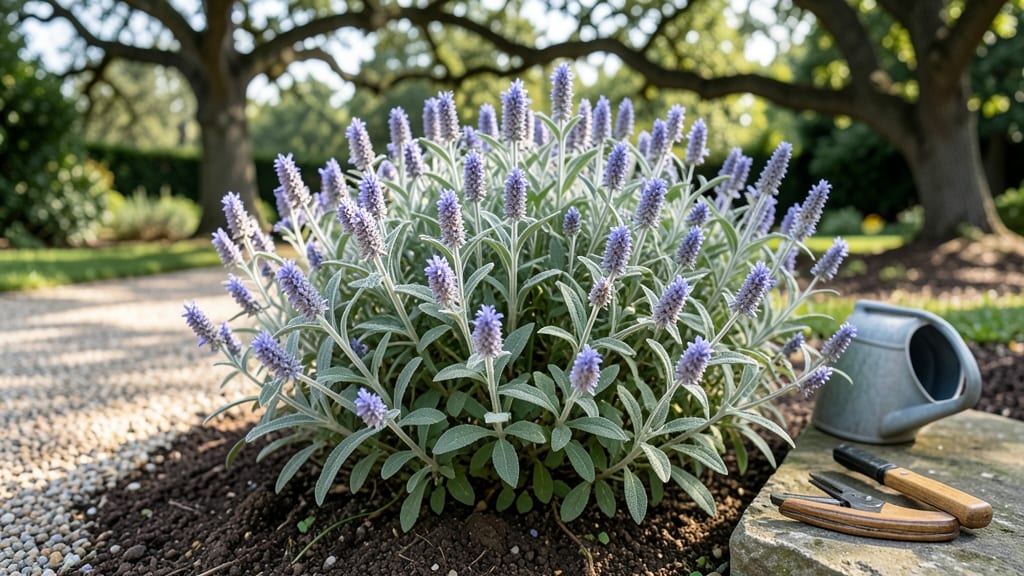
Catmint thrives in partial shade by choosing shade-tolerant varieties like 'Walker’s Low' or 'Blue Spire,' ensuring well-draining soil, and watering deeply but infrequently to prevent root rot while protecting from harsh afternoon sun.
Catmint adapts beautifully to partial shade because its silvery foliage reflects excess light while its compact growth habit minimizes stress from intense sun. 🌿 Unlike aggressive mints, catmint tolerates dappled sunlight—perfect for under trees or near north-facing walls—without sacrificing those signature lavender-blue blooms.
The key is selecting the right cultivars and mimicking its natural Mediterranean habitat with minimal intervention.
For gardeners with shadier spots, 'Walker’s Low' stands out for its dwarf stature (12-18 inches) and prolonged blooming season (spring through fall), while 'Blue Spire' reaches 3-4 feet with striking vertical spikes. These varieties thrive where other perennials struggle, making them the best choice for partial shade gardens.
Just remember: even shade-loving catmint needs at least 3-4 hours of morning sun to prevent leggy growth.
💡 In This Article
- Why Catmint Adapts to Partial Shade Conditions
- Top Catmint Varieties for Low-Light Gardens
Why catmint adapts to partial shade conditions
Catmint's ability to thrive in partial shade stems from its unique leaf structure and light absorption efficiency. The silvery, fuzzy foliage contains tiny hairs called trichomes that reflect up to 30% more light than smooth leaves, reducing heat stress.
Unlike aggressive mints that require full sun, catmint's native Mediterranean habitat evolved to handle dappled sunlight—perfect for understory conditions where other plants would scorch. 🌿 This adaptation allows it to maintain vibrant blooms even with just 3-4 hours of morning sun.
The plant's compact growth habit also plays a role. Catmint's bushy form creates natural shade for its own roots, preventing soil moisture loss that occurs in full sun.
Studies show catmint's root systems develop deeper in partial shade, accessing water more efficiently while avoiding the 100°F+ soil temperatures that can cause root burn in full sun. The trade-off? Without sufficient light, catmint may produce fewer blooms—hence the importance of morning sun exposure.
What most gardeners miss is how catmint's flowering mechanism responds to light. The plant enters a state called "photoperiodism," where it senses day length rather than intensity. This means it can still bloom prolifically in partial shade as long as it receives consistent morning light.
Varieties like 'Walker’s Low' demonstrate this perfectly, producing 2-3 inches of lavender-blue flowers even with just 50% of full sunlight conditions.
Contrast this with peppermint or spearmint, which require full sun to prevent leaf yellowing and weak stems. Catmint's tolerance for partial shade makes it ideal for northern climates or urban gardens where direct sunlight is limited.
The key difference lies in its lower light saturation point—the minimum light needed for photosynthesis—compared to other mints. 🌱 This biological efficiency is why catmint remains vibrant where other perennials would struggle.
For practical application, this means you can place catmint near north-facing walls or under deciduous trees (like oak or maple) where it will receive filtered light. The plant's ability to handle 1-2 hours of afternoon shade without stress makes it one of the most adaptable mints for challenging garden spots.
Just avoid dense shade—catmint still needs some direct light to prevent etiolated (stretched, weak) growth.
Here's what happens when catmint gets too little light: stems elongate (reaching 18+ inches instead of their normal 12-18 inches), leaves lose their silvery hue, and blooms become sparse.
The solution? Supplement with a reflective mulch (like white gravel) to bounce extra light onto the plants, or choose the most shade-tolerant varieties like 'Purpurascens' for the best results.
The bottom line: catmint's partial shade success comes from its evolutionary adaptations—reflective leaves, deep root systems, and flexible flowering triggers. These traits make it the perfect choice for gardeners seeking low-maintenance, drought-tolerant plants that still deliver stunning color. 💫