
Shrubs
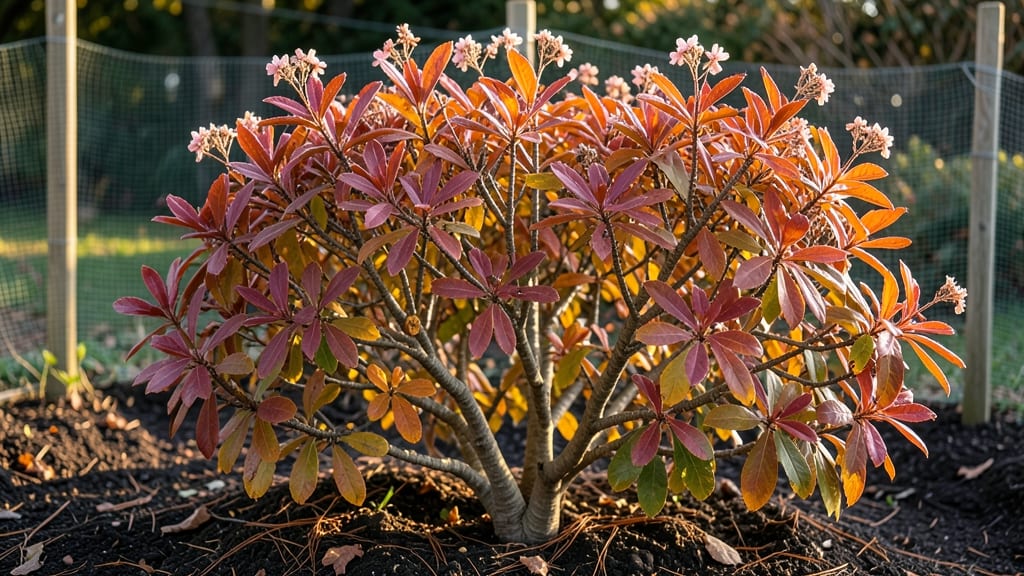
The burning bush thrives in sun or shade 🌿 with the right balance, but most gardeners get its light needs wrong—and end up with dull foliage or stunted growth.
Picture this: You plant your new burning bush in full sun, expecting vibrant reds and oranges by fall, only to watch it struggle through the summer heat. Or maybe it’s tucked in too much shade, where the leaves stay pale and lackluster.
The truth? This shrub is flexible, but it has clear preferences that make all the difference.
Whether you’re working with a bright border or a shady corner, understanding how light affects its color, growth, and even winter hardiness is the key to a showstopping shrub.
I’ll break down the ideal conditions, how to spot when it’s getting too much or too little, and the simple adjustments that keep it thriving year-round.
By the end, you’ll know exactly where to place your burning bush for bold foliage, how to adjust care based on its light, and which varieties handle shade best. Let’s get started!
 Best Window Placement
Burning bush sun requirements: how much light does it need for optimal growth?
The burning bush (Euonymus alatus) thrives with 4-6 hours of sunlight daily, but its needs shift by season and location. In full sun, it develops the vibrant red-orange foliage gardeners love, while partial shade yields softer hues.
Understanding these nuances ensures your shrub stays lush and colorful year-round.
Morning sun is gentler than afternoon heat, making it ideal for southern exposures. However, western sunlight can scorch leaves if too intense. Balancing these factors is key to preventing stress or weak growth in your burning bush.
Here’s how sunlight affects growth and color intensity:
Seasonal adjustments matter too. In summer, burning bushes need morning sun protection if temperatures exceed 90°F. Use lightweight shade cloth (30-50%) to prevent leaf scorch while maintaining color vibrancy.
Watch for signs of too much sun: crispy leaf edges or bleached patches indicate sunburn. Conversely, pale, sparse foliage signals insufficient light. These clues help you fine-tune placement for optimal health.
For northern climates, prioritize south-facing exposure to maximize winter sun. In southern regions, eastern or western light reduces heat stress while still delivering 4-6 hours of sun daily.
Pro tip: If your burning bush loses color in shade, try reflecting sunlight with a white fence or mulch to boost brightness. This hack mimics full sun without direct exposure.
Remember, dwarf varieties like 'Compactus' tolerate shade better than standard types. Always match your burning bush variety to your garden’s light conditions for the best results.
With the right balance, your burning bush will reward you with year-round interest, from spring blooms to fiery fall foliage. Start by testing your garden’s light levels and adjust as needed!
Shade-tolerant burning bush varieties: best options for low-light gardens
Not all burning bush varieties demand full sun—some thrive in shady corners where others would struggle. If your garden has limited sunlight, these shade-tolerant cultivars deliver stunning fall color and compact growth without compromise. Let’s explore the best options for low-light conditions and how they compare to sun-loving types.
First, it’s crucial to understand that shade-tolerant burning bushes often sacrifice some of their signature vibrant red foliage for survival in dimmer spaces. Varieties like 'Compactus' and 'Rudy Haackii' prioritize hardiness and dense growth over intense color, making them ideal for woodland gardens or north-facing borders.
🌿 PROS-CONS BOX: Shade vs. Sun Burning Bush Varieties
Shade-Tolerant Burning Bush Varieties
✅ Compact growth (3-6 ft tall)
✅ Drought-tolerant once established
✅ Lower maintenance pruning
❌ Slower growth rate
❌ May need extra fertilizer
❌ Limited winter hardiness in Zone 5
✅ Faster growth (8-15 ft tall)
✅ Hardier in cold climates
✅ More disease-resistant
❌ Needs consistent watering
❌ Prone to leaf scorch in heat
❌ Less adaptable to shade
For partial shade (3-6 hours of sun), 'Emerald Gaiety' stands out with its variegated foliage—creamy edges that glow even in low-light gardens. This hybrid handles transitional light conditions beautifully, making it perfect for urban courtyards or patio plantings where sunlight is inconsistent.
Its mature height of 5-6 feet also makes it ideal for foundation plantings.
If you’re dealing with deep shade (less than 3 hours of sun), 'Compactus' is your best bet. This dwarf variety maxes out at 3-4 feet tall and produces deep green leaves that turn pale pink in fall.
While not as dramatic as sun-grown bushes, its dense, mounding habit makes it a star in shady shrub borders or container gardens.
For hybrid options that bridge the gap between sun and shade, 'Rudy Haackii' is a game-changer. This sterile cultivar (no messy seeds) thrives in partial shade while still delivering bright red fall color.
Its upright growth (6-8 feet) and exfoliating bark add winter interest, making it a year-round performer even in low-light spaces.
Remember: soil drainage matters more in shade. Amend heavy clay with compost or sand to prevent root rot, and mulch annually to retain moisture.
With the right variety, your shady garden can still burst with burning bush drama—just dial back the color expectations and embrace the textural beauty these shade-lovers bring. 🌳