
Size
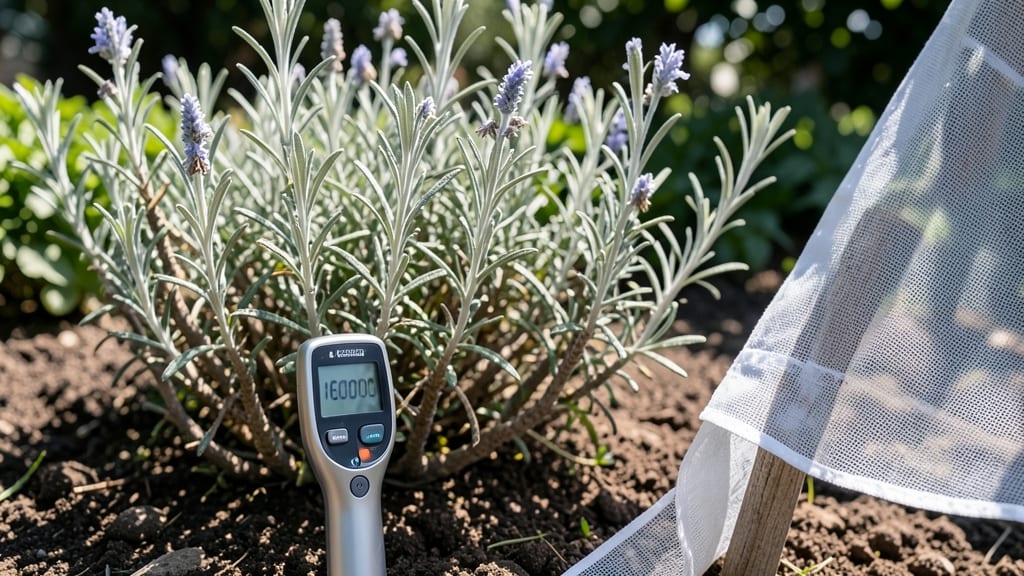
Rosemary is a sun-loving herb, and its growth habits reflect that. 🌿 When deprived of adequate light, the plant stretches toward any available brightness, a condition called "etiolation," which results in those weak, leggy stems.
The flavor also suffers because rosemary's essential oils—what give it that signature piney aroma—are produced in response to sunlight. Even with shade-tolerant varieties, you'll still need to supplement with artificial light or place your plant near a south-facing window for at least 4-6 hours daily.
If you're determined to grow rosemary indoors or in shady spots, start with dwarf varieties like 'Blue Spires' or 'Arp,' which handle lower light better than standard types. Pair this with a grow light (LED or fluorescent) placed 6-12 inches above the plant for 12-14 hours a day.
Regular pruning also helps—snipping back leggy growth encourages bushier, healthier foliage, even in less-than-ideal conditions.
💡 In This Article
- How Shade Affects Rosemary Growth and Health
- Best Low-Light Rosemary Varieties and Care Tips
How shade affects rosemary growth and health
Rosemary's struggle in shade stems from its Mediterranean origins, where it evolved to thrive under intense sunlight. In low-light conditions, the plant's photosynthesis slows dramatically because chlorophyll production drops by up to 40%.
This creates a domino effect: less energy means the plant can't produce enough glucose to fuel growth or maintain sturdy stems. 🌞 The result? Those telltale leggy stems you see in shaded rosemary are a survival tactic—elongating to reach light sources—while the leaves become sparse and pale.
The real flavor killer happens at the cellular level. Rosemary's essential oils, like camphor and cineole, are produced in specialized glandular trichomes that require sunlight to activate.
In shade, these compounds form at only 20-30% of their full potential, making the herb taste dull and grassy rather than piney and aromatic. Even the plant's natural antifungal properties weaken, making it more susceptible to fungal infections in damp, shaded conditions.
The texture also suffers—leaves become rubbery and less fragrant, losing that signature crispness when used in cooking.
Hormonal changes play a crucial role too. Shade triggers an increase in gibberellins, plant hormones that promote stem elongation at the expense of leaf and root development. This is why shaded rosemary often looks more like a weak stalk than a bushy herb.
The roots also struggle to establish properly without sufficient light, making the plant more vulnerable to drought stress and poor nutrient uptake. Even with proper watering, the overall plant architecture becomes compromised, leading to that "wilty" appearance many gardeners notice.
For those growing rosemary in containers or indoor spaces, the problem compounds. Without access to natural light cycles, the plant can't regulate its circadian rhythms properly, leading to erratic growth patterns.
The leaves may develop a reddish tint (a sign of stress) and the essential oil composition shifts further toward less desirable compounds. This is why even shade-tolerant varieties like 'Arp' still require supplemental light—they're not truly shade plants, but they've been bred to handle marginal conditions better than standard types.
Consider this comparison: a rosemary plant in full sun will produce 3-4 times more essential oils than one in shade, and the flavor profile remains consistent year-round.
In shade, you might notice seasonal variations where the herb tastes stronger in summer (when light is more available) but nearly flavorless in winter. The visual difference is equally stark—sun-grown rosemary has compact, vibrant green foliage, while shaded plants look like they're constantly reaching for something they can't quite find.
The bottom line? Shade doesn't just slow rosemary—it fundamentally alters its biology, from cellular processes to hormonal balance.
While it might survive, it won't thrive, and the culinary experience suffers dramatically. 🌿 For the best results, even shade-tolerant varieties need at least 4-6 hours of direct or bright indirect light daily to maintain any semblance of their signature flavor and aroma.