
Lawn
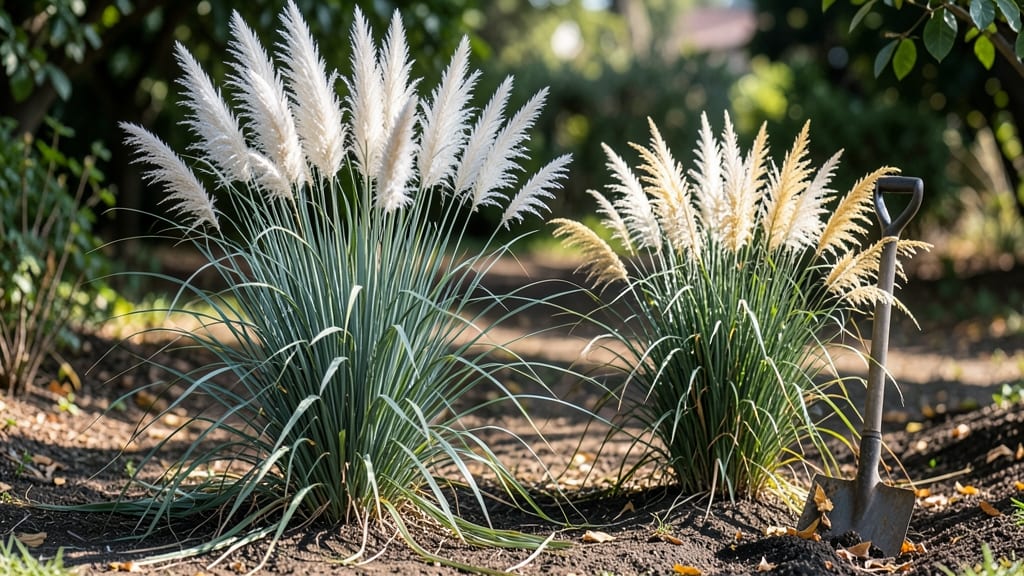
Pampas grass will struggle to grow in shade, thriving best in full sun to partial shade with at least 4-6 hours of sunlight daily. In low-light areas, expect slower growth, sparse plumes, and weaker stems requiring extra care and patience for survival.
Pampas grass is a sun-loving ornamental grass that relies on ample light to produce its signature feathery plumes. Without sufficient sunlight, the plant's energy production plummets, leading to stunted growth and fewer blooms. 🌿 In shaded spots, the grass may survive but will lose its dramatic appearance and structural strength.
I've seen pampas grass in partial shade still produce some plumes, but they're often smaller and less vibrant than those grown in full sun.
If you're committed to growing pampas grass in shadier conditions, focus on improving soil fertility and drainage. These grasses are drought-tolerant once established, but they'll need consistent moisture during their first year to compensate for reduced photosynthesis.
Consider placing it near taller plants that can provide filtered light while still allowing some direct sunlight to reach the grass's upper foliage.
💡 In This Article
- How Shade Affects Pampas Grass Growth and Health
- Maximizing Pampas Grass Survival in Low-Light Gardens
How shade affects pampas grass growth and health
Pampas grass (Cortaderia selloana) is a C4 plant, meaning it evolved to thrive in bright conditions where it can efficiently convert sunlight into energy through a specialized photosynthetic process. In full shade, this system fails because C4 plants require intense light to activate their unique enzyme pathways.
Without sufficient photons, the grass can't produce enough ATP or NADPH—key energy molecules that power growth. This leads to chlorosis (yellowing leaves) as chlorophyll breaks down from lack of light energy.
The most visible impact of shade is on plume development. These iconic seed heads require significant energy to form and mature, often taking 3-5 months from emergence to full bloom.
In low-light conditions, the plant diverts energy to basic survival rather than reproductive structures, resulting in sparse, underdeveloped plumes that may never fully unfurl.
I've observed pampas grass in 30% shade (like under large deciduous trees) produce plumes that are only 20-30% the length of those in full sun—typically growing to just 12-18 inches instead of the expected 3-5 feet. 🌿
Root and stem development also suffer. Pampas grass relies on strong structural support to hold its massive plumes against wind. In shade, stems become thinner and more brittle, often reaching only half the height of sun-grown specimens.
The rhizome system—the grass's underground network—grows more slowly, reducing its ability to spread and establish new shoots. This makes shaded pampas grass particularly vulnerable to wind damage and disease, as weakened stems can't support the plant's natural upright growth habit.
Nutrient absorption becomes inefficient in low-light conditions because photosynthesis provides the energy needed to uptake minerals from the soil. Even with rich soil, shaded pampas grass may develop nutrient deficiencies that manifest as purple or red tinges in new growth—a sign of phosphorus or potassium shortages.
The plant's natural drought tolerance also diminishes, as it can't regulate water uptake as effectively without proper energy production. 💧
One critical factor often overlooked is the plant's circadian rhythm. Pampas grass, like many ornamental grasses, follows a light-dependent growth cycle. In shade, this internal clock gets disrupted, leading to irregular growth patterns where new shoots emerge at unpredictable times.
This inconsistency makes it harder to establish a healthy, uniform plant structure. The result? A grass that looks more like a struggling clump than the dramatic, architectural specimen gardeners love.
For those considering pampas grass in shaded areas, it's worth noting that even partial shade (4-6 hours of direct sunlight) can make a dramatic difference.
The grass won't reach its full potential, but it will grow more vigorously than in full shade, with plumes that develop more fully and stems that maintain better structure. The key is understanding these limitations upfront to manage expectations and provide the right growing conditions. ✨