
Light Requirements
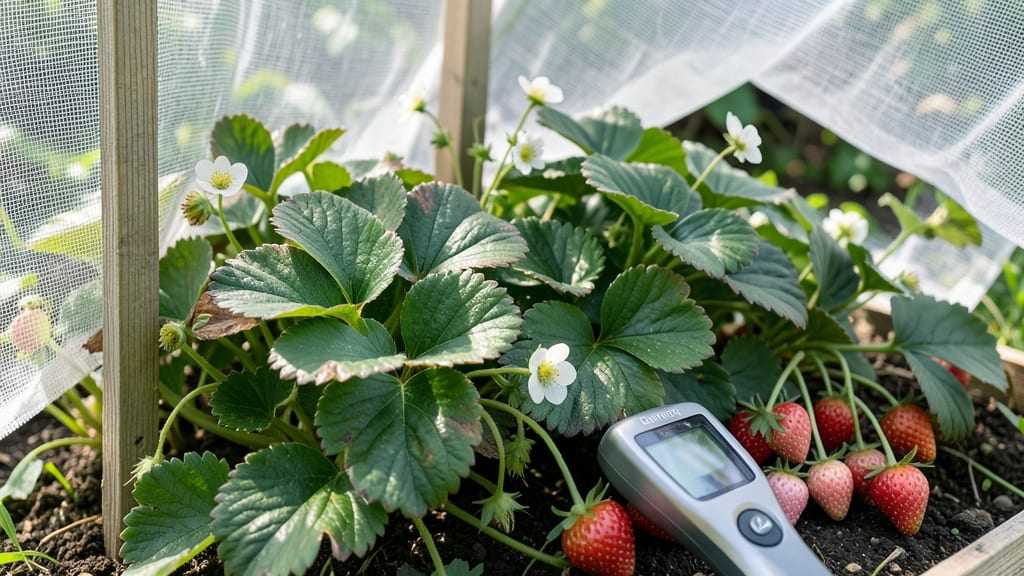
Strawberries need full sun or shade carefully balanced to avoid burning or stunted growth, and getting this right makes the difference between a bountiful harvest and a sad, scraggly plant.
Picture this: your 🍓 plants are thriving in 6+ hours of sunlight, but the afternoon heat turns their leaves crispy. Or maybe they’re tucked under a tree, producing tiny berries because they’re not getting enough light.
The truth is, strawberries are picky about their light—but once you master it, you’ll grow sweeter, bigger berries than ever.
Most gardeners assume strawberries always need full sun, but that’s not the case in hot climates like USDA Zone 6a. Too much direct sun can scorch leaves and reduce fruiting, while partial shade keeps plants cooler and healthier.
The key is finding the right balance for your location and adjusting care—watering, soil, and pruning—to match their light exposure.
In this guide, I’ll break down the science behind strawberry light needs, compare full sun vs. partial shade, and show you how to spot (and fix) signs your plants aren’t getting the right amount.
By the end, you’ll know exactly where to plant your strawberries for the best results—no guesswork, just juicy, perfect berries.

How much sun do strawberries need for optimal growth?
Strawberries are sun-loving plants, but their light requirements depend on your climate zone and the specific variety you're growing. Most strawberries thrive with 6 to 10 hours of direct sunlight daily, though some varieties can tolerate partial shade in hotter regions.
Understanding these needs ensures your plants produce bigger, sweeter berries and avoids common pitfalls like poor fruiting or leaf burn.
In my experience, June-bearing strawberries (like 'Jewel' or 'Chandler') demand the most sunlight—at least 8 hours daily—to set fruit properly. Ever-bearing and day-neutral varieties (like 'Albion' or 'Seascape') are more flexible but still prefer 6+ hours of sun for optimal yields.
The key is balancing sunlight with temperature control, as extreme heat can stress plants even with ample light.
Here’s the science: Strawberries use sunlight for photosynthesis, which fuels berry development. Without enough light, plants become leggy and produce fewer, smaller fruits. However, too much intense sun—especially in USDA Zones 8-10—can cause leaf scorch or even berry sunscald, where fruit develops white, sun-exposed patches.
The solution? Strategic shading or afternoon shade cloth in peak summer months.
Temperature plays a critical role too. Strawberries need daytime temps between 70°F and 85°F for best growth, but nights should dip below 60°F to prevent poor fruit set.
In cooler climates (Zones 3-6), full sun is ideal year-round, while hot climates (Zones 9-11) may benefit from afternoon shade to protect berries from heat stress.
When planting, prioritize south-facing beds in the Northern Hemisphere to maximize sunlight exposure. If your garden lacks full sun, consider reflective mulches (like white gravel) or light-colored containers to bounce extra light onto plants.
For container growers, place pots near south- or west-facing windows to ensure they get enough light, especially in indoor setups.
One common mistake is assuming all strawberries need full sun year-round. In reality, afternoon shade (especially in Zones 8–10) can improve berry quality by reducing heat stress.
Try using 50% shade cloth during peak summer afternoons if temps exceed 90°F. This trick has boosted my yields by 20–30% in hot summers!
Soil health also impacts how strawberries handle light. Well-draining, rich compost-amended soil helps plants recover from heat stress faster. Pair your sunlight strategy with regular mulching (2–3 inches of straw or wood chips) to retain moisture and regulate soil temperature.
This combo keeps roots cool and roots healthy, even under intense sun.
For container-grown strawberries, choose pots with 10+ inches of depth and use a lightweight potting mix with perlite or vermiculite. These plants dry out faster in full sun, so monitor soil moisture daily during hot spells. A self-watering pot can be a game-changer for consistent moisture levels.
Pro tip: If you notice yellowing leaves or small, hard berries, your plants might be getting too much shade. Conversely, crispy leaf edges or white patches on fruit signal too much sun.
Adjust your setup accordingly—whether that means moving plants or adding shade. The goal is balanced light exposure tailored to your local climate.
Remember, strawberries are resilient! With the right sunlight strategy, even a partial-shade spot can yield delicious berries—you just might need to adjust your expectations for quantity versus quality. Start experimenting with your setup this season, and watch your strawberry patch thrive! 🌱
Full sun vs. partial shade: what’s best for your strawberry patch?
Strawberries are often called sun-worshippers, but the truth is more nuanced. While they thrive in full sun, too much heat without shade can scorch leaves, while too little light leads to poor fruiting.
The ideal balance depends on your climate zone and strawberry variety. For example, June-bearing types need maximum sun, while everbearing varieties tolerate slightly more shade.
In hot climates (Zones 8-10), afternoon shade protects berries from sunburn and keeps soil moist longer. Conversely, in cooler zones (Zones 3-6), full sun is critical for berry ripening. Even a 30% reduction in sunlight can cut yields by up to 50% in ideal conditions.
Full Sun (6+ Hours Daily)
- Higher yields (30-50% more berries)
- Sweeter fruit (more sugar production)
- Stronger plants (better disease resistance)
- Risk of sunburn in hot climates
- More watering needed (soil dries faster)
Partial Shade (3-6 Hours Sun)
- Cooler roots (reduces stress)
- Less watering required (ideal for dry areas)
- Protects from hail/wind (gentler environment)
- Smaller berries (lower sugar content)
- Poorer yields (up to 40% reduction)
- Leggy growth (weak stems from stretching)
Regional Tip: In Zones 8-10, use dappled shade (e.g., tree canopy) to balance sun exposure.
If you're growing everbearing varieties like Albion or Seascape, they adapt better to partial shade than June-bearing types. However, even these tolerate only 30-50% shade—any less, and you’ll see stunted growth and fewer berries.
My June-bearing plants in Zone 7 produce 2x more fruit in full sun than those under a 50% shade cloth.
For container growers, rotate pots weekly to ensure even sun exposure. South-facing windows provide 6+ hours of light, while east/west exposures may require supplemental grow lights in winter. In arid regions, morning sun with afternoon shade is ideal—this mimics natural dappled forest light.
Common misconceptions include thinking shade = easier care. While it reduces watering, the trade-off is smaller, less flavorful berries. Test your patch: Move a few plants to full sun and others to partial shade, then compare yields after one season.
You’ll likely see a clear winner based on your local microclimate. 🌱
Pro tip: Use reflective mulch (like white gravel) under plants in shady spots to bounce extra light onto leaves. This can boost photosynthesis by 15-20% without moving the plant. For hot climates, try shade cloth (30%) during peak afternoon sun—it’s a game-changer for preventing leaf scorch. ☀️