
Light Requirements
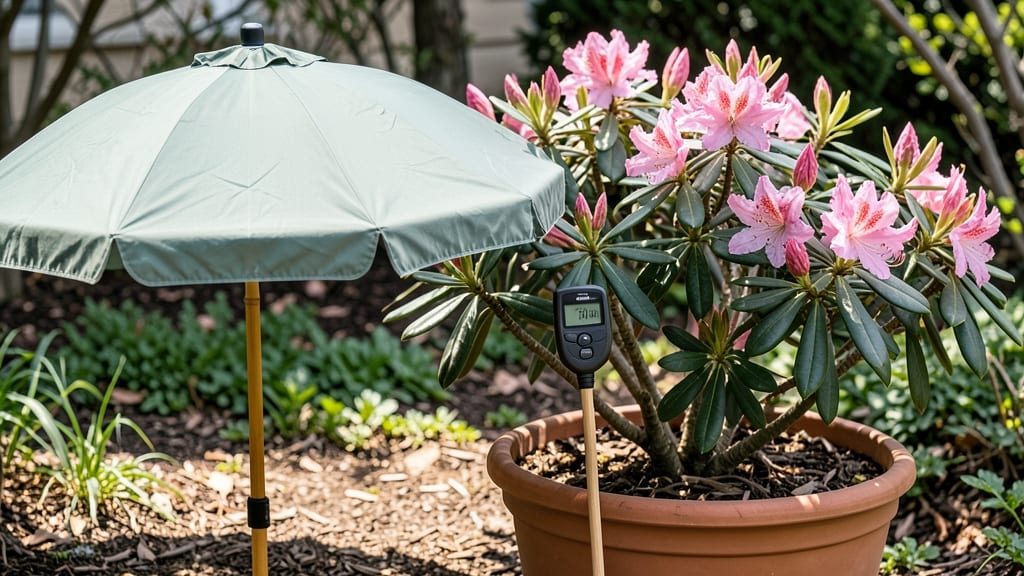
Deciding between azalea full sun or shade is the single biggest factor in whether your 🌸 azaleas thrive or struggle to bloom.
Struggling to keep your azaleas blooming year after year? The battle between full sun and shade might be the secret weapon—or the silent killer—of your garden’s most prized shrubs.
Most gardeners assume these vibrant shrubs need shade, but the truth is more nuanced. In cooler climates like USDA Zone 6a, azaleas can handle morning sun with afternoon shade, while hotter regions demand gentle, filtered light to prevent leaf scorch.
Below, I’ll break down exactly how much sun your azaleas need—whether planted in-ground or in containers—and how to spot when they’re getting too much (or too little) light.

Azalea light requirements: full sun vs. shade for optimal growth and blooms
Azaleas are stunning shrubs that bring vibrant color to gardens, but their light requirements can be confusing. Too much sun causes leaf scorch, while too little shade leads to sparse blooms. The key is finding the perfect balance tailored to your azalea variety and climate.
Most azaleas thrive in partial shade, especially in hotter regions. However, evergreen azaleas often tolerate slightly more sun than their deciduous cousins. Understanding these nuances ensures your azaleas grow lush and bloom beautifully every season.
Evergreen azaleas can handle 3-6 hours of morning sun with afternoon shade, while deciduous azaleas may tolerate up to 6 hours of sun in cooler climates. The difference lies in their ability to handle heat stress and maintain moisture.
Here’s how sunlight impacts azaleas: Direct sun increases bloom intensity but risks leaf burn in hot climates. Conversely, deep shade reduces blooms and weakens growth. The ideal scenario is filtered sunlight or dappled shade, especially in southern regions.
🌸
In hot climates (Zones 8-10), azaleas need afternoon shade to prevent leaf scorch. A simple trick is planting them near deciduous trees that provide shade in summer but allow sun in winter. For cooler climates (Zones 4-6), they can handle more sun, even full morning exposure.
If you notice yellowing leaves or brown leaf edges, your azalea may be getting too much sun. Conversely, pale leaves and fewer blooms signal insufficient light. Adjust gradually—azaleas can’t handle sudden changes in light exposure.
For container-grown azaleas, morning sun on a shaded patio works best. Avoid placing them in direct afternoon sun, which can overheat roots and reduce blooming. In-ground plants benefit from mulching to retain moisture and regulate soil temperature.
🌿
Pro tip: Monitor your azalea’s leaves in summer. If edges turn crispy, move it to a shadier spot immediately. If leaves stay green but blooms fade, it’s time to increase light exposure slightly. The goal is a balanced microclimate that keeps your azalea happy year-round.
🌸
How to adapt your azalea’s light exposure for year-round success
Azaleas thrive in partial shade, but their light needs can shift with seasons and climate. If your evergreen azaleas are struggling with leaf scorch in summer or sparse blooms in spring, it’s time to adjust their exposure.
The key is gradual changes—azaleas hate sudden shifts that cause stress shock. I’ll show you how to fine-tune their environment without risking damage.
Start by observing your azalea’s current light conditions. Are the leaves turning yellowish-brown along the edges? That’s a classic sign of too much afternoon sun. Conversely, if blooms are sparse or leaves appear pale and leggy, they might need a little more morning sunlight.
The goal is 3-6 hours of filtered light daily, ideally from the east or north.
-
Step 1: Assess Current Light
Place a light meter (or use your phone’s light app) near your azalea for 3 days. Note peak sunlight hours—10 AM–2 PM is critical. -
Step 2: Prune for Partial Shade
Thin out dense foliage on the south or west sides to reduce direct sun. Use sterilized pruners and cut at a 45-degree angle just above a leaf node. -
Step 3: Gradual Acclimation
Move potted azaleas 1 foot closer to shade every 2 weeks in summer. For in-ground plants, install a lightweight shade cloth (30-50%) over hot months. -
Step 4: Strategic Planting
Plant tall shrubs (e.g., rhododendrons) on the south side of your azalea to block afternoon sun. Avoid fast-growing trees that steal moisture. -
Step 5: Seasonal Adjustments
In winter, let more light reach your azalea (remove shade cloth). In spring/fall, provide morning sun only to encourage blooming.
For container-grown azaleas, rotate pots quarter-turns weekly to ensure even light exposure. This prevents one-sided growth and keeps the plant balanced. If your azalea is near a large tree, watch for root competition—mulch with 3 inches of pine bark to retain moisture and block excessive shade.
Monitor your azalea’s response after adjustments. Healthy leaves should be dark green and glossy, while new growth indicates successful acclimation. If you notice wilting or drooping, it’s a sign of too much shade—gradually increase light exposure over 4-6 weeks.
Pro tip: Use reflective mulch (like white gravel) around the base to bounce extra light onto lower leaves. This mimics dappled forest light, which azaleas love. With these tweaks, your azalea will reward you with vibrant blooms and lush foliage year-round.