
Flowers
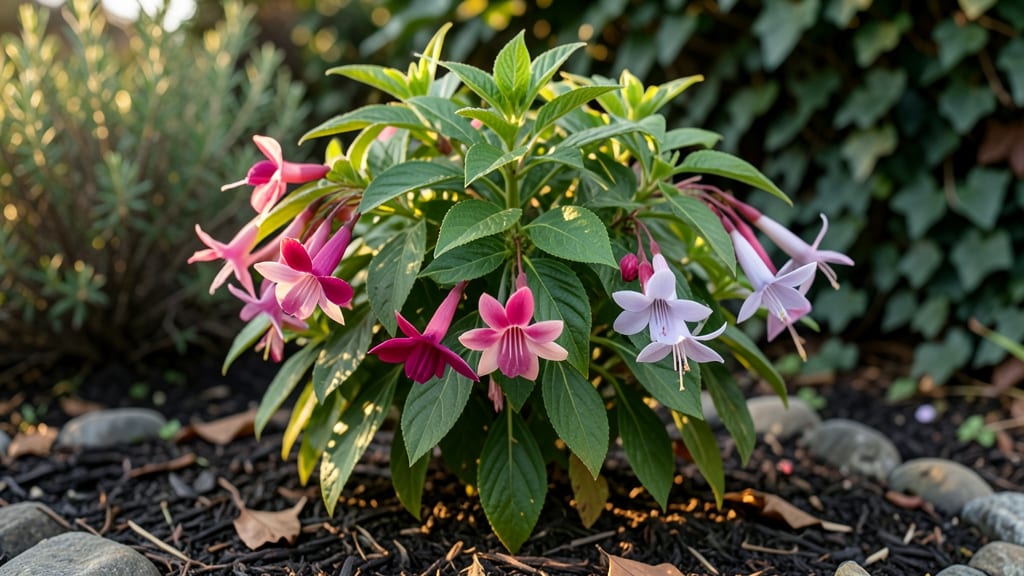
The shades of fuchsia in varieties like 'Giant Marble' or 'Santa Cruz' turn shady corners into jewel-box gardens with their deep magenta, bright pink, and lavender blooms. 🌸 Their velvety petals catch every passing breeze, making even the quietest corners feel alive.
Pair them with silver foliage plants like lamb's ear or dusty miller to make the fuchsia colors pop even more. For containers, mix fuchsias with trailing ivy or heuchera for a lush, layered look. In borders, they soften the edges while adding unexpected color to dark spaces.
📚 In This Guide
- What you need
- Instructions
- Tips and common mistakes
- Wrapping up and next steps
What you need
- ● Fuchsia plants: Choose 3–5 varieties (e.g., Fuchsia magellanica, Fuchsia ‘Giant Lady’, or Fuchsia ‘Lady Bo-Peep’) for height and texture diversity.
- ● Well-draining potting mix: 10–15 lbs (for containers) or amend garden soil with compost (for in-ground planting).
- ○ Containers (optional but recommended): 1–2 hanging baskets (12–18" diameter) or window boxes for cascading effect.
- ● Slow-release fertilizer: Balanced 10-10-10 or organic options like worm castings (1 cup per plant).
- ● Mulch: Shredded bark or coconut coir (2–3 inches) to retain moisture.
- ● Pruning shears: Sharp, clean pair for trimming leggy stems.
- ● Companion plants: Ferns (e.g., Matteuccia struthiopteris) or Heuchera for contrast in shade.
- ● Decorative stakes: Moss-covered or painted wooden stakes to support trailing fuchsias.
- ● Liquid feed: Diluted fish emulsion (every 4–6 weeks) for a nutrient boost.
- ● Garden gloves: For handling prickly stems or thorny varieties.
How to choose and plant Fuchsia flowers for maximum impact
Here's how to pick the perfect fuchsia varieties and plant them for show-stopping color in shady spots.
🌿 Step 1: Select Fuchsia Varieties for Your Light Conditions
Fuchsias thrive in partial shade—think 4-6 hours of morning sun with afternoon shade. For deepest colors, choose purple-black varieties like 'Royal Purple' or 'Midnight'—they'll pop against dark foliage. If you have dappled shade, try pink and white varieties like 'Giant Marble' or 'Alice Hoffman' for a soft contrast.
Here's the thing—tropical fuchsias (like 'Lady Boothby') love bright indirect light and will bloom more freely. Hardy fuchsias (like 'Dicksonii') tolerate full shade but may bloom less. I always check the tag—if it says "tender," it needs winter protection.
☀️ Step 2: Prepare the Planting Site for Thriving Fuchsias
Fuchsias hate soggy roots, so amend heavy soil with 2-3 inches of compost and a handful of perlite to improve drainage. Work it into the top 6 inches of soil—this prevents root rot, which is the #1 killer of fuchsias. A slightly acidic to neutral pH (6.0-7.0) works best, so test your soil if possible.
If planting in containers, use a well-draining potting mix (never garden soil) and add a slow-release fertilizer at planting time. I like to mix in 1 cup of worm castings per gallon of soil—it gives them a gentle nutrient boost without burning roots.
🪴 Step 3: Plant with Proper Spacing for Airflow and Blooms
Space fuchsias 12-18 inches apart in the ground—crowding leads to powdery mildew and weak stems. In containers, one plant per 6-inch pot is ideal. Plant at the same depth as their nursery pot, pressing soil gently around roots to eliminate air pockets. Water deeply right after planting to settle the soil.
Don’t bury the crown—fuchsias hate wet stems. If the top of the root ball is below soil level, dig it up and replant higher. I always tap the pot gently before removing it—this helps roots stay intact and recover faster.
💧 Step 4: Water and Fertilize for Continuous Blooms
Water when the top inch of soil feels dry—fuchsias wilt fast but bounce back quickly if you catch it early. Morning watering prevents fungal issues, and I always water at the base to keep leaves dry. During hot spells, mulch with 2 inches of shredded bark to retain moisture and cool roots.
Feed every 2-3 weeks with a balanced liquid fertilizer (10-10-10) during the growing season. When buds form, switch to a low-nitrogen, high-phosphorus (5-10-5) fertilizer to encourage more blooms. I swear by fish emulsion—it’s organic and gives them a glossy leaf finish.
✂️ Step 5: Prune for Bushier Growth and Longer Blooming
Pinch back new growth in early spring to encourage branching—this gives you a fuller plant with more flower stems. After blooms fade, cut back spent stems to the nearest leaf node (about ¼ inch above it). This trick keeps them blooming all season instead of putting energy into seed production.
In fall, reduce watering and stop fertilizing—this helps hardy fuchsias prepare for dormancy. If you’re growing tender varieties, bring them indoors before frost hits. I always move mine to a bright, cool window (50-60°F) and check for pests before storing.
Tips & tricks for perfect Fuchsia planting
Here's what nobody tells you about getting fuchsias to thrive in your shady garden spots.
Light Condition Secrets: That 4-6 hours of morning sun is non-negotiable for vibrant blooms—it's the sweet spot where fuchsias get enough light without scorching. If your spot gets afternoon sun, move plants to a shadier location after 12 PM. I've seen 'Royal Purple' fuchsias go from dull to show-stopping just by adjusting their light exposure this way.
Soil Prep Game-Changer: The 2-3 inches of compost and perlite mix isn't just about drainage—it's about creating a sponge-like environment that holds moisture without suffocating roots. I like to add a handful of coarse sand too for extra grit, especially in clay soils. This combo prevents that dreaded root rot while keeping roots happy and hydrated.
Pruning Payoff: When you cut back spent stems to the nearest leaf node (about ¼ inch above), you're not just cleaning up—you're signaling the plant to focus on new growth instead of seeding. I do this every time a flower fades, and my plants keep blooming all season long. The key is using sharp, clean shears to avoid tearing stems.
Fertilizer Timing: That switch from 10-10-10 to 5-10-5 when buds form is crucial. The lower nitrogen prevents leafy growth at the expense of flowers, while the extra phosphorus pushes those vibrant blooms. I start the 5-10-5 fertilizer when I see the first buds forming, and it makes a noticeable difference in bloom quantity and color intensity.
Pro Tips for Shades Of Fuchsia
- Here's what nobody tells you about getting fuchsias to thrive in your shady garden spots.
- Light Condition Secrets: That 4-6 hours of morning sun is non-negotiable for vibrant blooms—it's the sweet spot where fuchsias get enough light without scorching.
- Soil Prep Game-Changer: The 2-3 inches of compost and perlite mix isn't just about drainage—it's about creating a sponge-like environment that holds moisture without suffocating roots.
Frequently asked questions
What’s the difference between true fuchsia and fuchsia-colored flowers?
True fuchsia (genus Fuchsia) includes plants like Fuchsia magellanica with tubular, bell-shaped flowers in pink-purple hues. Fuchsia-colored flowers (like Petunia or Salvia) mimic the shade but aren’t the same species. True fuchsias thrive in shade; mimics often tolerate sun better.
Are fuchsia flowers easy to grow in shady gardens?
Fuchsias love shade—they’re perfect for dark corners where sun-loving plants struggle. Plant them in well-draining soil with morning sun or dappled light. Avoid soggy roots (they hate wet feet!). For extra drama, pair them with heuchera or hostas for a lush, moody palette.
How can I mix fuchsia shades without clashing?
Balance is key! Pair bright fuchsia (like Fuchsia ‘Giant Marble’) with deep purples (e.g., Salvia ‘May Night’) or silver foliage (like Artemisia ‘Powis Castle’) to soften the vibrancy. For a modern look, add charcoal or black containers. Pro tip: Odd-numbered groupings (3 or 5 plants) create natural harmony.
Can fuchsias survive winter in cold climates?
Most fuchsias are tender perennials and die back in frost. Dig up container-grown plants or mulch heavily before winter. In Zone 8+, hardy varieties like Fuchsia ‘Riccartonii’ may return yearly. For colder areas, treat them as annuals or overwinter indoors with bright light and 60% humidity.
What if my fuchsias look leggy or stop blooming?
Leggy growth or sparse blooms often mean too little light or over-fertilizing. Move plants to brighter shade (but avoid harsh sun) and prune back by ⅓ to encourage bushiness. Deadhead spent blooms to prolong flowering. Bonus: A balanced 10-10-10 fertilizer in spring boosts blooms without excessive foliage.
Wrapping up and next steps
From vibrant fuchsia blooms to their versatile uses in gardens and décor, these bold hues prove that even the darkest corners can shine bright.
Whether you’re drawn to their dramatic color or their resilience in shade, fuchsia flowers are a game-changer for adding life and energy to your outdoor space. 🌸
Ready to transform your garden? Start by choosing your favorite fuchsia variety—whether it’s the classic Fuchsia magellanica or the striking Fuchsia ‘Giant Marble’—and plant with confidence! Check out our planting tips to get started today.