
Light Requirements
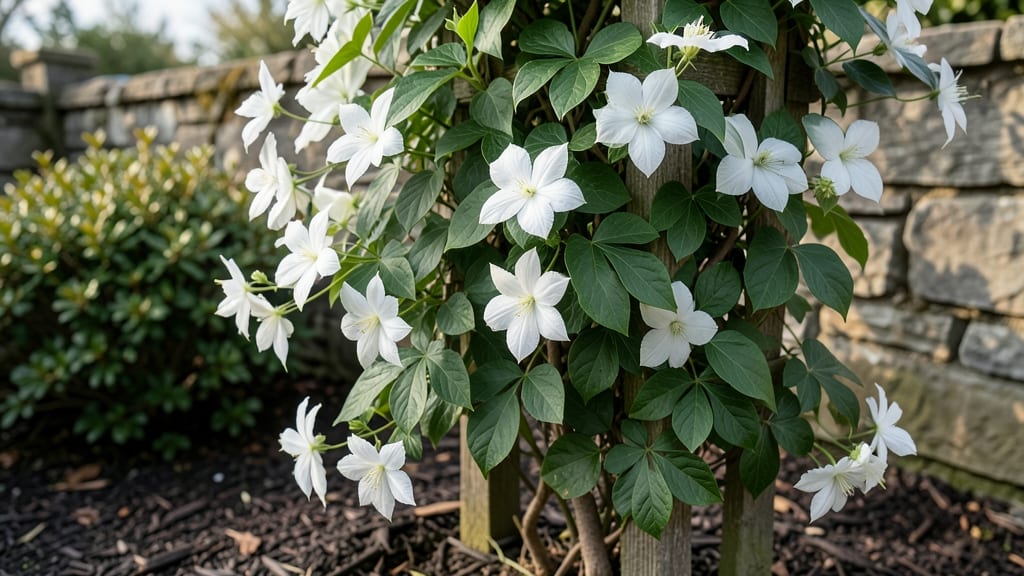
Shade-loving climbing flowering vines turn gloomy corners into lush vertical gardens. 🌿 I’ve transformed my darkest patio with vines that thrive where sunstruck plants wilt—adding color, texture, and even fragrance without a single ray of direct light.
These plants aren’t just survivors; they’re showstoppers that bloom from spring through fall (and sometimes winter too).
The best options—like Clematis montana (snow-white spring blooms), Hoya carnosa (waxy, heart-shaped leaves with sweet-scented flowers), and Actinidia kolomikta (silver-and-pink foliage with tiny white flowers)—grow fast, need minimal fuss, and handle shade like pros. They’ll climb trellises, fences, or even arbor frames, turning blank walls into living tapestries.
Most just ask for well-draining soil, occasional watering, and a little support to reach their full potential. By summer’s end, you’ll have a fragrant, flower-filled vertical garden that keeps giving long after sun-loving vines have faded.
These plants also attract pollinators, making your shaded spots feel alive with hummingbirds and bees. The key? Choosing the right vine for your light level—deep shade, dappled shade, or partial shade—and giving it a sturdy structure to climb. Works for patios, balconies, or even indoor spaces near bright windows.
Here’s how to pick, plant, and maintain them for years of effortless beauty.
📚 In This Guide
- What you need
- Instructions
- Tips and common mistakes
- Wrapping up and next steps
What you need
- ● Shade-tolerant climbing vines (3–5 plants): Clematis (e.g., Clematis montana or Clematis armandii)
- ● Honeysuckle (e.g., Lonicera periclymenum)
- ● Star jasmine (Trachelospermum jasminoides)
- ● English ivy (Hedera helix) – non-flowering but great for texture
- ● Support structure: Trellis (6–8 ft tall, metal or wooden)
- ● Arbor or pergola (for larger spaces)
- ● String or twine (for training vines)
- ● Potting soil: 2–3 bags of well-draining, organic-rich soil (or a mix of garden soil + compost)
- ○ Containers (optional): 1–2 large pots (12–15 inches deep) with drainage holes
- ● Fertilizer: Slow-release balanced fertilizer (10-10-10) or organic compost
- ● Pruning shears: Sharp, clean pair for trimming
- ● Gloves & watering can: Basic gardening essentials
- ● Mulch (to retain moisture and suppress weeds)
- ● Epsom salt (for magnesium boost, especially for clematis)
- ● Pest control (neem oil or insecticidal soap for aphids)
- ● Decorative stakes or clips (for extra vine support)
- ● Drip irrigation system (for consistent watering)
Step-by-step guide to planting shade-loving climbing flowering vines
Transform those dim corners into lush vertical gardens with these elegant, low-light vines.
🌱 Step 1: Select the Right Vine Varieties for Your Space
Start with shade-tolerant climbers like clematis, climbing hydrangeas, or Japanese honeysuckle—these thrive where sunlight is scarce. I always check the mature height of each vine to match my structure: clematis can reach 10-15 feet, while hydrangeas typically max out at 8-10 feet. Choose vines with glossy, dark leaves as a first indicator of shade adaptability.
For immediate color, opt for varieties that flower in low light, such as 'Jackmanii' clematis with its deep purple blooms or 'Annabelle' hydrangeas with their snow-white clusters. These will reward you with flowers even when sunlight is limited to 2-4 hours daily. Avoid sun-loving vines like morning glories or passionflowers—they’ll quickly yellow and decline in shady spots.
🪴 Step 2: Prepare the Planting Site and Support Structure
Install your trellis, arbor, or wire frame before planting—these vines need sturdy support from day one. I use powder-coated metal or rot-resistant cedar for longevity, especially in damp corners where wood can rot. Position the structure within 6 inches of the planting spot so roots can reach it easily.
Amend the soil with 3-4 inches of compost mixed into the top 12 inches of soil. Shade-loving vines appreciate moist, well-draining soil with a slightly acidic pH (6.0-6.5). Test your soil’s moisture by squeezing a handful—if it crumbles easily, it’s ready. If it stays clumpy, add 20% perlite to improve drainage. Avoid heavy clay, which suffocates roots.
☀️ Step 3: Plant with Proper Spacing and Mulching
Dig a hole twice as wide as the vine’s root ball but only as deep as the container it came in. Place the vine in the hole, ensuring the top of the root ball sits level with the soil surface—burying the crown too deep invites rot. For 4 vines, space them 3-5 feet apart along the base of the trellis to allow airflow and prevent disease.
Backfill with native soil mixed with a slow-release fertilizer (10-10-10 ratio), then water deeply to settle the roots. Top with 2-3 inches of mulch (cypress or hardwood chips work best) to retain moisture and suppress weeds. Keep mulch 6 inches away from the vine’s stem to prevent rot. Water again after mulching to encourage root spread.
💧 Step 4: Train Vines and Maintain Consistent Care
Once planted, gently tie the main stems to the trellis with soft plant ties (avoid wire—it cuts into tender growth). I start with 3-4 points of attachment spaced evenly up the structure. For clematis, focus on the strongest stems first, as they’ll bear the most flowers. Prune any leggy growth back by one-third to encourage bushier, flower-filled growth.
Water deeply once a week (or more in extreme heat) to keep the soil evenly moist but not soggy. Shade-loving vines still need humidity—mist the foliage occasionally if your home’s air feels dry. Fertilize lightly every 6-8 weeks with a balanced liquid fertilizer during the growing season (spring through fall). Stop fertilizing in winter to let the plant rest.
✂️ Step 5: Prune for Year-Round Health and Blooms
Prune clematis and hydrangeas immediately after flowering to shape the vine and encourage next year’s blooms. For clematis, cut back last year’s stems by half and remove any weak or crossing branches. Hydrangeas benefit from light pruning in late winter to open the center of the plant and improve air circulation.
In late fall, cut back all vines by two-thirds to prepare for dormancy. This prevents weak, leggy growth and keeps the plant compact. Remove any dead or diseased foliage year-round to prevent pests. With proper pruning, your vines will reward you with lush foliage and vibrant flowers from spring through fall, even in the shadiest spots.
Tips & tricks for thriving shade-loving climbing vines
Turn your shady corners into vertical gardens with these essential tips that’ll keep your vines flourishing year-round.
Variety Selection: When choosing between clematis and hydrangeas, consider your trellis height—clematis will need that 10-15 foot structure to reach its full potential, while hydrangeas max out at 8-10 feet. I always opt for the glossy, dark foliage varieties as they're the most shade-adaptable. For immediate color impact, 'Jackmanii' clematis or 'Annabelle' hydrangeas are my go-to choices for their bold blooms in limited light.
Support System Insight: The key to a sturdy support structure is positioning it within 6 inches of the planting spot—this ensures roots can quickly establish a connection. For damp corners, I recommend powder-coated metal over wood to prevent rot. A quick test for proper spacing: if you can reach the trellis from the planting hole without stretching, you're good to go.
Soil Preparation: That 3-4 inches of compost mixed into the top 12 inches of soil makes all the difference for shade-loving vines. I always add 20% perlite if my soil feels heavy—this improves drainage without sacrificing moisture retention. A simple moisture test: squeeze a handful of soil; if it crumbles easily, your soil's ready. If it stays clumpy, you need more perlite.
Pruning Precision: When pruning clematis after flowering, always cut back last year's stems by half—this encourages new growth that will produce next year's blooms. For hydrangeas, a light pruning in late winter opens up the center and improves airflow. In late fall, that two-thirds reduction prepares your vines for dormancy and prevents leggy growth. I mark my pruning dates on my calendar to avoid missing these critical windows.
Pro Tips for Shade Loving Climbing Flowering Vines
- Turn your shady corners into vertical gardens with these essential tips that’ll keep your vines flourishing year-round.
- Variety Selection: When choosing between clematis and hydrangeas, consider your trellis height—clematis will need that 10-15 foot structure to reach its full potential, while hydrangeas max out at 8-10 feet.
- Support System Insight: The key to a sturdy support structure is positioning it within 6 inches of the planting spot—this ensures roots can quickly establish a connection.
Frequently asked questions
Got questions about transforming shady spots into vibrant vertical gardens? Here are some of the most common concerns—and their answers—to help you grow confidently with shade-loving climbing flowering vines.
Which shade-loving vines bloom the longest?
For year-round color, prioritize Clematis (especially Clematis montana or Clematis armandii) and Hoya carnosa. These thrive in partial shade and produce blooms in spring, summer, and even fall with proper care. Pair them with Climbing Hydrangea (Hydrangea petiolaris) for lush, long-lasting foliage and occasional flowers.
How do I train a vine to climb without damaging the wall?
Use soft, flexible supports like trellises made of bamboo or plastic-coated wire to avoid scratching surfaces. For delicate vines (e.g., Star Jasmine), gently tie stems with twist ties or soft garden twine every 6–12 inches. Avoid metal hooks—they can pierce bark or siding. Pro tip: Let vines grow freely on arbors or pergolas for a natural look!
When is the best time to plant shade vines?
Plant in early spring or early fall when temperatures are mild (50–75°F). This gives roots time to establish before extreme heat or cold. Container-grown vines can be planted year-round in mild climates, but avoid transplanting during frost or peak summer. Water deeply after planting to reduce shock.
What if my vine isn’t flowering? How can I fix it?
Check these common issues:
- Too much shade: Most flowering vines need at least 4–6 hours of dappled light daily. Try moving the trellis to a brighter spot or prune overhanging trees.
- Over-fertilizing: Too much nitrogen = lush leaves but few blooms. Use a balanced fertilizer (10-10-10) or one high in phosphorus (e.g., 5-10-5) in early spring.
- Deadheading needed: Remove spent blooms to encourage new flowers (especially for Clematis and Wisteria).
If the problem persists, your vine might need more space—some varieties (like Passionflower) sprawl aggressively.
Are there non-invasive alternatives for small spaces?
For compact areas, try:
- Sweet Potato Vine (Ipomoea batatas) – Fast-growing, trailing, and non-climbing (great for hanging baskets).
- English Ivy (Hedera helix) – Evergreen and shade-tolerant, but check local regulations (some areas ban it as invasive).
- Creeping Fig (Ficus pumila) – Slow-growing and perfect for small trellises or rock walls.
For true climbers without spread, Star Jasmine (Trachelospermum jasminoides) is a fragrant, well-behaved choice.
Wrapping up and next steps
Transforming those dark, forgotten corners of your garden into lush, vibrant vertical spaces is easier than you think! Shade-loving climbing flowering vines like Clematis, Hoya, or English Ivy bring year-round beauty without demanding full sun.
With the right plants, support, and care, you’ll create a stunning, low-maintenance focal point that thrives even in the shadiest spots.
Ready to take the next step? Pick your favorite vine, gather your supplies, and start planting—your garden’s new masterpiece is just a few steps away! 🌿✨