
Shrubs
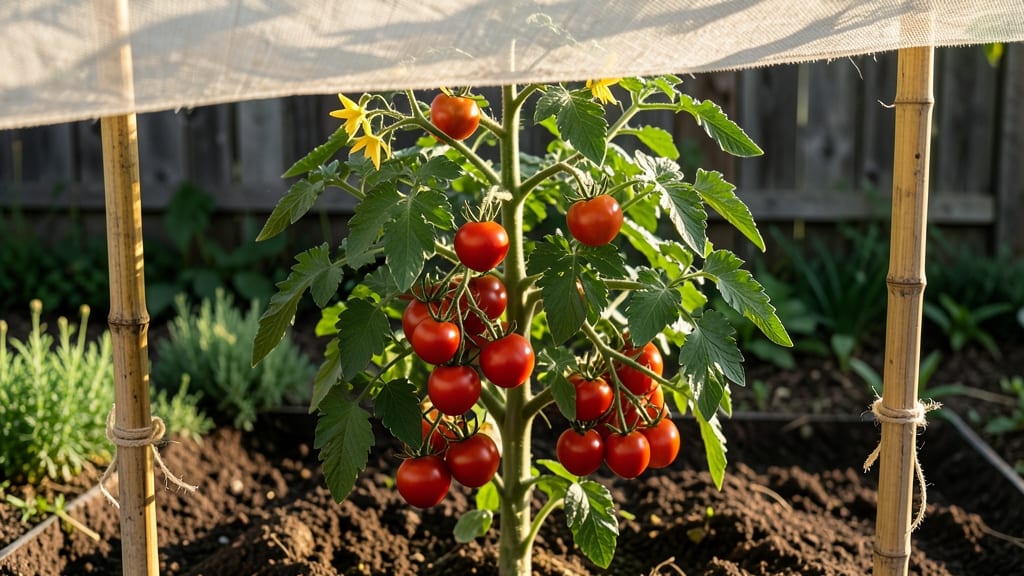
My tomatoes nearly fried in last summer’s 100°F heat waves—until I draped shade cloth over them. 🌿 That simple fabric hack saved my balcony harvest by preventing sunscald, keeping fruit from splitting, and even warding off pests.
The right percentage (30-50%) makes all the difference between mealy tomatoes and juicy, vine-ripened perfection.
You’ll need lightweight, breathable fabric rated for your climate—heavier cloth for intense sun, lighter for mild afternoons. Install it with stakes or a hoop system about 2 feet above plants, leaving room for airflow.
I adjust the height as my plants grow, keeping foliage just barely shaded when temps hit 85°F.
Within days, you’ll notice glossier leaves and stronger stems. The real magic happens at harvest: tomatoes stay firmer longer, develop deeper color, and resist cracking. Even my balcony’s limited space produces enough for sauces and salads—no more store-bought disappointment.
Works for container gardens, raised beds, or trellised plants. Just remember: morning sun is your friend, so only shade the hottest afternoon hours. Here’s how to set it up without sacrificing growth.
📚 In This Guide
- What you need
- Instructions
- Tips and common mistakes
- Wrapping up and next steps
What you need
- ● Shade cloth: 30-50% density (recommended: 40% for balanced sun protection and airflow). Size depends on your balcony—measure your space first! 📏
- ● Measuring tape: For precise cloth sizing and frame measurements.
- ● Scissors or utility knife: For cutting shade cloth to fit your frame.
- ● Frame materials: PVC pipes (½" or ¾") OR
- ● Wooden dowels (½" diameter) OR
- ● Aluminum tubing (lightweight and durable).
- ● Zip ties or clothespins: To secure shade cloth to the frame.
- ○ Staple gun + staples: For attaching cloth to wooden frames (optional but sturdy).
- ○ Grommets (optional): Pre-punched holes in shade cloth for easier hanging.
- ● Adjustable clips or bungee cords: For easy removal or height adjustments.
- ● Reflective mulch: Under the cloth to maximize light reflection.
- ● Weather-resistant spray: To protect wooden frames from moisture.
- ● Portable freestanding frame kit: If you prefer no DIY assembly!
Step-by-Step guide to using shade cloth for tomatoes
Here's how to protect your balcony tomato plants while maximizing growth in hot climates.
🌿 Step 1: Select the Right Shade Percentage and Size
Choose 30-50% shade cloth for tomatoes—this blocks enough UV while allowing sufficient light for photosynthesis. A 50% coverage works best in my experience, especially for varieties prone to sunscald like 'Celebrity' or 'Early Girl'. Measure your balcony space and buy cloth that's at least 2 feet wider than your plants on all sides to create proper airflow.
I always opt for knitted mesh over woven cloth because it's more durable and lets water drain through. Avoid plastic or vinyl covers—they trap too much heat and can scorch leaves. Hang the cloth 3-4 feet above plant tops so it doesn't touch foliage, which prevents fungal issues.
☀️ Step 2: Install Support Frame and Cloth Properly
Construct a hoop or frame system using PVC pipes or metal hoops spaced 4-5 feet apart along your balcony railing. Secure them with zip ties or heavy-duty staples to prevent sagging. The frame should be taller than your mature tomato plants—aim for 6-7 feet for indeterminate varieties.
Drape the shade cloth over the frame and secure it tightly with clothespins or bungee cords at the edges. Leave 6-8 inches of slack at the bottom to allow for airflow at soil level. I test the tension by gently pulling the center—if it doesn't spring back immediately, it's too loose and will flap in wind.
💧 Step 3: Adjust Covering Based on Temperature and Sun Intensity
Remove the shade cloth completely on cloudy days—tomatoes still need 6+ hours of light daily, even in heat. I check the forecast and adjust coverage: 50% shade for 85-95°F days, 30% for 100°F+. Use clothespins or quick-release ties so adjustments are easy.
Watch for sunburn signs—yellowing leaves with brown edges or white patches mean the cloth isn't blocking enough UV. If you see this, either lower the cloth closer to plants or switch to a higher percentage (like 60%) for a few days. Over-shading shows up as pale, leggy growth—if stems stretch excessively, your coverage is too heavy.
✂️ Step 4: Maintain Airflow and Monitor for Pest Issues
Check weekly for condensation buildup on the underside of the cloth—this creates a humid microclimate that attracts whiteflies and spider mites. If you spot webbing or tiny white insects, wipe the cloth down with a damp cloth and treat plants with neem oil spray the same day. I also rotate the cloth 90 degrees monthly to prevent uneven sun exposure.
Prune lower leaves regularly to improve airflow under the shade—this reduces humidity and fungal risks. When tomatoes start ripening, remove the shade cloth during peak sun hours (10 AM-2 PM) to encourage color development. I use a small flag or marker on the cloth to track which side faces south for even exposure.
⏰ Step 5: Remove Cloth for Harvest and Winter Storage
Take down the shade cloth once fruits are fully colored—the last thing you want is green shoulders on tomatoes. I leave it up until 80% of the crop is ripe, then store it clean and dry in a garage or shed for next season. Before putting it away, scrub it with mild soap and water to remove any fungal spores or insect eggs.
If you're in a hot, humid climate, consider leaving the frame up year-round and just swapping cloth for a lighter percentage in winter (like 10-20%). This saves setup time and protects plants from unpredictable late-season heat waves. Just remember to check for holes or fraying before reuse—sun degrades cloth over time.
Tips & tricks for perfect shade cloth setup
Between us, the right shade cloth setup can mean the difference between thriving tomatoes and a sad, sun-scorched mess. Here's what nobody tells you—
Shade Percentage Precision: That 30-50% range in Step 1 isn't arbitrary—it's a balance between UV protection and light requirements. For varieties like 'Celebrity' or 'Early Girl', I've found that 50% coverage works best during 85-95°F days, but if your plants start showing yellowing with brown edges (sunburn), don't hesitate to temporarily switch to 60% coverage for a few days. The key is monitoring, not just following the initial recommendation.
Frame Height Matters: When constructing your frame in Step 2, remember that indeterminate varieties can grow 6-7 feet tall—that's why the frame needs to be taller than your mature plants. I've seen gardeners make the mistake of using frames that are too short, forcing them to constantly adjust the cloth as plants grow. Pro tip: Add 1-2 feet extra height to account for unexpected growth spurts, especially in warm climates.
Condensation Control: The humid microclimate created under shade cloth is a breeding ground for pests like whiteflies and spider mites. In Step 4, when you see condensation buildup on the underside of the cloth, don't just ignore it—this is your warning sign. I've had success using a small handheld fan aimed at the underside of the cloth for 5-10 minutes daily to improve airflow and reduce condensation. It's a simple fix that prevents bigger problems down the road.
Seasonal Adjustments: The temperature guidelines in Step 3 are your baseline, but don't treat them as set-in-stone rules. If you're in a coastal area with high humidity, you might need to use 30% coverage even at 85°F to prevent fungal issues. Conversely, in arid climates, you can push to 60% coverage at 100°F+ without stressing plants. The goal is always balanced protection, not rigid adherence to the percentages.
Pro Tips for Shade Cloth For Tomatoes
- Between us, the right shade cloth setup can mean the difference between thriving tomatoes and a sad, sun-scorched mess.
- Shade Percentage Precision: That 30-50% range in Step 1 isn't arbitrary—it's a balance between UV protection and light requirements.
- Frame Height Matters: When constructing your frame in Step 2, remember that indeterminate varieties can grow 6-7 feet tall—that's why the frame needs to be taller than your mature plants.
Frequently asked questions
Got questions about using shade cloth for tomatoes?
You’re not alone! Here are answers to the most common concerns—from setup to troubleshooting—to help your balcony garden thrive under the sun.
What shade percentage should I use for tomatoes?
For tomatoes, 30-50% shade cloth is ideal in hot climates (90°F+). Use 30% for mild heat (preserves some sunlight for ripening) and 50% for extreme heat (prevents sunburn). Adjust based on your local summer temps—start lighter and increase if needed!
When is the best time to install shade cloth?
Install shade cloth before peak summer heat (late spring/early summer) to avoid shocking plants. If adding later, acclimate tomatoes gradually over 7–10 days by covering them for 2–3 hours daily, then increasing time. Never drop shade cloth suddenly—it can stress plants!
Can I use shade cloth instead of pruning tomatoes?
Shade cloth isn’t a replacement for pruning, but it can reduce the need for heavy pruning. It lowers stress from heat, so you may prune 10–20% less to remove diseased leaves or overgrowth. Still, remove suckers and bottom leaves for airflow—shade cloth won’t fix poor circulation!
How do I clean or store shade cloth between seasons?
Rinse cloth with mild soap and water to remove dust/debris, then air-dry in the sun. Store it flat or rolled loosely in a dry place (like a mesh bag) to prevent mildew. Avoid folding tightly—trapped moisture breeds mold. Pro tip: Treat with a vinegar spray (1:3 ratio) before storage for extra freshness!
Why are my tomatoes still getting sunburn even with shade cloth?
Check these fixes:
- Gaps in coverage: Ensure cloth is taut and fully draped (no sagging or holes). Secure edges with clips or weights.
- Wrong percentage: If using <30%, upgrade to 50% for intense sun.
- Timing issues: Remove cloth during early morning/evening for light exposure if tomatoes aren’t ripening.
- Reflective surfaces: Light-colored walls or pavement can bounce heat—add a windbreak or mulch nearby.
Wrapping up and next steps
Using shade cloth for tomatoes is a game-changer for balcony gardeners battling scorching sun or unpredictable weather. 🌞 With the right setup—like lightweight, breathable fabric and proper installation—you’ll protect your plants while boosting yields, even in small spaces.
Ready to try it? Start by testing a small section of your garden this season and watch your tomatoes thrive under the perfect balance of sun and shade!
Pro tip: Keep an eye on humidity levels and adjust your cloth as needed—your plants will thank you with juicy, flavorful rewards! 🍅