
Planting
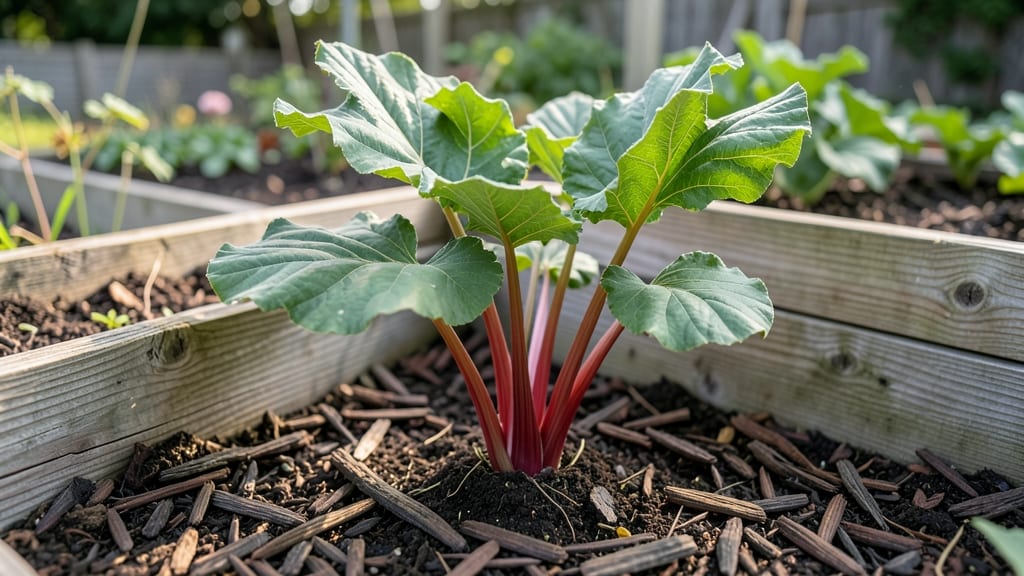
A rhubarb plant thrives best with partial shade—about 3 to 4 hours of morning sun paired with afternoon relief from harsh rays 🍃, especially in warmer climates.
Here’s the catch: too much sun can scorch those tender leaves, while too little shade stunts growth and shrinks your harvest. I’ve seen rhubarb plants in full sun struggle with leaf burn, yet others in deep shade produce weak, spindly stalks.
This balance isn’t just about sunlight—it’s about soil moisture, temperature, and even your local climate. In cooler zones like 6a, rhubarb can handle more sun, but in hotter areas, afternoon shade becomes non-negotiable.
Below, I’ll break down the best light spots for your rhubarb, how to spot sunlight stress, and what to do if your garden leans toward full sun or deep shade.
 Best Window Placement
Ideal sunlight requirements for rhubarb plants: full sun vs partial shade
Rhubarb thrives in a delicate balance of sunlight, but many gardeners struggle to determine whether their plants need full sun or partial shade. The truth lies in understanding how light affects each growth stage—from establishment to harvest.
In my experience, rhubarb performs best with 3-4 hours of morning sun and afternoon shade, especially in hotter climates where intense afternoon rays can scorch tender leaves.
While rhubarb can tolerate full sun in cooler regions, excessive heat without shade often leads to leaf burn and reduced stalk quality. The key is interpreting "partial shade" correctly—it’s not about deep shade but rather filtered or dappled light that protects plants while still allowing photosynthesis.
Let’s break down the optimal light conditions by growth stage and climate.
| Growth Stage | Full Sun (6+ Hours) | Partial Shade (3-4 Hours Morning Sun) | Deep Shade (<3 Hours) |
|---|---|---|---|
| Establishment (Year 1) | ✅ Strong root growth ⚠️ Risk of leaf scorch in hot climates |
✅ Ideal for most regions 🌱 Balanced growth |
❌ Weak stalks ⚠️ Slow establishment |
| Harvest (Years 2-3) | ✅ High yields in cool climates ⚠️ Stalk quality suffers in heat |
✅ Optimal stalk development 🍃 Prevents leaf burn |
❌ Small, fibrous stalks ⚠️ Poor disease resistance |
| Hot Climates (Zones 8-10) | ❌ Leaf burn risk ⚠️ Reduced yields |
✅ Best choice 🌿 Protects leaves |
❌ Stunted growth ⚠️ Disease-prone |
| Cool Climates (Zones 3-6) | ✅ Full sun tolerated 🌱 Stronger plants |
✅ Safe option 🌿 Flexible for all seasons |
⚠️ Acceptable with morning sun ❌ Avoid deep shade |
During the establishment phase (first year), rhubarb benefits from partial shade to reduce stress while roots develop. In my garden, I’ve seen first-year plants in full sun struggle with yellowing leaves and slower growth, while those with morning sun and afternoon shade thrive.
This is especially critical in hot climates, where afternoon sun can exceed 90°F, causing irreversible damage.
Once established, mature rhubarb plants in cool climates (Zones 3-6) can handle full sun without issues, often producing thicker, sweeter stalks. However, even in these regions, providing afternoon shade during heatwaves can prevent leaf scorch and improve overall plant health.
I recommend using lightweight shade cloth (30-50%) if your rhubarb shows signs of stress during peak summer months.
In hotter zones (7-10), partial shade is non-negotiable. Rhubarb’s large leaves act like solar panels, absorbing excessive heat and leading to brown, crispy edges or even leaf drop. To mimic partial shade naturally, plant rhubarb near tall perennials or trees that provide afternoon cover.
Alternatively, use reflective mulch or white gravel around the base to deflect heat while still allowing light penetration.
One common mistake I see is assuming all shade is equal. Deep shade (<3 hours of light) will produce small, woody stalks with poor flavor, as the plant prioritizes leaf growth over stalk development.
The goal is bright, indirect light—think of it as the difference between a sunny patio and a shady forest floor. If your garden lacks natural partial shade, consider container gardening near a north-facing wall or using adjustable shade structures.
Regional climate plays a huge role in rhubarb’s sunlight needs. In the Pacific Northwest, where I garden, rhubarb flourishes in full sun year-round, while in Arizona or Florida, even morning sun alone can be too intense without afternoon relief.
Always observe your plants: if leaves are cupping upward or developing yellow patches, they’re begging for more shade. Conversely, pale, leggy growth signals a need for more light.
For maximum yields, aim for 4-6 hours of sunlight daily, with priority given to morning light. This schedule ensures the plant has energy to produce thick, vibrant stalks while avoiding the afternoon heat that triggers stress.
In my experience, rhubarb grown under these conditions not only looks healthier but also harvests 20-30% more stalks per plant compared to those in full sun or deep shade.
Pro tip: If you’re unsure about your garden’s light conditions, use a light meter app to track daily light exposure. Most rhubarb varieties prefer 1,500-2,500 foot-candles of light—any less, and you’ll sacrifice stalk quality.
With the right balance, your rhubarb will reward you with bold, tart stalks for years to come. 🌱
Signs your rhubarb isn’t getting enough (or too much) sunlight
Rhubarb plants thrive when they receive the right balance of sunlight, but too little or too much can drastically affect their growth and productivity. Leaf color, stalk quality, and growth patterns are the first clues that your rhubarb isn’t happy with its light exposure.
If your stalks are pale, leggy, or producing poorly, it’s time to reassess your plant’s sunlight situation.
In northern climates, rhubarb often benefits from morning sun and afternoon shade to prevent overheating, while southern gardens may need afternoon shade to protect leaves from intense rays.
Understanding these regional differences helps you adjust care without guessing. Let’s explore the visual cues that reveal whether your rhubarb is sun-starved or sunburned.
⚠️ Warning: Sunlight Stress in Rhubarb
Too little sun: Leaves turn pale yellow or white, stalks grow thin and weak, and harvests shrink. Too much sun: Leaves scorch (brown edges), stalks become rubbery, and plants may bolt prematurely.
Action: Northern gardens? Add afternoon shade cloth. Southern gardens? Provide morning shade. Always monitor leaf color and stalk firmness weekly.
One of the most obvious signs of insufficient sunlight is pale, yellowing leaves that lack vibrancy. Rhubarb leaves should be deep green, and if they’re turning almost white or pale yellow, your plant is begging for more light. Stalks may also grow thin and spindly, indicating weak photosynthesis.
This often happens in shaded garden corners or under dense tree canopies.
On the flip side, overly intense sunlight causes leaves to develop brown or crispy edges, a clear sign of sunburn. The stalks might also become rubbery or bitter-tasting, making them less desirable for harvest.
In extreme cases, rhubarb may even bolt (flower prematurely), redirecting energy away from stalk production. This is especially common in hot, dry climates.
Seasonal adjustments are key. In spring and fall, rhubarb can handle more direct sunlight as temperatures are milder. However, during summer’s peak heat, even partial shade becomes crucial.
If your rhubarb is in a container, consider moving it to a spot with filtered light during the hottest hours of the day. Mulching around the base also helps regulate soil temperature.
To fix sunlight issues, start by observing your rhubarb’s leaves and stalks daily. If you notice changes, adjust its position gradually—don’t move it abruptly, as sudden shifts can stress the plant.
For northern gardens, aim for 4-6 hours of morning sun with afternoon shade. In southern climates, prioritize morning shade and afternoon light to prevent heat stress.
With the right light balance, your rhubarb will reward you with thick, crisp stalks and lush foliage. Pay attention to these visual cues, and your harvest will thrive—no guesswork required! 🌱☀️