
Light Requirements
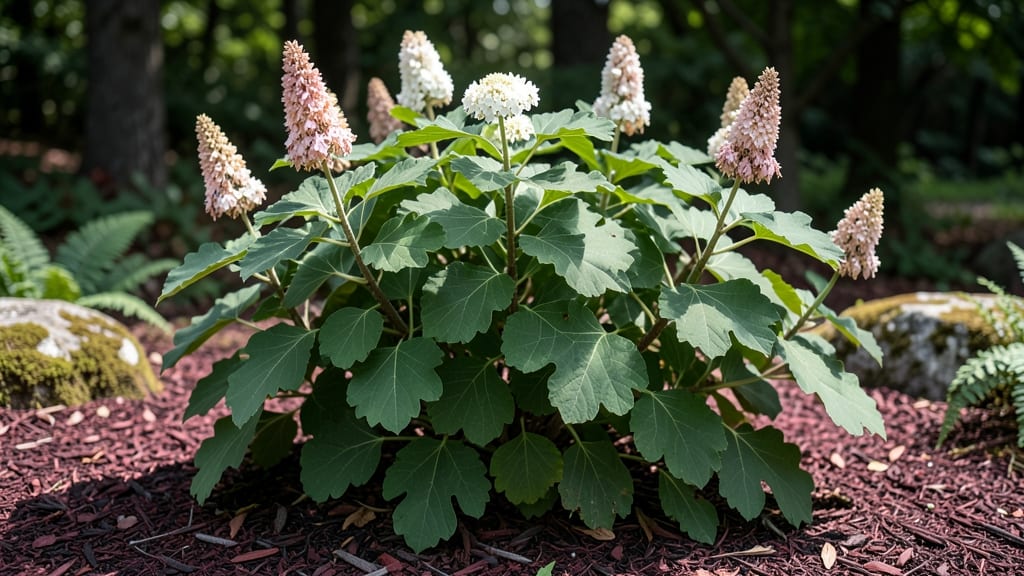
Oakleaf hydrangeas in full shade still deliver stunning results, showcasing their legendary fall foliage while producing fewer blooms compared to partial shade. Their deep green leaves transform into fiery reds and purples as sunlight fades, making them a standout in low-light gardens.
These shade-loving beauties actually thrive in deep shade because their broad leaves efficiently capture whatever light is available. 🌿 The trade-off? They redirect more energy into vibrant foliage than flower production, which is why you'll see fewer—but often larger—blooms.
I've seen oakleaf hydrangeas in my own backyard explode with color in late summer and fall, even under mature trees where other plants struggle. The key is mimicking their natural forest-floor habitat with rich, moist soil and regular watering to support that spectacular leaf transformation.
What's fascinating is how their leaf chemistry changes with light exposure. In full shade, they produce higher levels of anthocyanins—the pigments responsible for those jaw-dropping red and purple hues. This makes oakleaf hydrangeas one of the best choices for dark corners of your garden where most plants would fade away.
💡 In This Article
- How Oakleaf Hydrangeas Adapt to Full Shade
- Full-Shade Care Tips for Oakleaf Hydrangeas
How oakleaf hydrangeas adapt to full shade
The oakleaf hydrangea's remarkable shade tolerance stems from its unique leaf structure and photosynthetic efficiency. Unlike many flowering shrubs, oakleaf hydrangeas (Hydrangea quercifolia) have broad, leathery leaves designed to maximize light absorption even in low-light conditions.
Their leaves contain a higher concentration of chlorophyll than many other hydrangeas, allowing them to convert minimal sunlight into energy through a process called shade adaptation. This means they can thrive in areas receiving less than 3 hours of direct sunlight per day, where other plants might struggle.
What makes them truly special is their energy allocation strategy. In full shade, oakleaf hydrangeas prioritize leaf production over flower development. This is because their broad leaves act like solar panels, capturing as much light as possible to fuel the plant's metabolic processes. The result?
Stunning fall foliage that transitions from deep green to fiery reds, purples, and oranges—colors that develop due to increased anthocyanin production when daylight becomes limited. 🌿 These pigments not only create the spectacular color display but also act as natural sunscreen, protecting the leaves from potential UV damage in bright but indirect light.
The trade-off is fewer—but often larger—blooms compared to their partial-shade counterparts. Oakleaf hydrangeas typically produce flowers on old wood (last year's growth), and in full shade, the plant may delay or reduce blooming until it has built sufficient leaf mass.
However, when they do bloom, the flowers often appear later in the season (June-July) and may last longer due to the plant's slower growth rate in low light. This delayed blooming also means the flowers coincide beautifully with the peak foliage color, creating a two-season show.
Another fascinating adaptation is their root system. Oakleaf hydrangeas develop extensive, shallow roots that spread horizontally to access moisture and nutrients in the topsoil layer. This root structure is particularly beneficial in shaded areas where soil can remain damp longer.
The roots also produce mycorrhizal associations with fungi in the soil, which help the plant absorb water and nutrients more efficiently in low-light conditions. This symbiotic relationship is why these plants often outperform others in dense shade where competition for resources is fierce.
For gardeners, understanding this adaptation means you can place oakleaf hydrangeas in spots where other shrubs would fail—like under tall trees or along north-facing walls. Their ability to thrive in these conditions makes them ideal for creating lush, layered garden designs with minimal sunlight requirements.
The key is to mimic their natural forest-floor habitat by keeping the soil consistently moist and rich in organic matter, which supports their energy-intensive leaf production process.
What's particularly rewarding is watching the foliage transformation throughout the growing season. In spring, the leaves emerge a rich green, gradually darkening as summer progresses.
Then, as daylight hours shorten in late summer, the leaves begin their magical color change—first developing hints of red along the edges, then deepening into intense purples and oranges by fall.
This seasonal display is a direct result of the plant's physiological response to decreasing light levels, making each plant a living work of art in your shade garden.