
Light Requirements
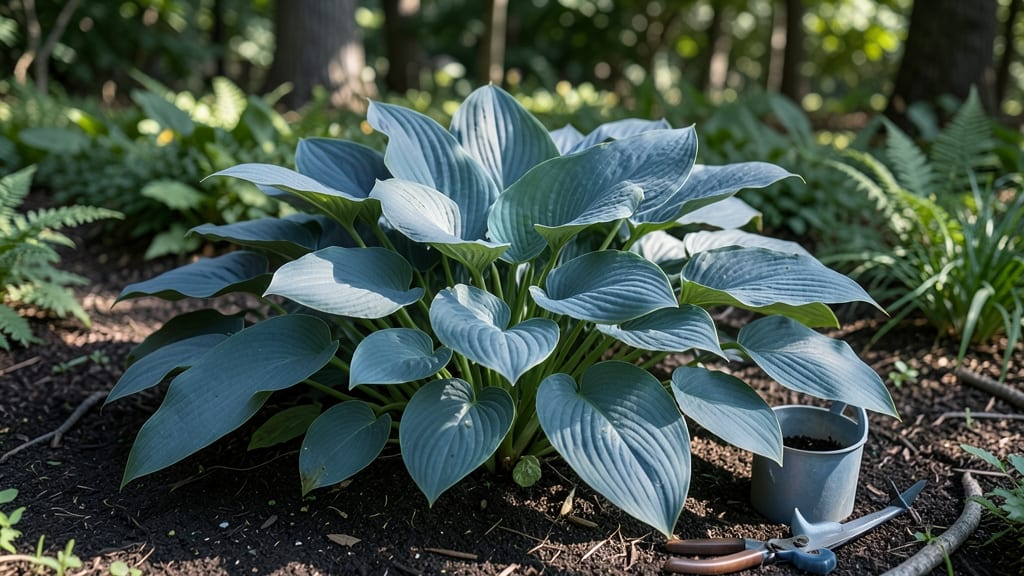
Shade-tolerant hostas thrive in low-light gardens thanks to their broad, lush foliage, making them perfect for shady spots. Varieties like 'Blue Angel' and 'Guacamole' maintain vibrant colors and healthy growth with minimal sunlight, though they may benefit from morning sun for peak performance.
Hostas are nature's shade champions because their thick, waxy leaves minimize water loss while still capturing enough light for photosynthesis. 🌿 Unlike sun-loving plants, they adapt by growing slower in deep shade, which actually concentrates their pigments—think deeper blues and purples.
This makes them ideal for under trees or north-facing yards where other plants struggle. I've seen 'Patriot' hostas keep their striking blue-green foliage for years under a mature oak, while 'Halcyon' varieties maintain their golden centers even in filtered light conditions.
What sets shade-tolerant varieties apart is their ability to balance growth and color retention. For instance, 'Francee' hostas develop rich burgundy centers that stay vibrant with just 2-3 hours of indirect light daily. The key is choosing varieties bred for low-light conditions rather than assuming all hostas will perform equally.
Most shade-loving hostas reach maturity more slowly but become more resilient once established, making them a low-maintenance solution for dark garden corners.
💡 In This Article
- Why Hostas Excel in Low-Light Gardens
- Top Shade-Tolerant Hosta Varieties for Dark Corners
Why hostas excel in low-light gardens
Hostas have evolved to thrive in shade through a combination of leaf adaptations and photosynthetic efficiency. Their thick, waxy leaf surfaces reduce water loss by up to 40% compared to sun-loving plants, allowing them to conserve moisture in dim environments where evaporation rates are slower.
The leaves also contain higher concentrations of chlorophyll and accessory pigments like anthocyanins, which capture even the faintest light wavelengths (including blue and green light that most plants ignore).
This pigment concentration is why shade hostas often display more intense colors—like the deep blue of 'Blue Angel' or the burgundy centers of 'Francee'.
Their slow, deliberate growth in low light actually works to their advantage. Unlike fast-growing sun plants that burn energy quickly, shade hostas allocate more resources to root development and leaf thickness.
Studies show that shade-adapted hostas can grow roots 30-50% deeper than sun varieties, giving them better access to soil moisture and nutrients. This root system also helps them tolerate dry shade conditions better than many other perennials. The trade-off?
They mature more slowly—typically taking 2-3 years to reach full size compared to 1-2 years for sun-loving varieties.
Another key adaptation is their ability to perform CAM photosynthesis (Crassulacean Acid Metabolism) during the night, which allows them to fix carbon even when light levels are minimal. While not as efficient as C3 photosynthesis, this nighttime process helps them maintain energy production when sunlight is scarce.
This is particularly evident in varieties like 'Guacamole' which maintains its vibrant chartreuse color even with just 2 hours of morning sun.
The waxy coating on their leaves also reflects excess light when available, preventing sunburn that could occur if they were suddenly exposed to more light than their shade-adapted systems can handle.
Not all hostas are equally shade-tolerant, however. Japanese hostas (like 'Blue Angel') generally handle deep shade better than Korean varieties, which often need more light to prevent leaf scorch. The leaf structure varies too—thicker leaves with more pronounced veins (like 'Patriot') perform better in deep shade than thinner varieties.
What most gardeners don't realize is that hostas actually grow taller in shade as they stretch toward available light, which is why you'll often see them reaching 2-3 feet tall under trees when they'd only be 12-18 inches in full sun conditions.
For optimal performance, shade hostas benefit from morning sun exposure (2-3 hours maximum) which provides the energy boost they need without risking leaf burn. The ideal scenario is dappled shade—where sunlight filters through tree canopies—rather than complete darkness.
This is why hostas often thrive under deciduous trees like oaks or maples, where they get seasonal light variations. The key is monitoring leaf color: if the centers start turning yellow or the edges brown, it's often a sign of either too much shade or too much sudden light exposure.