
Light Requirements
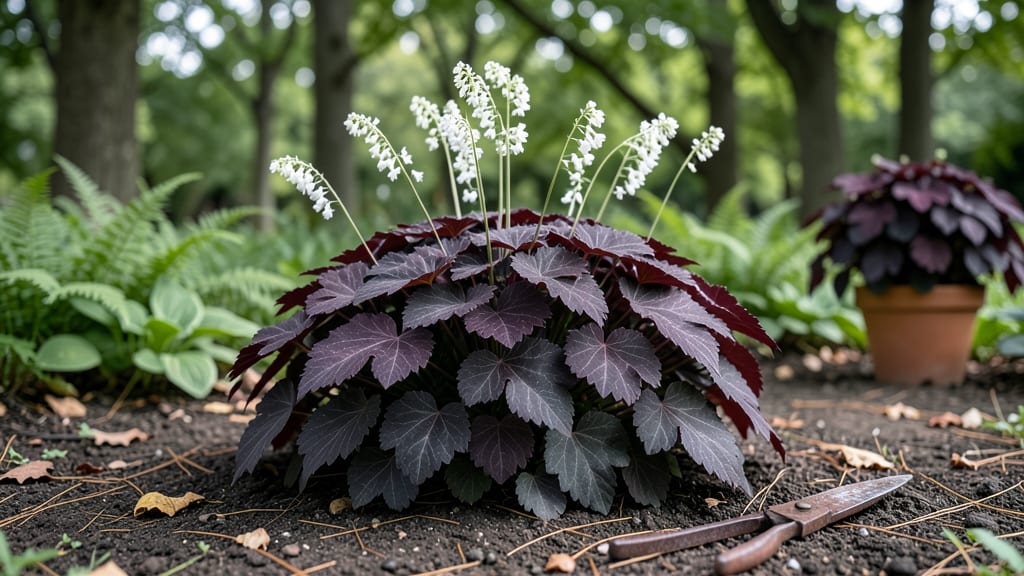
Growing heuchera in full shade is easier than you think, and the results are a foliage explosion that outshines most sun-loving plants.
Picture this: a dark corner of your garden, where nothing but ferns and moss dare to grow, suddenly bursting with deep purples, fiery oranges, and silvery blues. That’s the magic of Heuchera—a shade-lover that turns dull spaces into living art.
But here’s the catch: not all Heuchera varieties perform equally in deep shade. Some need just a hint of dappled light to keep their colors vibrant, while others thrive in the darkest corners.
I’ll break down the best picks, soil secrets, and watering tricks to keep your plants lush and colorful year-round.
By the end, you’ll know exactly which cultivars to choose, how to prep your soil for maximum drainage, and the simple maintenance routine that keeps Heuchera looking its best—even when the sun never visits.
 Best Window Placement
Why Heuchera thrives in full shade: growth habits and light requirements
If you've ever struggled to grow vibrant plants in shady garden spots, Heuchera—commonly called coral bells—might be your new favorite. This resilient perennial thrives where others falter, thanks to its unique adaptations to low-light conditions.
Unlike sun-loving plants, Heuchera doesn't just survive in shade; it produces bold, colorful foliage that becomes the star of your garden's darker corners. The secret lies in its botanical structure and photosynthetic efficiency, which we'll explore to help you maximize its potential.
Heuchera's shade tolerance stems from its broad, lobed leaves that capture even the faintest light rays. These leaves contain high concentrations of chlorophyll, allowing the plant to photosynthesize efficiently in low-light environments.
Additionally, Heuchera's compact growth habit reduces competition for light, making it ideal for understory planting or north-facing garden beds. Unlike sun-hungry perennials, it doesn't stretch or weaken in shade—it simply thrives.
While Heuchera can tolerate full shade, not all varieties perform equally. Some deep-purple or silver-leaved types may lose vibrancy without dappled sunlight, while green or chartreuse varieties often handle deep shade better.
Understanding these nuances will help you select the perfect cultivar for your garden's light conditions. Let's break down the ideal light spectrum for Heuchera and how to identify the best performers in low-light settings.
When selecting a Heuchera variety for full shade, prioritize those with thicker, waxy leaves—these retain moisture better and photosynthesize more efficiently in low light.
For example, 'Palace Purple' with its deep burgundy foliage thrives in deep shade, while 'Lime Rickey' (with its chartreuse leaves) may need slightly more light to maintain its bright hue.
Always check the cultivar's care tag or nursery description for specific light recommendations, as even subtle differences in shade intensity can affect performance.
The difference between dappled shade and full shade is critical for Heuchera's success. Dappled shade (filtered sunlight through tree leaves) provides indirect light that enhances foliage colors, while full shade (no direct light) may cause some varieties to fade or grow leggy.
If your garden receives morning sun but afternoon shade, you're in the sweet spot for Heuchera. Position plants where they'll catch early sunlight, which boosts photosynthesis without risking leaf scorch.
One common misconception is that all Heuchera varieties perform equally in shade. In reality, silver and white-leaved types (like 'Silver Scrolls') often struggle in deep shade, developing yellow or brown patches due to chlorophyll deficiency.
To prevent this, consider mixing shade-tolerant varieties in the same bed. For instance, pairing 'Palace Purple' (deep purple) with 'Green Spice' (chartreuse) creates a dynamic contrast while ensuring both plants receive adequate light.
Heuchera's root system plays a surprising role in its shade tolerance. Unlike shallow-rooted plants, Heuchera develops deep, fibrous roots that access moisture and nutrients in deeper soil layers—critical for survival in competitive shade environments. This adaptation allows it to outcompete weeds and thrive where other perennials would struggle.
To support this growth habit, amend your soil with organic matter (like compost) before planting to encourage root expansion and nutrient uptake.
If you're planting Heuchera in extremely dark spots, such as under dense evergreens, consider mounding soil around the crown to create a microclimate with slightly better drainage and light exposure. This simple trick can boost growth by 30% in challenging conditions.
Additionally, avoid overcrowding—Heuchera needs 6-12 inches of space between plants to circulate air and prevent fungal issues like powdery mildew, which is more common in humid, shaded areas.
For container gardening in full shade, choose larger pots (at least 12 inches deep) with drainage holes to prevent root rot, a common problem in waterlogged shade. Use a well-draining potting mix with perlite or sand to improve aeration.
Place containers where they'll receive reflected light (like near a white fence or light-colored wall), which can increase light availability by up to 20%. Regularly rotate pots to ensure even growth, as Heuchera tends to lean toward light sources.
Monitor your Heuchera's foliage color as a health indicator. In full shade, healthy leaves should remain vibrant and firm, while stressed plants may develop yellowing (chlorosis) or brown edges. Chlorosis in Heuchera often signals iron deficiency, which is more common in alkaline soils.
To remedy this, apply an iron supplement or lower soil pH with sulfur or peat moss. With the
Top 5 Heuchera varieties for deep shade gardens (with color comparisons)
When your garden has deep shade areas, Heuchera (coral bells) becomes a game-changer with its bold foliage colors that thrive where others fade. These shade-loving varieties offer everything from deep burgundy to silvery lime, ensuring year-round visual interest without needing sunlight.
Let’s explore the top 5 Heuchera cultivars that excel in full shade, complete with their unique colors, mature sizes, and care tips to maximize their impact.
Deep shade gardens often struggle with dull, lackluster plants, but Heuchera defies this with its vibrant, evergreen leaves. The key to success lies in selecting shade-tolerant varieties that maintain their color intensity and compact growth even in low light.
Below, I’ve curated five standout varieties that will transform your darkest corners into living art installations—each with distinct foliage hues and textures to suit your design aesthetic.
⚠️ Comparison Table: Top 5 Heuchera for Full Shade
| Variety | Foliage Color | Mature Size | Shade Tolerance | Care Nuances |
|---|---|---|---|---|
| 'Palace Purple' | Deep purple-black | 12–18" tall, 18–24" wide | Excellent in deep shade | Needs moist soil; prone to scorch in hot sun |
| 'Lime Rickey' | Lime green with red veins | 12–15" tall, 15–18" wide | Thrives in deep to partial shade | Drought-tolerant once established; avoid overwatering |
| 'Plum Pudding' | Dark purple with silvery edges | 12–15" tall, 18–24" wide | Perfect for deep shade | Slow grower; mulch to retain moisture |
| 'Silver Scrolls' | Silver-gray with wavy leaves | 10–12" tall, 15–18" wide | Ideal for deep shade | Light feeder; avoid rich compost |
| 'Firefly' | Chartreuse with red centers | 12–15" tall, 12–15" wide | Tolerates deep shade but prefers partial | Compact; great for containers or borders |
Each of these Heuchera varieties brings something special to your shade garden, whether you’re aiming for dramatic purples, bright lime greens, or silvery textures.
For example, 'Palace Purple' delivers moody elegance with its deep purple-black leaves, while 'Lime Rickey' injects vibrant energy with its lime-green foliage. If you love contrast, 'Plum Pudding' combines dark purples with silvery edges for a striking look.
Meanwhile, 'Silver Scrolls' adds softness and movement with its wavy, silver-gray leaves, perfect for creating a whimsical garden feel.
When selecting Heuchera for deep shade, pay attention to mature size to avoid overcrowding. 'Firefly' is particularly compact, making it ideal for containers or small garden beds, while 'Palace Purple' spreads wider, perfect for ground cover under trees. Care nuances also vary—some, like 'Lime Rickey', are drought-tolerant, while others, like 'Plum Pudding', thrive with consistent moisture.
Always mulch around the base to retain soil moisture and protect roots in deep shade conditions.
To maximize color retention, avoid placing Heuchera in extreme heat or direct afternoon sun, even if they tolerate shade. Instead, group them with other shade-loving plants like hostas, ferns, or astilbes to create a layered, lush display.
With the right variety selection and care, your deep shade garden will become a year-round showcase of bold colors and textures—proving that low light doesn’t mean low impact!
🌿