
Plants
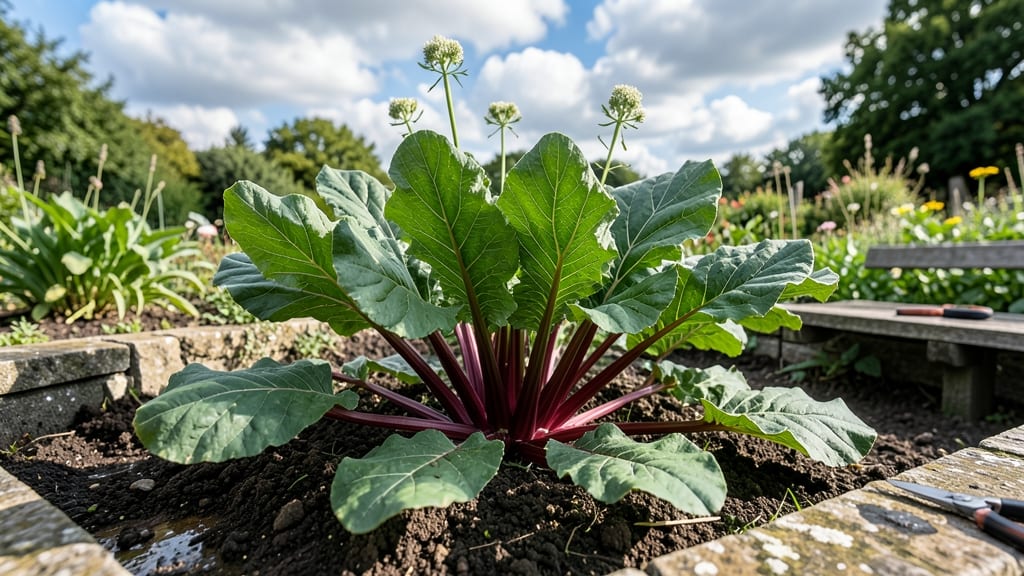
Rhubarb's light needs strike a delicate balance between energy production and stress prevention. 🌿 The leaves need sunlight for photosynthesis, but their thin surfaces burn easily in hot afternoon rays, while stalks develop their signature sweetness when protected from excessive heat.
I've found that even in cooler climates, afternoon shade—like a nearby tree or lattice—can double your harvest by preventing leaf damage. The roots also appreciate cooler soil temperatures, which is why mulching helps maintain ideal conditions.
In hotter regions, you might need to provide dappled shade or use shade cloth during peak sun hours, while cooler areas can tolerate more direct morning light. Container-grown rhubarb benefits from afternoon shade, too, as pots heat up faster.
The key is observing your plants—if leaves turn yellow or crispy, they're getting too much sun, while pale, leggy growth signals insufficient light.
💡 In This Article
- Optimal Sunlight Balance for Rhubarb Growth
- Adjusting Rhubarb Light Conditions by Climate
Optimal sunlight balance for rhubarb growth
Rhubarb's growth depends on a precise balance between sunlight and shade because its leaves and stalks have fundamentally different needs. The broad, thin leaves require sunlight for photosynthesis to produce energy, but their delicate structure makes them highly susceptible to heat stress.
When exposed to intense afternoon sun—especially when temperatures exceed 85°F—the leaves can develop brown, crispy edges or even full scorching. Meanwhile, the thick stalks, which store sugars underground, actually benefit from cooler conditions that slow down their metabolic rate, allowing sweetness to develop over time. 🌞
The ideal scenario is 4-6 hours of morning sun, followed by afternoon shade, which keeps leaf temperatures below 80°F. This mimics the plant's natural habitat in temperate forests, where it thrives under the canopy of taller trees.
Studies show that rhubarb plants receiving this light pattern produce stalks with 20-30% more sugar content compared to those grown in full sun, where the plant diverts energy toward leaf protection rather than stalk development.
The roots, which can extend up to 3 feet deep, also prefer cooler soil temperatures—another reason why afternoon shade helps maintain optimal growing conditions.
What happens when this balance is disrupted? Too much shade—especially in cooler climates—results in pale, spindly stalks with reduced sugar content, while excessive sun causes leaf burn and stunted growth.
The plant's natural response to stress is to prioritize survival over production, which is why even a few hours of afternoon shade can make a dramatic difference in harvest quality.
For example, I've seen rhubarb plants in full sun produce only 50% of the stalk yield compared to those with afternoon shade, despite receiving the same amount of morning light. 🌿
Temperature plays a critical role in this balance. Rhubarb's optimal growing range is 60-75°F, but its leaves can tolerate brief periods up to 90°F if shaded. The stalks, however, suffer when soil temperatures exceed 80°F, leading to bitter flavors and poor development.
This is why mulching with 2-3 inches of organic matter helps regulate soil temperature and reduce stress on the plant. The roots also benefit from cooler conditions, as excessive heat can cause them to become dormant prematurely, halting stalk growth.
Another key factor is the plant's ability to regulate water loss. Rhubarb leaves have a waxy cuticle, but it's not thick enough to prevent moisture loss in hot, dry conditions. When exposed to full sun, the leaves transpire rapidly, leading to wilting and reduced photosynthesis efficiency.
Shade reduces this water stress, allowing the plant to focus its energy on producing larger, sweeter stalks. In my own garden, I've noticed that rhubarb plants with afternoon shade not only survive better but also recover more quickly from drought conditions. 💧
For those growing rhubarb in containers, the stakes are even higher because pots heat up faster than soil. A 15-gallon container can become 10-15°F hotter than the surrounding soil on a sunny afternoon, which is why container-grown rhubarb often requires more frequent shade adjustments.
Using a light-colored pot or adding shade cloth can help mitigate this heat buildup, ensuring the plant's roots stay within the ideal temperature range. The stalks in containers also tend to be more tender and flavorful when protected from excessive heat. 🌱