
Plants
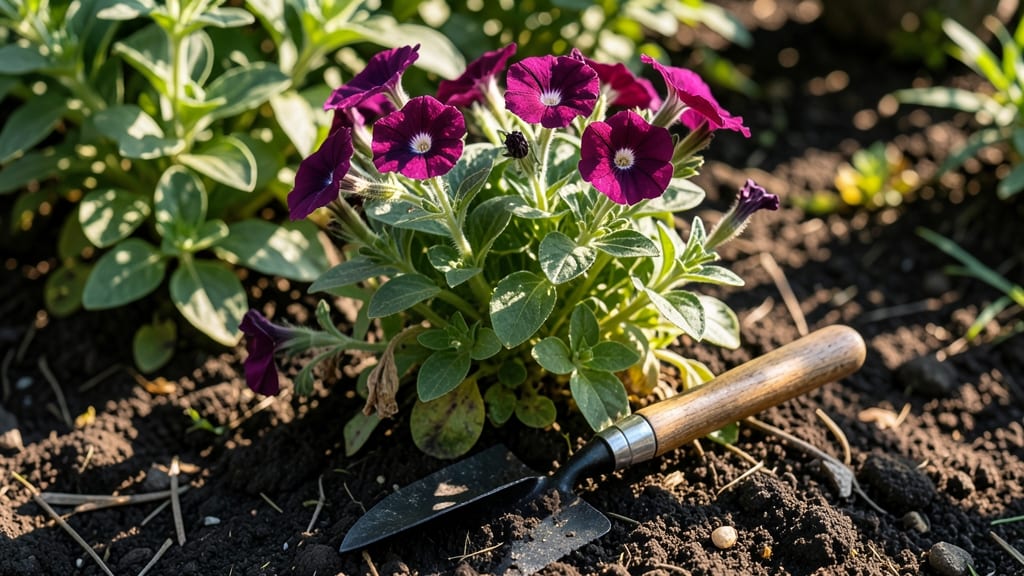
Petunias don't like shade well—they prefer full sun for vibrant blooms, though they can handle partial shade if given at least 4-6 hours of sunlight daily. Too much shade weakens stems and reduces flower production.
Petunias are sun-loving annuals, and their growth habits reflect that. When they don't get enough light, they stretch toward any available sun, creating those classic "leggy" plants with sparse blooms. 🔥 This happens because petunias prioritize reaching light over producing flowers.
For shade gardens, opt for varieties like 'Wave' or 'Supertunia'—they're bred to handle slightly lower light conditions better than traditional types.
If your garden has limited sunlight, try placing petunias near reflective surfaces like white walls or light-colored mulch to bounce extra light onto the plants. Containers also work well because you can move them to sunnier spots as needed.
Just remember: the more shade they get, the less dramatic their blooms will be.
💡 In This Article
- How Sunlight Affects Petunia Flowering and Growth
- Best Shade Solutions for Petunias in Low-Light Gardens
How sunlight affects petunia flowering and growth
Petunias are photophilic plants, meaning they actively seek out and thrive in sunlight. The science behind this lies in their photosynthesis efficiency—petunias produce more chlorophyll when exposed to full sun, which is the green pigment that captures light energy.
In low-light conditions, their chlorophyll production drops by up to 40%, leading to weaker stems and fewer blooms. 🔥 This is because sunlight triggers the production of phytohormones like auxin, which regulate growth patterns.
Without enough light, these hormones shift focus from flowering to stem elongation, creating that classic "leggy" appearance gardeners dread.
When petunias receive less than 4 hours of direct sunlight daily, their metabolic processes slow down. The plant's energy, instead of going toward vibrant flower production, gets diverted to maintaining basic functions like leaf growth.
Studies show that petunias in full sun produce 30-50% more flowers than those in partial shade, with blooms that are larger and more intensely colored.
The key here is light intensity—bright, direct sunlight (especially morning sun) maximizes photosynthesis, while filtered or dappled shade reduces the plant's ability to create energy efficiently.
Another critical factor is the red-to-far-red light ratio. Petunias respond strongly to red light (600-700 nm), which promotes flowering, while far-red light (700-800 nm) dominates in shaded areas and triggers etiolation—the process where stems elongate rapidly in search of light.
This is why petunias in shade often grow tall and spindly with sparse blooms. 💫 To combat this, gardeners can use reflective mulches (like white gravel) or place plants near light-colored walls to bounce extra sunlight onto the foliage, effectively increasing the light exposure by up to 20%.
Temperature also plays a role in how petunias handle shade. While they can tolerate cooler temperatures better than full-sun plants, shade reduces their ability to warm up quickly. Petunias prefer daytime temperatures between 70-85°F for optimal growth.
In shaded areas, temperatures may drop faster at night, causing stress. This is why shade-grown petunias often require more frequent watering—their roots struggle to absorb moisture efficiently in cooler, darker conditions.
For those wondering about the bloom intensity difference, consider this: petunias in full sun produce anthocyanins—the pigments responsible for their vibrant purple, pink, and red hues—at much higher levels. In shade, these pigments become diluted, resulting in paler, less striking flowers.
The contrast is visually dramatic: a petunia in full sun might display deep magenta blooms, while its shade-grown counterpart could appear more lavender or pale pink. 🌟
One final nuance is the type of shade your petunias receive. Dappled shade (like under a tree with sparse branches) is less harmful than dense shade (like a building wall). Dappled light allows for intermittent sunlight exposure, which can still support moderate growth and flowering.
However, even dappled shade reduces bloom production by 25-30% compared to full sun. If you're dealing with dense shade, consider supplementing with grow lights (LED or fluorescent) for 4-6 hours daily to mimic sunlight.