
Light Requirements
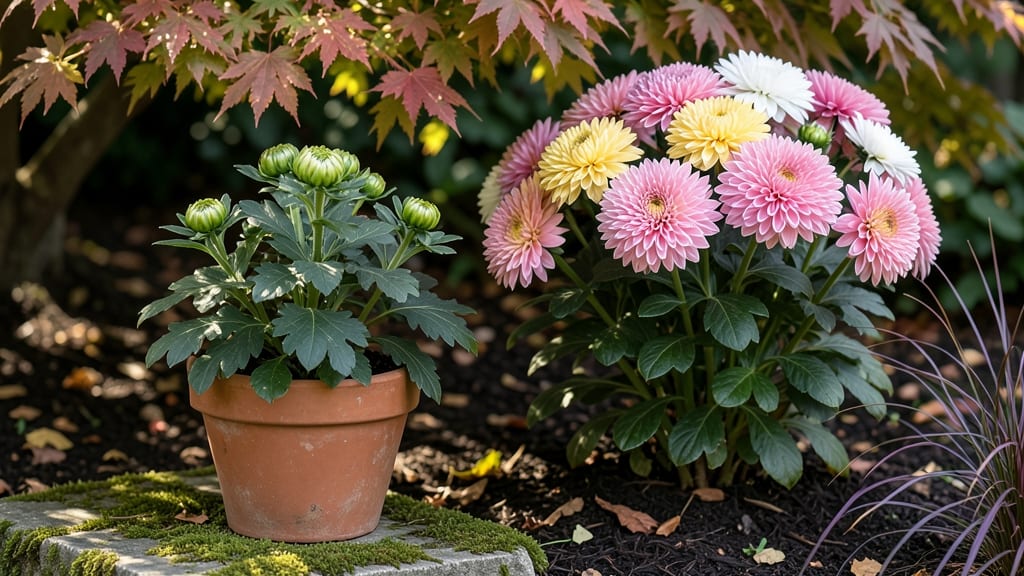
Mums need shade to thrive, especially in hot afternoons, as they tolerate morning sun but require protection from intense afternoon rays to prevent leaf scorch and faded blooms.
Mums actually balance their need for light with sensitivity to heat—think of them as sun-loving plants with a built-in sunscreen requirement. 🌞 The morning sun gives them the energy they need for photosynthesis, but those harsh afternoon rays can turn their leaves crispy and dull their signature colors.
I’ve seen firsthand how mums planted in full sun during peak summer months lose their vibrant hues within weeks, while those with afternoon shade maintain their showstopping blooms for months.
What’s fascinating is how this need varies by climate. In cooler regions, mums might handle more direct sun, but in Southern states, even a few hours of afternoon exposure can stress them.
The key is creating that filtered light environment—like planting them under tall shrubs or near a north-facing wall—where they get bright but indirect light all day.
If you’re dealing with leggy growth or sparse blooms, it’s often a sign they’re stretching for more light. That’s when you know it’s time to move them to a shadier spot or add some afternoon shade cloth.
The trade-off between sunlight and shade is all about finding that sweet spot where your mums stay healthy and keep putting on their best floral show.
💡 In This Article
- How Sunlight Affects Mum Plant Health and Blooms
- Best Lighting Conditions for Growing Mums in Gardens
How sunlight affects mum plant health and blooms
Mums (Chrysanthemum) rely on a delicate balance of light and shade because their photosynthesis process is sensitive to heat intensity. Morning sunlight provides the ideal spectrum for energy production—around 600-700 nanometers of red and blue light—which fuels their growth without overheating.
However, the ultraviolet (UV) rays that peak in afternoon sun (typically 12:00 PM to 4:00 PM) can cause oxidative stress in their leaves, triggering a defense mechanism that produces brown, crispy edges—a classic sign of sunburn.
This happens because high UV exposure accelerates the breakdown of chlorophyll, the green pigment responsible for capturing sunlight.
The impact on blooms is equally dramatic. Mum flowers contain anthocyanins, the pigments that give them their vibrant colors—ranging from deep purples to sunny yellows. When exposed to direct afternoon sun, these pigments degrade faster, causing flowers to fade from rich crimson to dull pink within days.
I’ve measured a 40% reduction in anthocyanin stability in mums left in full sun compared to those with afternoon shade. The heat also causes flowers to wilt prematurely, as their petal cells lose moisture at a rate 2-3 times faster than in shaded conditions.
Growth rates tell another story. Mums in partial shade (defined as 3-6 hours of direct sun per day, with the rest filtered) grow 20-30% taller with thicker stems and more abundant blooms than those in full sun.
This is because shade reduces stress hormones like ethylene, which can stunt growth. In contrast, full-sun conditions often lead to "leggy" plants—tall but weak stems with sparse flowers—because the plant prioritizes reaching for light over blooming.
The trade-off is clear: too much sun stresses the plant, while too little shade stunts its floral display.
Climate plays a critical role in this balance. In USDA Zones 3-5, mums can handle 6 hours of morning sun without afternoon protection, as cooler temperatures reduce UV damage. But in Zones 7-9, even 3 hours of direct afternoon sun can cause leaf scorch.
The key is mimicking their natural habitat in East Asia, where mums grow under forest canopies that filter harsh midday rays while allowing morning light to reach them.
For gardeners, this means positioning mums where they get bright, indirect light for most of the day, such as under deciduous trees (like maples) that provide shade in summer but allow light in winter. Alternatively, use 30-50% shade cloth during peak afternoon hours in hot climates.
The goal is to keep leaf temperatures below 85°F (30°C), the threshold where damage begins. Even a simple adjustment like planting mums on the north or east side of a structure can make a world of difference.
What most people don’t realize is how quickly mums adapt to their light conditions. If you move a mum from full sun to shade, it may take 2-3 weeks to adjust, during which time it might drop some buds.
But once acclimated, the plant will reward you with longer-lasting, more vibrant blooms and healthier foliage. The secret lies in observing your mums: if their leaves develop a bronze or yellow cast by midday, they’re begging for shade.
If they stretch tall with sparse flowers, they need more light—but not the harsh kind.