
Flowers
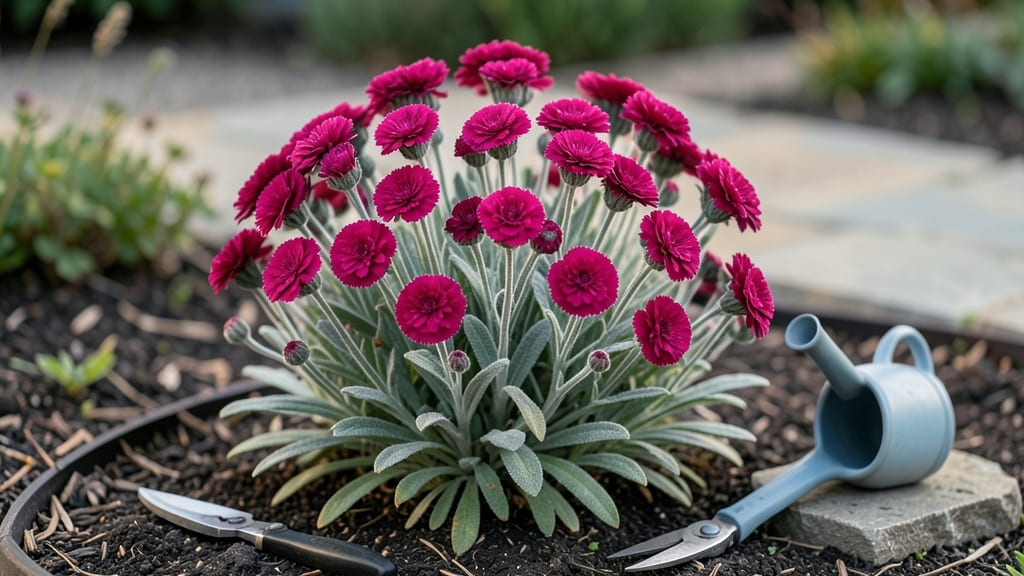
Dianthus for shade includes hardy varieties like Dianthus gratianopolitanus (Cheddar Pink) and Dianthus barbatus (Sweet Williams), which adapt well to partial shade while maintaining colorful blooms and aromatic foliage. Opt for dark-leaved cultivars to maximize light absorption in dimmer garden spaces.
Many gardeners assume dianthus needs full sun, but these resilient plants actually thrive in filtered light when given the right varieties. 🌿 The key lies in their leaf structure—thicker, darker foliage absorbs more light efficiently, while their deep root systems help them access moisture in shadier spots.
For best results, pair shade-tolerant dianthus with other low-light plants like ferns or hostas to create a balanced understory. Just remember: while they tolerate shade, they still need at least 4-6 hours of indirect light daily to produce their signature vibrant blooms.
When selecting cultivars, prioritize those bred for shade adaptation. For example, Dianthus chinensis handles partial shade better than its sun-loving cousins, while Dianthus superbus (also called "pinks") often reblooms more reliably in dappled light. The trade-off?
You might see slightly fewer blooms compared to sun-exposed plants, but the fragrance and foliage remain just as impressive. I’ve found that mulching around the base helps retain moisture—critical for shade-grown dianthus, which dry out more slowly than their sun-happy counterparts.
💡 In This Article
- How Light Affects Dianthus Growth and Flowering
- Best Shade-Tolerant Dianthus Varieties for Low-Light Gardens
How light affects dianthus growth and flowering
Dianthus plants adapt to shade through specialized leaf adaptations that maximize light absorption. Their thicker, darker foliage contains more chlorophyll cells per unit area, allowing them to capture limited light more efficiently than sun-loving varieties.
This adaptation is particularly evident in varieties like Dianthus gratianopolitanus, where the leaves develop a deep green hue in shade, acting like tiny solar panels to convert even faint light into energy. 🌿 The trade-off?
These plants grow slightly slower in low light, as their energy production is reduced compared to sun-exposed counterparts.
Root depth plays a crucial role too. Shade-tolerant dianthus develop deeper root systems (often extending 12-18 inches deep) to access moisture and nutrients in shaded soil layers. This adaptation helps them survive in areas where surface water evaporates more slowly than in sunny spots.
Interestingly, their roots also produce more mycorrhizal fungi—symbiotic relationships with soil fungi—that enhance nutrient uptake in low-light conditions. The result? More stable growth even when sunlight is scarce.
Light quality matters just as much as quantity. Shade-tolerant dianthus thrive under filtered light (like through tree canopies) because it contains more blue and red wavelengths—the exact spectrum they need for photosynthesis. In contrast, direct sunlight contains harsher green and yellow wavelengths, which can stress shade-adapted varieties.
This is why you’ll often see them blooming more prolifically in morning sun with afternoon shade rather than full sun all day.
Flowering behavior shifts dramatically with light exposure. Sun-loving dianthus like Dianthus barbatus produce 20-30% more blooms in full sun, but shade varieties compensate by extending their blooming season. For example, Dianthus chinensis in partial shade may bloom 3-4 weeks longer than sun-grown plants, though individual flowers might be slightly smaller.
The fragrance, however, remains just as intense—shade actually concentrates essential oils in the foliage for better scent diffusion in dimmer environments.
Temperature interactions further complicate shade performance. In hot climates, shade protects dianthus from leaf scorch (brown edges from excessive sunlight), while in cooler regions, it helps maintain soil temperatures above 55°F—the minimum needed for root activity.
This dual benefit explains why shade-tolerant varieties often outperform sun-lovers in USDA Zones 4-6, where winters are harsher and summers can be unpredictable.
What most gardeners overlook is how light intensity gradients affect dianthus. Even in "shade," light varies—deep shade (under dense trees) may only provide 10-20% of full sun, while partial shade (dappled light) offers 30-50%**.
The latter is ideal for dianthus, as it mimics their natural habitat in forest edges and meadows. Planting them 3-4 feet from tree trunks ensures they receive enough light without competing for resources with larger plants.