
Trees
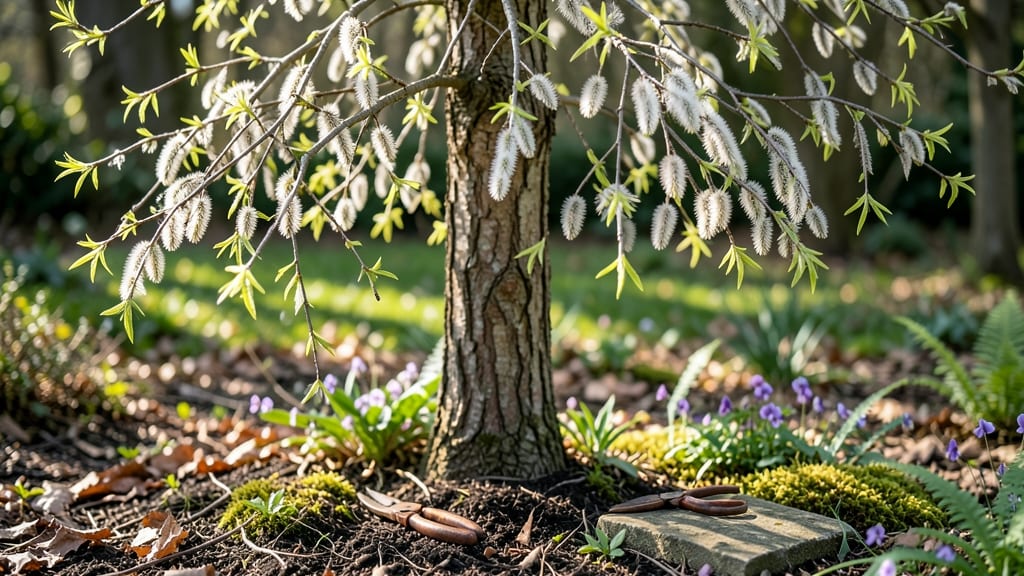
Dappled willow shade transforms garden light into a shifting mosaic, softening direct sunlight while maintaining enough brightness for shade-loving plants. This partial light environment encourages vibrant growth in ferns, hostas, and woodland perennials while shielding sensitive flowers from intense UV exposure.
Willow trees create this unique lighting effect through their weeping branches, which naturally filter sunlight into dappled patches. 🌿 The movement of leaves throughout the day further regulates light intensity, creating ideal conditions for plants that thrive in partial shade.
This dynamic environment reduces heat stress while still providing enough light for photosynthesis, making it perfect for understory plants that would struggle in full sun or dense shade.
What makes willow shade particularly valuable is how it mimics natural forest understory conditions. Many gardeners use willows to create microclimates where moisture levels remain higher and temperature fluctuations are gentler.
This setup benefits plants like Japanese forest grass or bleeding hearts, which appreciate the filtered light but can't tolerate harsh afternoon sun.
💡 In This Article
- How Dappled Willow Shade Affects Plant Growth Patterns
- Best Plants to Thrive Under Willow Tree Shade
How dappled willow shade affects plant growth patterns
Willow trees create dappled shade through their distinctive weeping branches, where sunlight filters through a dense canopy of narrow leaves. This natural light filtration happens because willow leaves have a high surface area-to-volume ratio, allowing only about 30-50% of direct sunlight to reach the ground below.
The movement of leaves throughout the day—especially in breezy conditions—further breaks up light into shifting patterns, creating what scientists call "variable light environments." This dynamic lighting is crucial because plants respond differently to light intensity changes than to constant shade.
The science behind this involves photosynthesis efficiency. Plants under willow shade experience what's called "sunflecks"—brief bursts of direct light that trigger photosynthesis without causing heat stress. Research shows that shade-tolerant plants like ferns can utilize these sunflecks up to 20% more efficiently than they would in deep shade.
The dappled pattern also prevents leaf scorch in sensitive species while still providing enough light for growth. For example, hostas thrive in this environment because their broad leaves can capture scattered light while avoiding the 2,500-3,000 foot-candles of intensity found in full sun.
This light filtration creates microclimates with unique growing conditions. The ground under willows typically stays 5-10°F cooler than open areas due to reduced direct sunlight, while humidity remains higher from increased transpiration. These conditions are ideal for woodland plants that evolved in forest understories.
The shifting light patterns also encourage more compact growth in plants like astilbes, as they don't waste energy growing toward a single light source. 🌿 What's fascinating is how this mimics natural forest ecosystems, where understory plants receive only 1-10% of the sunlight that reaches the canopy above.
For gardeners, understanding these patterns helps with plant placement. The densest shade occurs directly under the tree's center, where light might drop to 100-500 foot-candles, while the edges receive more variable light.
This creates a gradient perfect for layering plants—placing moisture-loving ferns near the trunk and more sun-tolerant perennials at the edges. The key is matching plant light requirements to these specific zones, as even slight variations in light intensity can affect growth rates by up to 30% in some species.
Seasonal changes also play a role. In spring, when willows are still leafing out, the dappled effect is less pronounced, allowing more light through. By summer, when the canopy is fully developed, the shade becomes denser. This natural progression helps prevent sudden shock to shade-loving plants when transitioning between seasons.
The flexible light environment created by willows makes them ideal for gardens where you want to support a diverse range of plant life without creating harsh transitions between sun and shade areas.
What most gardeners don't realize is how this shade pattern benefits soil health too. The cooler, more humid conditions under willows encourage beneficial mycorrhizal fungi growth, which enhances nutrient uptake in plants.
This symbiotic relationship between plants and fungi becomes particularly active in the dappled light conditions created by willows, leading to more vigorous growth in compatible species like Japanese forest grass or bleeding hearts. 🌱 The result is a self-sustaining ecosystem that requires less intervention once established.