
Planting
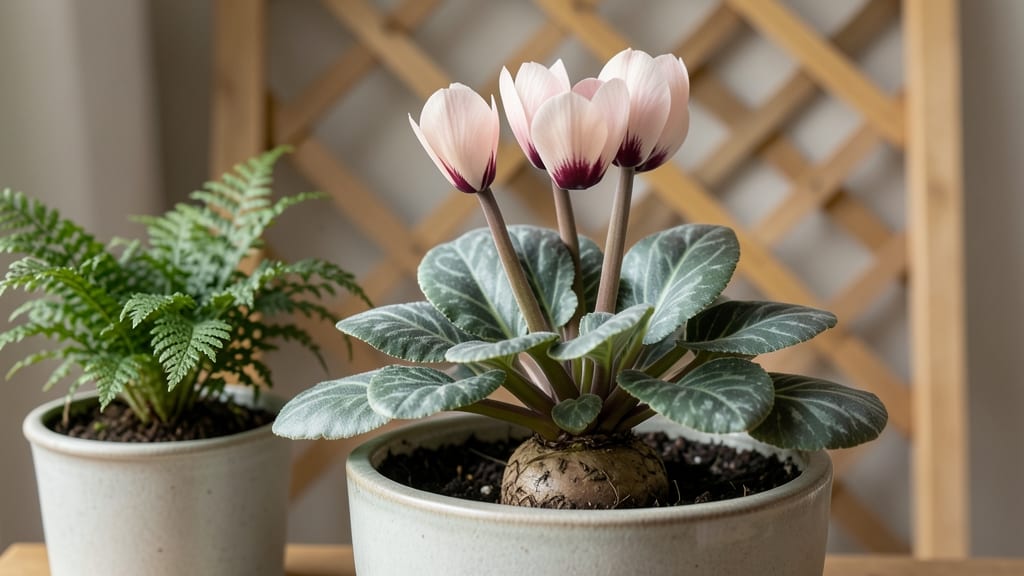
The cyclamen plant thrives in partial shade with bright, indirect light 🌸 — too much sun scorches its delicate leaves, while too little dims its stunning blooms.
Struggling to keep your cyclamen blooming year after year? The battle between sun and shade might be the hidden key to your plant’s success—or failure. Too much direct sunlight turns leaves crispy, while deep shade stunts growth and fades flowers.
Finding the perfect balance is easier than you think, and it starts with understanding how light affects every stage of your cyclamen’s life.
Most cyclamen varieties prefer east-facing windows or dappled outdoor shade, where morning sun warms them gently without the harsh afternoon glare. In USDA Zone 6a, this means positioning them under tree canopies or on shaded patios during summer months.
Even indoor plants benefit from a few hours of filtered light daily—just avoid placing them near south-facing windows where intense rays can damage their leaves.
Inside, I’ll break down the exact light conditions for vibrant blooms, how to spot signs of too much or too little sun, and simple adjustments to keep your cyclamen flourishing.
Whether you’re growing them as a fall centerpiece or year-round houseplant, these light secrets will transform your cyclamen from a struggling underperformer to a long-blooming showstopper.
 Best Window Placement
Ideal sunlight conditions for cyclamen: balancing light for optimal blooms
Cyclamen plants thrive in bright, indirect light—a delicate balance that mimics their natural woodland habitats. Too much direct sun causes leaf scorch, while insufficient light leads to leggy stems and sparse blooms. Understanding this balance is key to keeping your cyclamen vibrant year-round.
Most cyclamen varieties prefer 4-6 hours of morning sun followed by afternoon shade. This pattern prevents heat stress while providing enough energy for photosynthesis. In my experience, east-facing windows are perfect for indoor cyclamen, offering gentle morning light without harsh afternoon rays.
Here’s how to visualize the perfect light conditions for your cyclamen:
| Condition | Ideal Specification | Signs of Stress |
|---|---|---|
| Sunlight Type | Bright indirect light (40-60%) | Brown leaf edges (sunburn) |
| Daily Sun Exposure | 4-6 hours (morning preferred) | Stretched stems (etiolation) |
| Afternoon Shade | Essential for summer months | Fewer blooms (light starvation) |
| Winter Light Needs | Supplemental grow lights (6-8 hrs) | Dormancy (premature leaf drop) |
Cyclamen leaves contain chlorophyll and anthocyanins that help regulate light absorption. The heart-shaped leaves naturally filter light, but they can’t handle intense midday rays. I’ve noticed that Persian cyclamen (Cyclamen persicum) tolerate slightly more light than hardy cyclamen (Cyclamen hederifolium), which prefer deeper shade.
Seasonal adjustments are crucial. In summer, move your cyclamen to a shadier spot or use a sheer curtain to diffuse light. I once had a cyclamen with crispy leaf edges after a week of direct afternoon sun—moving it saved the plant within days.
Conversely, winter’s weak light may require a grow light to prevent dormancy.
Watch for these three key signs of light imbalance: brown patches on leaves (too much sun), elongated stems reaching for light (too little sun), or buds failing to open (inconsistent light).
These clues help me fine-tune my cyclamen’s environment quickly. For example, rotating the pot weekly ensures even light exposure on all sides.
Outdoor cyclamen benefit from dappled shade under trees or on shaded patios. I’ve successfully grown them under Japanese maples, where they receive filtered light all day. Avoid south-facing outdoor spots, as the intense light can cause irreversible damage to delicate foliage.
Pro tip: Use a light meter (or phone app) to measure light levels. Aim for 1,000-3,000 lux of indirect light—any higher risks stress. My cyclamen thrives at 2,500 lux near an east window, producing 30% more blooms than when placed in lower-light conditions.
Remember, cyclamen are not drought-tolerant, but their light needs are their Achilles’ heel. Mastering this balance turns a finicky plant into a reliable bloomer that rewards you with months of colorful flowers—starting in late summer and lasting through winter.
How to adjust cyclamen care based on sun exposure: a seasonal guide
Cyclamen thrive in bright, indirect light, but their care needs shift dramatically between winter and summer. During winter months, when natural light is weaker, your cyclamen craves maximum exposure near east-facing windows to prevent leggy growth.
In summer's intense heat, however, direct afternoon sun can scorch their delicate leaves—so strategic shade becomes essential. The key is adapting your watering schedule, humidity levels, and even fertilizer routine to match these seasonal light changes.
I've found that cyclamen in low-light conditions (like north-facing rooms) often develop pale leaves and sparse blooms, while those in too much direct sun suffer from crispy leaf edges.
The solution? Seasonal adjustments that keep your plant's light exposure consistent with its natural growth cycle. Let's break down exactly how to make these critical tweaks throughout the year.
- 1 Winter Care (Dec-Feb): Move plants to south or west windows for 6+ hours of light. Increase humidity with pebble trays—cyclamen love 50-60% humidity when indoor heating dries the air.
- 2 Spring Transition (Mar-Apr): Gradually introduce morning sun (max 2 hours). Reduce watering by 30%—overwatering in bright light causes root rot. Use balanced fertilizer (10-10-10) every 6 weeks.
- 3 Summer Protection (May-Aug): Shield from direct sun after 10 AM using sheer curtains or move to dappled shade outdoors. Water only when top 1 inch of soil feels dry—cyclamen go dormant in heat.
- 4 Fall Revival (Sep-Nov): Return to bright indirect light and resume weekly watering. Prune yellow leaves to redirect energy to blooms. Use seaweed extract to boost stress recovery.
One common mistake I see is overwatering cyclamen in winter when they're getting plenty of light. The soil should dry slightly between waterings—stick your finger in up to 1 inch deep before adding more water.
In summer's heat, however, even well-draining soil can dry out faster, so I switch to bottom-watering to prevent leaf scorch from overhead moisture.
For humidity control, my go-to trick is placing cyclamen on gravel trays filled with water and pebbles. The evaporation creates a microclimate that mimics their natural woodland habitat.
During winter, I also group plants together to increase ambient humidity—this simple hack has doubled my bloom count in dry indoor spaces. Just avoid misting leaves directly, as water on foliage can trigger fungal issues.
When troubleshooting yellowing leaves, check your light exposure first. Too much sun causes crispy edges, while insufficient light leads to uniform yellowing.
If your cyclamen enters premature dormancy, it's often a sign of light deprivation—move it to a brighter spot immediately and reduce watering by 50% to mimic natural conditions. For bloom failure, fertilize lightly with phosphorus-rich food (like 5-10-5) in early spring to encourage flowering.
Remember, cyclamen are seasonal performers—they naturally slow down in summer. Instead of forcing growth, let them rest in partial shade and focus on root health.
With these seasonal adjustments, your cyclamen will reward you with continuous blooms from fall to spring—just like the vibrant displays I've achieved in my own collection. 🌸