
Shrubs
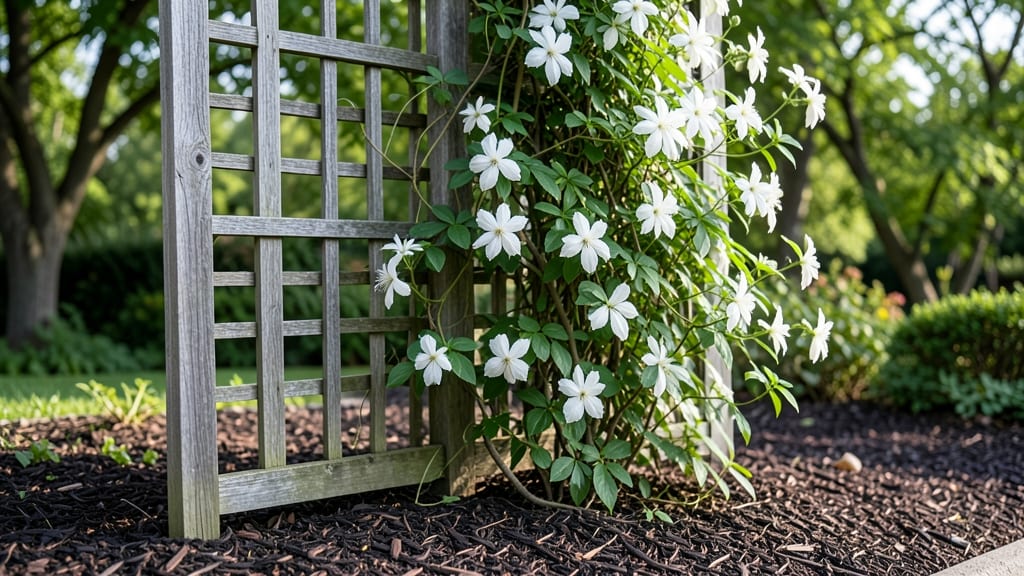
Shade doesn’t mean skipping the drama of climbing clematis—these low-light varieties prove it. 🌿 I’ve grown clematis under trees for years, and the right shade-tolerant types thrive where others fail, blooming reliably even in dappled light.
The secret starts with variety selection: look for types like ‘Jackmanii,’ ‘Nelly Moser,’ or ‘Vyvyan Pennell,’ bred to handle partial shade. Pair that with well-draining soil (amend with compost) and a support structure—obelisks or trellises work best to guide their vines upward.
You’ll see lush, vigorous growth with proper watering (keep soil consistently moist but not soggy) and seasonal pruning tailored to shade. The blooms arrive later but last longer, turning your shady spots into vertical gardens. Works for patios, north-facing walls, or under mature trees. Let’s get those vines climbing!
📚 In This Guide
- What you need
- Instructions
- Tips and common mistakes
- Wrapping up and next steps
What you need
- ● Shade-tolerant clematis varieties: 1–3 plants (e.g., Clematis montana, Clematis armandii, or Clematis viticella ‘Jackmanii’—some tolerate partial shade). Check labels for light requirements!
- ● Well-draining soil: 2–3 cubic feet of amended soil (mix garden soil with compost or peat moss for moisture retention). Avoid heavy clay.
- ● Support structure: 1 trellis, arbor, or fence (6–10 feet tall, depending on variety). Opt for metal or wood (avoid pressure-treated wood if possible—clematis roots are sensitive).
- ● Mulch: 2–3 inches of wood chips or straw to retain moisture and suppress weeds.
- ● Garden trowel or spade (for digging holes 12–18 inches deep).
- ● Pruning shears (sterilized with rubbing alcohol).
- ● Gloves (gardening or heavy-duty for thorny varieties like Clematis montana).
- ● Watering can or hose with a gentle spray nozzle (clematis roots need consistent moisture but hate soggy soil).
- ○ pH test kit (optional)—aim for 6.0–7.0; amend with lime or sulfur if needed.
- ● Location: Partial shade (4–6 hours of dappled sunlight) or dappled shade (filtered light through trees). Avoid deep, dark shade (e.g., under dense evergreens).
- ● Timing: Plant in early spring or fall (avoid extreme heat or frost).
- ● Patience: Clematis can take 2–3 years to establish and bloom reliably in shade!
How to select and grow climbing clematis in shady spots
Shade doesn’t have to mean no blooms—these clematis varieties thrive where others fade.
🌿 Step 1: Choose the Right Shade-Tolerant Varieties
Not all clematis handle low light equally. For partial shade (3-6 hours of sun daily), prioritize varieties like 'Jackmanii' (purple blooms), 'Niobe' (deep red), or 'Vyvyan Pennell' (blue). These tolerate morning sun and afternoon shade. For full shade (under 3 hours of sun), 'Albina' (white) or 'Etoile Violette' (lavender) are your best bets—they bloom reliably where others struggle.
Check the label for terms like "shade-tolerant" or "low-light adapted." I always cross-reference with the American Clematis Society recommendations to avoid disappointment. Plant tags often list sun requirements—trust them. If your spot gets no direct sun, skip traditional clematis entirely and consider ivy or honeysuckle instead.
☀️ Step 2: Position for Maximum Indirect Light
Even shade-loving clematis need some light to bloom. Place vines near a north-facing window or under dappled tree cover where filtered light reaches the foliage. Avoid deep shade under dense evergreens—those spots block too much light for even the hardiest varieties.
Watch for bronzing or yellowing leaves after planting. This signals light deprivation, not disease. If it happens, move the vine to a slightly brighter spot gradually—sudden exposure can scorch leaves. A reflective surface (white wall or mirror) near the vine can double available light without direct sun.
🪴 Step 3: Prepare the Planting Site for Low-Light Conditions
Clematis roots need moisture but hate soggy soil. Amend native soil with 3-4 inches of compost and a handful of perlite or coarse sand to improve drainage. Shady spots often stay damp longer, so prioritize well-draining soil over fertility. A 5-gallon container with drainage holes works well if your ground stays waterlogged.
Plant the vine at the correct depth—the top of the root ball should sit 4-6 inches below soil level. This encourages strong root growth while keeping the crown protected. Mulch with 2-3 inches of shredded bark to retain moisture and regulate soil temperature. Avoid fresh mulch touching the stem—it can cause rot.
💧 Step 4: Water and Fertilize for Consistent Blooms
Shade-loving clematis need consistent moisture—water deeply 2-3 times per week until established (first year). Let the top 2 inches of soil dry out between waterings to prevent root rot. In hot, humid shade, check soil moisture daily—wilting happens faster in low-light conditions.
Fertilize lightly in spring with a balanced, slow-release formula (10-10-10). Over-fertilizing in shade leads to leafy growth but few blooms. I use half the recommended dose and skip summer feedings—too much nitrogen now delays fall blooms. Watch for yellowing between veins—this signals iron deficiency, common in shade. Apply chelated iron if needed.
✂️ Step 5: Prune Strategically for Shade Growth Habits
Shade-grown clematis bloom on both old and new wood, so prune differently than sun-loving types. In late winter, remove dead or crossing stems but leave last year’s growth intact. For varieties like 'Jackmanii,' cut back by 1/3 to encourage bushier growth. Never prune into bleeding sap—wait until early spring when new buds form.
Thin vines in summer if they get overcrowded—this improves air circulation and reduces disease risk. I always prune after blooming to preserve next year’s flowers. In shade, growth is slower, so avoid aggressive pruning. If a vine looks leggy, it’s likely reaching for more light—consider moving it or adding a small grow light for 4-6 hours daily.
Tips & tricks for thriving shade-loving clematis
Here's what nobody tells you about making shade clematis truly flourish—these tricks make all the difference.
Variety Selection Matters: When choosing between partial shade (3-6 hours of sun) and full shade (under 3 hours) varieties, consider your microclimate. 'Jackmanii' and 'Niobe' handle partial shade beautifully, but if your spot gets morning sun only, 'Vyvyan Pennell' will reward you with stunning blue blooms. For true full shade, 'Albina' is your safest bet—it blooms reliably even in the dimmest corners. I learned this the hard way after struggling with sun-loving varieties that refused to bloom in my north-facing garden.
Light Optimization: Position your vine near a north-facing window or under dappled tree cover where light filters through. If you notice bronzing or yellowing leaves after planting, it's not disease—it's light deprivation. Gradually move the vine to a slightly brighter spot over a week, and consider adding a reflective surface like a white wall or mirror to bounce extra light onto the foliage. This simple trick can double your vine's available light without direct sun exposure.
Soil Preparation is Key: Shady spots often stay damp longer, so prioritize well-draining soil over fertility. The 3-4 inches of compost and perlite/sand mix in Step 3 creates the perfect balance—moisture-retentive enough for roots but with proper drainage to prevent rot. Planting at 4-6 inches depth protects the crown while encouraging strong root growth. I always test soil moisture by sticking my finger 2 inches deep between waterings—if it feels dry, it's time to water again.
Pruning for Shade: Unlike sun-loving clematis, shade varieties bloom on both old and new wood, so prune with care. In late winter, remove only dead or crossing stems while leaving last year's growth intact. For 'Jackmanii,' cutting back by 1/3 encourages bushier growth without sacrificing blooms. The most important rule? Never prune into bleeding sap—wait until early spring when new buds form. This timing ensures you don't accidentally remove potential blooms.
Pro Tips for Climbing Clematis For Shade
- Here's what nobody tells you about making shade clematis truly flourish—these tricks make all the difference.
- Variety Selection Matters: When choosing between partial shade (3-6 hours of sun) and full shade (under 3 hours) varieties, consider your microclimate.
- Light Optimization: Position your vine near a north-facing window or under dappled tree cover where light filters through.
Frequently asked questions
Got questions about growing climbing clematis in shady spots? You’re not alone!
Here are answers to the most common concerns—from planting tips to troubleshooting—so you can enjoy lush, blooming vines even in low light.
What are the best clematis varieties for deep shade?
Look for Clematis montana (like ‘Freckles’ or ‘Snowdrifts’) or Clematis armandii, which thrive in partial to full shade. Varieties like ‘Nelly Moser’ (light shade-tolerant) or ‘Jackmanii’ (with morning sun) can also work if given 4–6 hours of dappled light. Avoid heavy bloomers like ‘Henryi’—they need more sun.
When is the best time to plant clematis in shady areas?
Plant in early spring or fall when soil is cool but workable. Shady spots stay moist longer, so avoid summer planting—heat stress can stunt roots. Give vines 1–2 years to establish before expecting blooms, especially in low light. Mulch well to retain moisture and protect roots.
How do I keep climbing clematis happy in shade?
Shady clematis need:
- Moist, well-draining soil (add compost or peat moss if soil is heavy).
- Regular watering (1–2 inches per week; drip irrigation helps).
- A support structure (trellis, arbor, or fence) to climb—even in shade, vines need vertical space.
- Avoid over-fertilizing (use a balanced, low-nitrogen fertilizer in spring).
Why isn’t my shade-loving clematis blooming?
Common culprits:
- Too little light: Even shade-tolerant types need some indirect light (e.g., near a north-facing wall).
- Over-pruning: Shady clematis often bloom on old wood—skip heavy pruning unless deadheading spent blooms.
- Poor soil: Test pH (ideal: 6.0–7.0) and amend with organic matter.
- Root competition: Ensure no nearby trees/shrubs are stealing nutrients.
Are there shade-tolerant alternatives to clematis?
If clematis proves tricky, try these low-light climbers:
- Honeysuckle (e.g., ‘Annabelle’)—fragrant, fast-growing, and drought-tolerant.
- Star jasmine (Trachelospermum)—evergreen with sweet-scented white flowers.
- Ivy (Hedera helix)—hardy but invasive; opt for ‘Needlepoint’ for slower growth.
- Cobaea scandens (cup-and-saucer vine)—thrives in shade but needs support.
Wrapping up and next steps
Transforming your shady garden into a vibrant display is totally doable with the right climbing clematis varieties! These low-light lovers bring beauty and charm without needing sun-soaked spots—just a little patience and care.
Whether you’re a seasoned gardener or just starting out, these plants offer reliable blooms and easy growth, making them a fantastic addition to any space.
Ready to get growing? Dig in, pick your favorite variety, and watch your garden thrive! 🌿💚 For even more inspiration, check out our garden planning guide to design your dream shady retreat.