
Shrubs
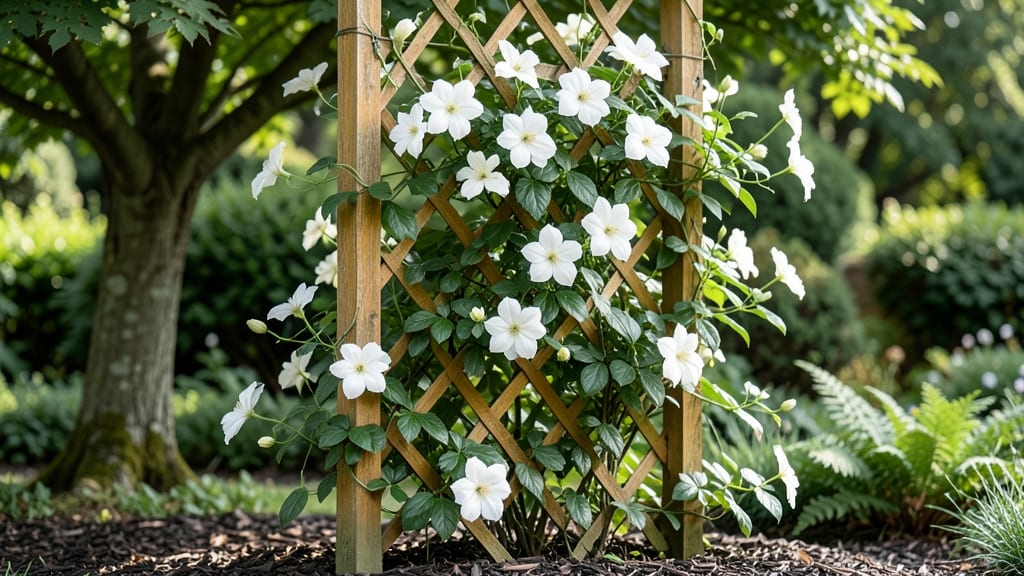
Growing clematis in the shade isn’t just possible—it’s where some varieties shine brightest. 🌿 I’ve watched my ‘Jackmanii’ and ‘Niobe’ vines thrive under oak trees, their deep purple blooms standing out against the dappled light, proving shade isn’t a dealbreaker.
The secret lies in choosing the right cultivars and giving them the care they crave in low-light spots.
Start with shade-tolerant varieties like ‘Freckles’ or ‘Hagley Hybrid’, which handle partial shade better than sun-lovers. Amend your soil with compost to improve drainage and nutrients—clematis roots need to breathe, even in shady spots.
A 3-5 foot trellis gives them support without competing for light, and mulch keeps moisture consistent without letting roots stew.
Water deeply once a week (more in summer heat), and prune strategically: cut back last year’s growth in early spring to encourage fresh, vigorous shoots. The payoff? Lush, healthy foliage and surprisingly abundant blooms that outshine sun-grown vines. My shade-grown clematis now gets more compliments than my sunbathing roses.
Watch for powdery mildew in humid shade—space plants for airflow and spray with neem oil if needed. Pair with hostas or ferns for a natural, low-maintenance understory. With the right approach, your shady corner becomes a blooming oasis instead of a blank spot on the landscape.
📚 In This Guide
- What you need
- Instructions
- Tips and common mistakes
- Wrapping up and next steps
What you need
- ● Clematis plants: Choose shade-tolerant varieties like Clematis montana, Clematis armandii, or Clematis viticella (3–5 plants, depending on desired coverage). Opt for container-grown plants (1–2 gallons) for easier transplanting.
- ● Support structure: Trellis (6–8 ft tall, non-corrosive metal or PVC) or
- ● Arbor/obelisk (4–6 ft diameter, sturdy wood or metal).
- ● Potting soil: 1–2 bags of well-draining, organic-rich soil (e.g., Miracle-Gro Garden Soil or FoxFarm Ocean Forest).
- ● Mulch: 2–3 bags of organic mulch (e.g., pine bark fines or shredded leaves) to retain moisture.
- ● Fertilizer: Balanced slow-release fertilizer (e.g., 10-10-10, 1 lb per plant).
- ○ Bone meal (optional, ½ cup per plant for phosphorus boost).
- ● Garden trowel or spade (for digging).
- ● Pruning shears (sterilized, sharp blades for clean cuts).
- ● Gloves (heavy-duty for handling soil and thorns).
- ● Watering can or hose with soaker nozzle (for gentle hydration).
- ● Measuring tape (to space plants 3–6 ft apart).
- ● String or twine (to secure vines to trellis during early growth).
- ● ✅ Location: Partial shade (3–6 hours of dappled sunlight) or deep shade (filtered light). Avoid full shade (e.g., dense tree canopies).
- ● 💡 Soil prep: Amend heavy clay soil with compost (5–10 gallons) to improve drainage.
- ● 🔥 Watering schedule: Keep soil consistently moist (not soggy) for the first 2–3 weeks post-planting.
- ● 🌡️ Climate note: In hot climates, opt for morning sun + afternoon shade to prevent stress.
Step-by-Step guide to growing clematis in shade
Here's how to coax vibrant blooms from shade-loving clematis—no direct sun required.
🌱 Step 1: Select the Right Clematis Variety for Low Light
Not all clematis thrive in shade, so choose varieties bred for lower light conditions like 'Jackmanii,' 'Nelly Moser,' or 'Vyvyan Pennell.' These cultivars tolerate 4-6 hours of dappled light and still produce abundant blooms. I always check the plant tag for "partial shade" labels—this ensures you're picking a vine that won't struggle.
Plant in early spring after the last frost when soil temperatures reach 50°F. The soil should be cool but workable—if it feels cold and clumps tightly, wait another week. This timing gives roots time to establish before summer heat arrives, which is especially important for shade-grown clematis that rely on consistent moisture.
🪴 Step 2: Prepare the Planting Site for Moisture Retention
Clematis in shade need well-draining but moisture-retentive soil—think of it as a sponge that holds water without drowning roots. Amend native soil with 3 inches of organic matter (like compost or leaf mold) and a handful of slow-release fertilizer to provide nutrients without burning tender roots. I dig a hole twice as wide as the root ball to encourage outward growth, which helps the vine anchor itself in shadier spots.
Add a 4-6 inch layer of mulch (wood chips or shredded bark) around the base, keeping it 3 inches away from the stem to prevent rot. This mimics the forest floor where shade-loving clematis naturally grow, keeping roots cool and soil consistently moist. Water deeply after planting until the soil 12 inches down feels saturated—this ensures roots have enough moisture to start spreading.
☀️ Step 3: Position for Indirect Light and Airflow
Plant clematis where they receive morning sun and afternoon shade—this balance prevents leaf scorch while providing enough light for blooming. A north-facing wall or the base of a tall tree (with dappled, not dense, shade) works perfectly. I avoid planting directly under evergreens, as their roots compete aggressively for water and nutrients.
Stake the vine immediately with a 5-6 foot trellis or obelisk—even in shade, clematis need support to climb. Secure the main stem loosely with soft plant ties (never wire, which can girdle the stem). This early support prevents flopping, which is especially problematic in low-light conditions where vines grow more slowly. Prune any leggy growth back by one-third to encourage bushier, more compact growth that thrives in shade.
💧 Step 4: Water and Fertilize for Shade Success
Shade-grown clematis need consistent moisture—water 1-2 times weekly until the soil 6 inches down feels damp (stick your finger in to check). During heatwaves, increase to daily watering in the early morning to prevent fungal issues. I avoid overhead watering after noon, as wet foliage in shade can lead to powdery mildew—a common problem for shade-loving vines.
Fertilize twice a year: once in early spring with a balanced 10-10-10 formula and again after the first flush of blooms with a low-phosphorus, high-potassium fertilizer (like 5-10-10) to support flowering. Too much nitrogen leads to lush foliage but fewer blooms—something I learned the hard way with my first shade clematis. Always water before and after fertilizing to prevent root burn.
✂️ Step 5: Prune for Shade and Encourage Repeat Blooms
Prune shade clematis annually in late winter or early spring before new growth appears. For Group 1 varieties (early bloomers like 'Jackmanii'), remove dead or weak stems and cut back others by one-third to encourage dense growth. For Group 3 varieties (late bloomers like 'Nelly Moser'), prune lightly to shape the plant—these vines bloom on old wood, so aggressive pruning reduces flowers.
Deadhead spent blooms regularly to redirect the plant’s energy into new flowers rather than seed production. In shade, clematis often produce fewer blooms, so every spent flower counts. I also watch for yellowing leaves, which usually signal overwatering or poor drainage—adjust your watering schedule if you see this, as shade-grown clematis are more sensitive to root rot.
Tips & tricks for thriving clematis in shade
Common pitfalls—and how to sidestep every one when cultivating shade-loving clematis.
Variety Selection: The 4-6 hours of dappled light mentioned in Step 1 is non-negotiable for shade success. Look for cultivars labeled "partial shade tolerant" at nurseries, as these have been bred to handle lower light conditions. I always cross-reference with local garden centers—they often stock region-specific varieties that perform better in your specific climate. For example, 'Jackmanii' handles cooler shade better than 'Nelly Moser' in northern climates.
Soil Preparation: The 3 inches of organic matter and 12-inch deep watering in Step 2 create the perfect moisture sponge for shade-grown clematis. To test your soil's moisture retention, dig a small hole and fill it with water—if it drains completely within 30 minutes, add more compost. I also recommend mixing in perlite or vermiculite (about 10% of the soil volume) to improve drainage while maintaining moisture. This prevents the root rot that plagues many shade gardeners.
Light Positioning: That morning sun and afternoon shade balance in Step 3 is crucial for preventing leaf scorch while still fueling blooms. If your only option is dense shade, choose a location with reflected light—like near a light-colored fence or wall that bounces sunlight onto the plant. I've seen dramatic improvements in bloom quantity by positioning clematis just 3 feet away from a south-facing wall, even in heavily shaded yards. Just avoid evergreens—their aggressive roots compete for nutrients.
Pruning Strategy: The one-third pruning for Group 1 varieties in Step 5 might seem drastic, but it's essential for encouraging dense growth in low light. For late bloomers like 'Nelly Moser,' I recommend pruning only dead or crossing branches—never more than 10% of the plant—to preserve next year's blooms. Always use sharp, clean pruners and make cuts at a 45-degree angle just above a leaf node to encourage new growth from the right place.
Pro Tips for Clematis In The Shade
- Common pitfalls—and how to sidestep every one when cultivating shade-loving clematis.
- Variety Selection: The 4-6 hours of dappled light mentioned in Step 1 is non-negotiable for shade success.
- Soil Preparation: The 3 inches of organic matter and 12-inch deep watering in Step 2 create the perfect moisture sponge for shade-grown clematis.
Frequently asked questions
Got questions about growing clematis in shady spots? You’re not alone! Here are answers to the most common concerns—so you can enjoy stunning blooms even without full sun.
Can clematis really thrive in shade, or will they just grow leggy?
Yes, but with the right care! Some varieties (like Clematis montana or Clematis armandii) handle shade better than others. Expect slower growth and fewer blooms than in full sun, but they’ll still flourish with proper pruning and support. Aim for at least 3–4 hours of dappled light for best results.
When is the best time to plant clematis in a shady garden?
Spring or early fall is ideal! Plant in spring after the last frost (so roots establish before summer heat) or in early fall (6–8 weeks before your first frost) to let roots settle before winter. Avoid planting in mid-summer—heat stress can stunt growth, especially in shade.
What’s the secret to keeping clematis healthy in low-light areas?
Focus on three key things:
- Moisture: Shade means slower evaporation, but roots still need well-draining soil. Mulch (2–3 inches) to retain moisture.
- Fertilizer: Use a balanced, slow-release fertilizer (like 10-10-10) in early spring. Avoid high-nitrogen blends—they promote leafy growth over blooms.
- Support: Stake or trellis vines early to prevent flopping. Shade-grown clematis can get top-heavy!
My clematis in shade isn’t blooming—what’s wrong?
Try these fixes:
- Check the variety: Some clematis (like Clematis viticella) need 6+ hours of sun to bloom well. Swap for shade-tolerant types if needed.
- Prune correctly: Group 1 (early bloomers) get pruned after flowering; Group 3 (late bloomers) need a hard prune in early spring.
- Boost light gradually: If possible, thin nearby trees or relocate the vine to a sunnier spot near the base of a tree (where light filters through).
Are there shade-friendly clematis alternatives if my garden is too dark?
Try these low-light lovers:
Variety
Bloom Time
Shade Tolerance
Clematis montana (e.g., ‘Alba’)
Early spring
(Thrives in deep shade)
Clematis armandii
Late winter/early spring
(Handles partial shade)
Clematis ‘Jackmanii’
Mid-to-late summer
(Needs some light but adapts)
For deep shade, pair clematis with hostas, ferns, or astilbes—they’ll complement the vines while keeping the area lush!
Wrapping up and next steps
Growing clematis in the shade isn’t just possible—it’s a rewarding way to add vibrant color and texture to your garden without direct sunlight! With the right varieties, soil prep, and support, these versatile vines can thrive and even bloom beautifully in partial shade. 🌿✨
Ready to transform your shady spots into a lush, flowering oasis? Start by selecting the perfect clematis for your space, then give them the care they deserve. Plant one today and watch your garden come alive!