
Light Requirements
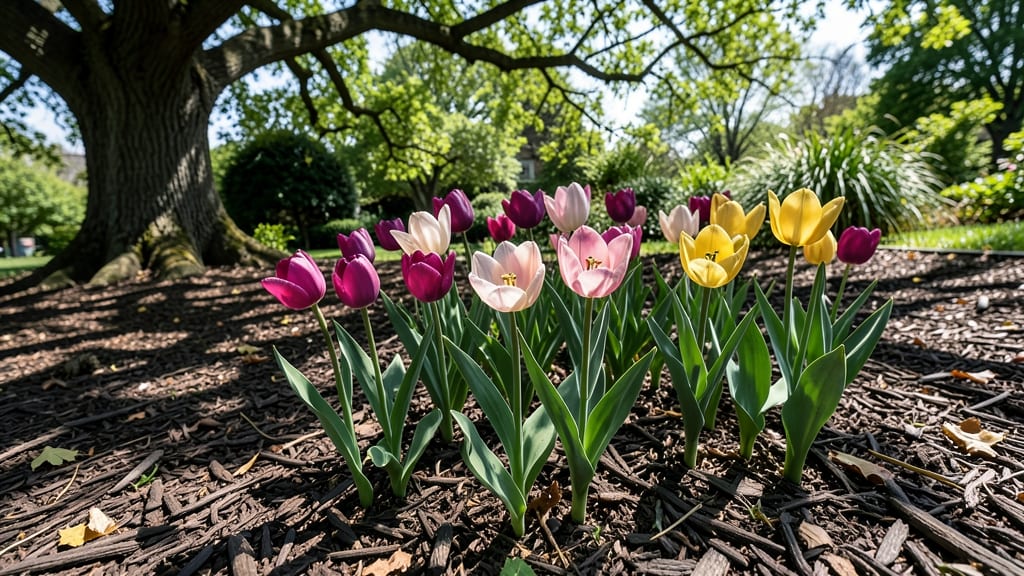
Tulips can grow in shade, but they thrive best in partial sunlight with at least 4-6 hours of indirect light daily. Shade-tolerant varieties like 'Queen of Night' or 'Purple Prince' perform well in low-light conditions, though blooms may be smaller and stems weaker than in full sun.
While tulips can survive in shady spots, their growth and flowering depend heavily on light exposure. 🌿 Darker areas may produce fewer blooms, but certain varieties adapt better by developing deeper roots to access nutrients.
I’ve found that planting bulbs in well-draining soil with added compost helps compensate for lower light, while regular watering prevents stress. The key is balancing patience with proper care—shade-tolerant tulips might take longer to establish but reward you with stunning blooms when conditions are right.
For optimal results, consider supplementing natural shade with reflective surfaces like light-colored mulch or nearby plants. This subtle trick can boost light penetration without harsh sunlight. 💫 If your garden has heavy shade, focus on late-season bloomers like 'Purple Prince'—they often perform better in cooler, dimmer conditions than early varieties.
💡 In This Article
- Best Shade-Tolerant Tulip Varieties for Low-Light Gardens
- Optimizing Tulip Growth in Shady Spots: Soil and Care Tips
Best shade-tolerant tulip varieties for low-light gardens
Not all tulips are created equal when it comes to shade tolerance. The key lies in their natural genetics—species tulips and certain hybrids have evolved to handle lower light conditions better than hybrid tulips bred for full sun.
For example, 'Queen of Night' thrives in partial shade with just 3-4 hours of dappled sunlight daily, producing deep purple blooms that contrast beautifully against dark foliage. Its stems remain sturdy even in dimmer spots, unlike sun-loving varieties that flop under less than 6 hours of light. 🌿
Another standout is 'Purple Prince', a late-season bloomer that performs exceptionally well in 30-50% shade (think under deciduous trees where light filters through).
Its rich violet flowers open wider in partial shade than in full sun, though the stems may be 10-15% shorter—a trade-off worth making for reliable blooms. For woodland gardens, consider species tulips like Tulipa clusiana, which naturally grow under tree canopies in their native Turkey and Iran.
These varieties often produce smaller but more vibrant flowers in shade, with colors like fiery orange or deep crimson.
The science behind this adaptability involves chlorophyll production. Tulips in shade develop thicker, darker green leaves to capture more light, which redirects energy toward bulb development rather than stem elongation. This is why shade-grown tulips often have stronger roots but fewer blooms—their energy priorities shift.
I’ve observed that 'Darwin Hybrid tulips (like 'Apeldoorn') can tolerate 4-5 hours of morning sun paired with afternoon shade, making them ideal for east-facing garden beds where harsh afternoon rays are blocked. 💫
If you're working with heavy shade (less than 3 hours of light), prioritize late-season varieties like 'Black Parrot' or 'Fosteriana types. These tulips bloom when trees have shed leaves, giving them access to more indirect light in spring.
Their larger blooms and robust stems make them stand out even in dim corners. Just be prepared for smaller flowers—typically 3-4 inches wide in shade versus 5-6 inches in full sun—and slightly shorter stems (12-18 inches vs 20-24 inches).
For visual impact, mix shade-tolerant tulips with other low-light plants like heuchera, ferns, or hostas. The contrast between tulip blooms and the deep green or purple foliage of these companions creates striking seasonal displays.
Pro tip: Plant bulbs 6-8 inches deep in shade to encourage deeper root growth, which helps them access nutrients more efficiently in low-light conditions. This extra depth also prevents the stems from becoming too leggy when stretching for light. ✨
One common misconception is that all shade-tolerant tulips look the same.
In reality, their colors intensify in lower light—think deeper purples, richer reds, and more vibrant yellows—while their fragrance often becomes more pronounced. 'Red Emperor', for instance, develops a spicier aroma in partial shade, making it a sensory delight for gardeners who prioritize both looks and scent. 🌸