
Light Requirements
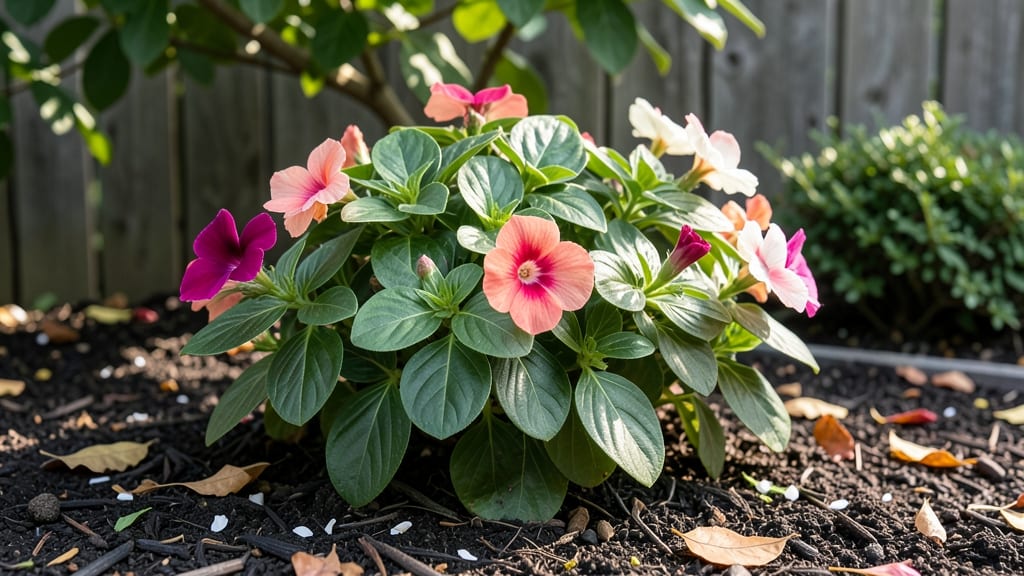
Yes, impatiens can grow in shade, thriving in low-light conditions better than most flowering annuals. While they prefer bright indirect light for abundant blooms, varieties like Impatiens walleriana adapt well to partial shade, though deep shade may reduce flowering.
Impatiens are famous for their shade tolerance because they evolved in tropical understories where sunlight is filtered through tree canopies. 🌿 The trade-off? Less light means fewer flowers, but their lush foliage remains vibrant.
For best results in shady spots, choose Impatiens hawkeri (New Guinea impatiens), which handles lower light better than classic Impatiens walleriana. These plants also benefit from occasional pruning to encourage bushier growth when light is limited.
When selecting varieties, prioritize those bred for shade—look for deep green leaves and compact growth habits. 💫 Most impatiens need at least 4-6 hours of dappled light daily to maintain decent bloom production, but they’ll still perform well in spots where other flowers would struggle.
The key is balancing their natural shade adaptability with occasional bright light to keep them flowering consistently.
💡 In This Article
- How Light Affects Impatiens Growth and Flowering
- Best Shade-Tolerant Impatiens Varieties for Low-Light Gardens
How light affects impatiens growth and flowering
Impatiens' ability to thrive in shade stems from their efficient chlorophyll system, which maximizes light absorption even in low-light conditions. These plants evolved in tropical understories where sunlight is filtered through dense foliage, giving them a competitive edge in shady gardens.
Their leaves contain a high concentration of chlorophyll b, which helps capture the limited blue and red light wavelengths available in shade. This adaptation allows them to perform photosynthesis effectively with as little as 25-30% of full sunlight, though they'll always produce more flowers with brighter light.
The trade-off becomes clear when examining photoperiodism—the plant's response to daylight length. Impatiens are short-day plants, meaning they flower best with 10-12 hours of daylight and respond to decreasing light periods.
In deep shade, where light intensity drops below 1,000 foot-candles (about 10% of full sun), stem elongation increases dramatically—a condition called "legginess"—while flower production plummets by 40-60%.
The stems become weak and spindly because the plant prioritizes reaching upward for any available light, often resulting in plants that flop over. 🌱
Leaf variegation also reveals light deprivation effects. Varieties with white or yellow leaf markings (like 'Jungle Cocktail' or 'Fiesta') often revert to solid green under low light, as the plant sacrifices pigment production to focus on basic survival functions.
This isn't just cosmetic—the chlorophyll concentration drops by 15-20% in deep shade, reducing the plant's energy production capacity. The result? Fewer blooms and slower growth rates, with some varieties showing 50% fewer flowers compared to their sun-exposed counterparts.
For practical gardeners, understanding these mechanisms translates to strategic placement. Partial shade (3-6 hours of direct sun) provides the best balance—enough light for decent flowering while maintaining strong stems.
In deep shade, where light never penetrates beyond tree canopies, impatiens will still grow but may require more frequent pruning (every 3-4 weeks) to encourage bushier, more compact growth. The key is monitoring leaf color: vibrant green indicates healthy growth, while pale leaves signal insufficient light.
Temperature plays an indirect role in shade tolerance. Impatiens prefer 65-75°F daytime temperatures, and in cooler climates, shade helps protect them from temperature swings. However, when nights drop below 55°F, even shade-loving varieties may struggle, as their metabolic processes slow down.
This is why impatiens perform best in USDA Zones 10-11 or as annuals in cooler regions—where they get consistent warmth and filtered light. 🌡️
What most gardeners don't realize is that impatiens' shade tolerance varies by growth stage. Seedlings and young plants are particularly sensitive to low light and may require grow lights (12-14 hours daily) during propagation.
Once established, mature plants develop deeper root systems that can access moisture and nutrients more efficiently, compensating for reduced photosynthesis. This is why transplanting established shade-grown impatiens often yields better results than starting from seed in dim locations.