
Light Requirements
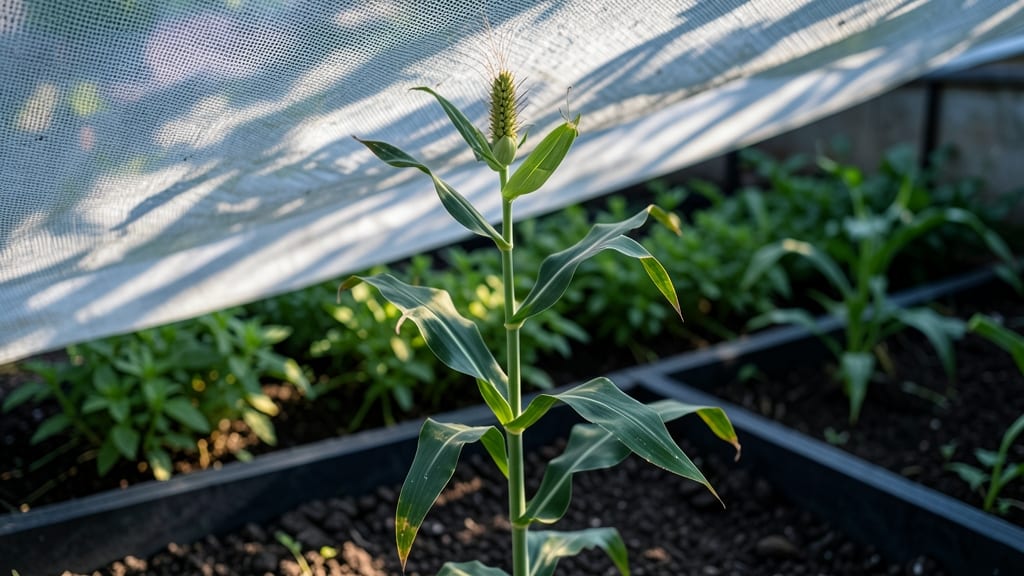
Corn can grow in shade but requires at least 4-6 hours of direct sunlight daily for optimal yields, with shorter varieties and shade-tolerant hybrids performing best in partial sun conditions. Expect smaller ears and slower growth without full sun exposure.
Corn thrives on sunlight because it needs ample energy for photosynthesis to develop strong stalks and plump ears. 🌱 While it can survive in partial shade, the trade-off is noticeable—plants may produce fewer, smaller ears and take longer to mature. Shorter varieties like 'Golden Bantam' or 'Baby Blue' adapt better to limited light, but even they won’t reach their full potential without adequate sun exposure. For best results, position your corn near taller plants or use reflective surfaces to maximize indirect light.
If your garden has heavy shade, consider vertical growing techniques or raised beds to improve air circulation and light penetration. Companion plants like sunflowers can also help by providing partial shade during hot afternoons while still allowing enough light for corn growth.
💡 In This Article
- How Shade Affects Corn Growth and Yield
- Best Shade-Tolerant Corn Varieties for Partial Sun Gardens
How shade affects corn growth and yield
Corn plants rely on photosynthesis to convert sunlight into energy, and their growth rate is directly tied to the intensity and duration of light exposure. Without 4-6 hours of direct sunlight daily, photosynthesis slows dramatically, leading to weaker stalks and reduced energy for ear development.
The plant’s chlorophyll—the green pigment responsible for capturing light—becomes less efficient in low-light conditions, forcing the corn to allocate more energy to survival rather than reproduction. This explains why ears in shade often appear smaller and less plump, with fewer kernels.
The impact of shade extends beyond ear size—it also affects stalk thickness and root development. Corn needs robust stalks to support heavy ears, but partial shade weakens cellulose production, making plants more prone to lodging (falling over).
In extreme cases, shaded corn may produce shriveled kernels or even fail to tassel (the male flower cluster), which is critical for pollination.
For reference, a corn plant in full sun can produce 2-3 ears per stalk, while shaded plants may yield just 1 ear or none at all.
Light quality matters too. Shade from trees or buildings filters out blue and red wavelengths, which are essential for photosynthesis. This spectral imbalance forces corn to stretch toward any available light—a phenomenon called etiolation—resulting in tall, spindly stalks that are structurally unstable.
Even with shade-tolerant varieties, you’ll notice a 20-30% reduction in yield compared to full-sun conditions. The trade-off is clear: more shade means less energy for the plant to invest in ear development.
Temperature plays a secondary role in shaded environments. Corn thrives in 75-85°F soil temperatures, but partial shade can keep soil cooler, further slowing growth. The plant’s metabolic rate drops, delaying tasseling by 1-2 weeks and extending the overall growing season.
This is why shade-grown corn often matures 10-15 days later than sun-exposed plants, leaving it vulnerable to early frosts or pests.
For gardeners working with limited light, the key is to maximize indirect light exposure. Position corn near reflective surfaces like white walls or use vertical trellises to angle leaves toward the sky.
Even a 30% increase in indirect light can improve yields by 15-20%. Companion planting with taller, sun-loving species (like sunflowers) can also create a microclimate that enhances light penetration for corn.
What most people overlook is the nutrient competition in shaded soil. Corn in low-light conditions often struggles to access nitrogen efficiently, leading to pale leaves and stunted growth. A balanced fertilizer with higher phosphorus content (for root development) and potassium (for stress resistance) can help mitigate these effects. 🌱