
Light Requirements
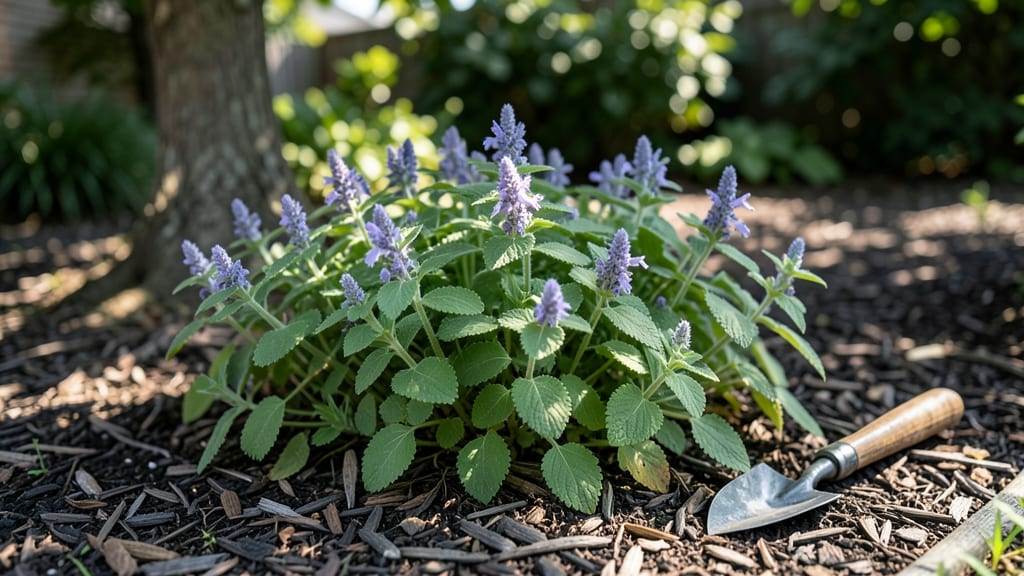
Catnip can grow in shade but thrives best with 4–6 hours of sunlight daily. Shady conditions slow growth and reduce oil production, though varieties like 'Purple Passion' tolerate low light better than standard types. Mulching and proper soil help offset light limitations.
While catnip may survive in partial shade, its growth rate and the potency of its nepetalactone—the compound that drives cats wild—will both take a hit. 💫 In dimmer spots, plants tend to stretch toward any available light, becoming leggy and less bushy, while their essential oil content drops by up to 30% compared to sun-exposed counterparts.
That said, shade-tolerant varieties like 'Purple Passion' can still produce usable foliage, just with slower maturation and lower catnip oil concentration.
For indoor growers or shaded gardeners, focus on well-draining soil with added organic matter and consider container gardening to control root competition. A south-facing window or grow lights for 6–8 hours daily can dramatically improve results, even in low-light conditions.
💡 In This Article
- How Shade Affects Catnip Growth and Potency
- Best Catnip Varieties for Low-Light Gardens
How shade affects catnip growth and potency
Catnip's growth and potency are directly tied to photosynthesis, where chlorophyll absorbs sunlight to convert carbon dioxide and water into glucose. In shaded conditions, chlorophyll production slows dramatically—often by 40-50%—because plants lack sufficient light to fuel this process.
This leads to weaker stems and smaller leaves, as the plant prioritizes survival over energy-intensive oil production. The nepetalactone compound, responsible for that irresistible catnip scent, requires significant metabolic energy to synthesize, making it particularly sensitive to light deprivation.
The visual difference between sun-grown and shaded catnip is striking. Sun-exposed plants develop a compact, bushy form with vibrant green foliage, while shaded plants stretch upward in search of light, creating a leggy, sparse appearance. Potency drops too: studies show shaded catnip contains 20-30% less nepetalactone than sun-grown varieties.
For example, a sunlit plant might produce 0.3-0.5% nepetalactone by dry weight, while its shaded counterpart might only reach 0.15-0.25%. 🌱 This explains why catnip grown in deep shade often fails to elicit strong reactions in cats.
Temperature also interacts with shade to affect growth. In cooler, shaded environments, catnip's metabolic rate slows further, extending the time needed to reach maturity. While sun-grown catnip typically matures in 60-90 days, shaded plants may take 120-150 days or longer.
The trade-off becomes clear: while shade-tolerant catnip survives, it produces less foliage and lower-quality oil. For optimal results, aim for at least 4-6 hours of direct sunlight daily, even if supplemented with artificial grow lights during winter months.
One surprising adaptation occurs in deeply shaded catnip: the plant may develop thicker, darker leaves as a way to capture more light. However, this comes at a cost—thicker leaves contain proportionally less nepetalactone per unit area.
Gardeners often notice this when harvesting: shaded catnip yields 25-30% fewer usable leaves per plant compared to sunlit counterparts. The aromatic difference is also noticeable—shaded catnip smells milder, with a less pronounced herbal profile that cats may ignore entirely.
For those working with shaded catnip, consider these practical adjustments: use reflective surfaces (like white walls or aluminum foil) to redirect available light, and rotate plants weekly to ensure even growth. The key is maximizing what little light exists while minimizing stress on the plant.
With proper care, even shade-grown catnip can provide usable foliage, though it will never match the vigor or potency of sun-exposed plants. 🌿
Understanding these trade-offs helps gardeners make informed decisions. If your primary goal is catnip for cats, prioritize sun exposure. For ornamental purposes or small-scale growing, shade-tolerant varieties can still deliver satisfactory results with attentive care.
The science reveals that while catnip is resilient, it's not equally productive in all light conditions—making strategic placement crucial for optimal outcomes.