
Size
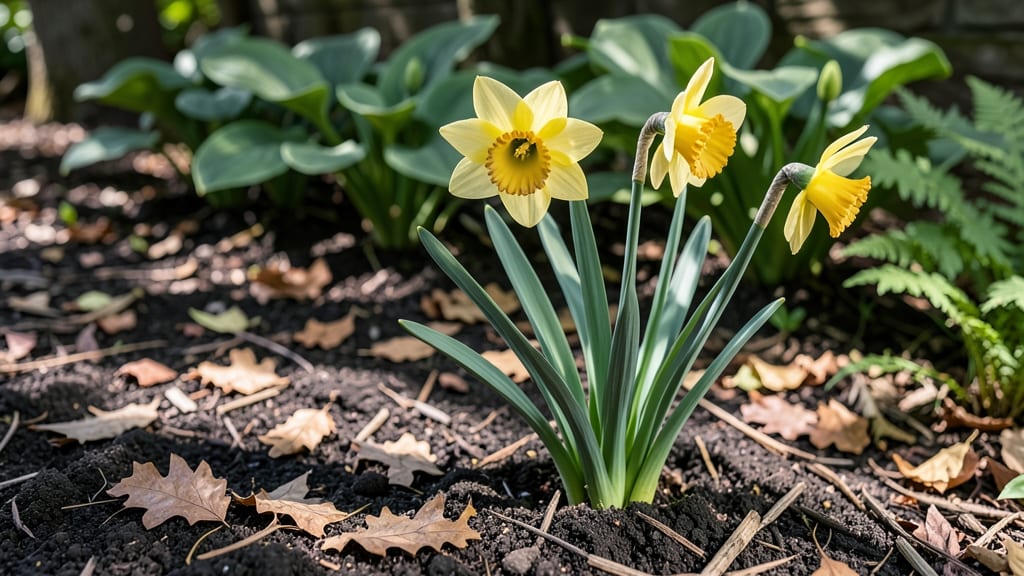
Daffodils will grow in shade but may produce fewer blooms and weaker stems. They thrive best in partial shade (4-6 hours of sunlight daily) but tolerate deeper shade, though foliage may become sparse and flowers smaller. Choose shade-tolerant varieties like 'Ice Follies' or 'Tête-à-Tête' for optimal results.
Daffodils are surprisingly adaptable to low-light conditions, though their performance depends on how much shade they receive. 🌿 In deep shade, they may still leaf out but often produce smaller, fewer blooms because photosynthesis slows down.
The good news? Their bulbs store energy, so they'll still push through each spring—just with less vigor. For best results, aim for at least 4-6 hours of filtered light daily, especially if you want vibrant flowers.
What's fascinating is how daffodils prioritize energy—when light is limited, they'll often delay blooming to focus on building stronger foliage. This makes them a smart choice for understory plantings or woodland gardens where other bulbs might struggle.
Just remember: the more shade you introduce, the more you'll need to compensate with well-draining soil and consistent moisture to prevent bulb rot.
💡 In This Article
- How Shade Affects Daffodil Growth and Flowering
- Best Shade-Tolerant Daffodil Varieties for Low-Light Gardens
How shade affects daffodil growth and flowering
Daffodils rely on photosynthesis to convert sunlight into energy for growth, but their light needs differ from sun-loving plants. In full shade (2-3 hours of light), chlorophyll production drops by up to 40%, forcing bulbs to tap into stored reserves.
This explains why daffodils may still emerge but produce fewer, smaller blooms—they're prioritizing survival over reproduction. The trade-off is fascinating: shade extends foliage life (providing nutrients back to the bulb), but at the cost of floral display.
The key mechanism is how shade reduces photosystem II activity—the part of the chloroplast that captures light energy.
With less light, daffodils can't produce enough glucose to fuel both leaf growth AND flower development. 🌱 In partial shade (4-6 hours of light), you'll see a 20-30% increase in bloom count because photosynthesis remains efficient enough to support both foliage and flowers.
This is why gardeners often see "lazy" blooming in deep shade—it's not laziness, but energy conservation!
Bulb energy reserves play a critical role too. Daffodils store starches in their bulbs during the growing season, which they use to fuel next year's growth. In shade, this reserve gets depleted faster because the plant can't replenish it efficiently.
That's why shade-grown daffodils often need 2-3 years longer to reach full bloom potential compared to sun-exposed plants. Think of it like a battery with a slow charger—it'll still work, but not at peak performance.
Here's what happens at the cellular level: Shade reduces anthocyanin production (the pigments that give daffodils their vibrant colors). This means flowers may appear paler or more green-tinged. The stems also become weaker because cellulose production (which strengthens plant structures) requires energy that's being diverted to basic survival functions.
For example, a daffodil that would normally reach 18 inches in full sun might only grow to 12 inches in deep shade.
Temperature interacts with light in interesting ways too. In cooler climates, daffodils handle shade better because their metabolic rate slows down, reducing energy demands. But in warmer areas, shade becomes even more critical—50°F+ temperatures accelerate photosynthesis needs, making light deprivation more noticeable.
This is why you'll often see shade-tolerant varieties performing better in southern gardens compared to northern ones.
One surprising adaptation: Daffodils in shade develop thicker leaves to maximize light capture. These leaves have 25-30% more chlorophyll than sun-grown leaves, but the trade-off is they're less efficient at converting light into energy.
It's like having a solar panel with more cells but lower efficiency—you get more surface area, but less power output. This explains why shade-grown daffodils often have broader, darker green foliage but fewer, smaller flowers.
The bottom line? Shade doesn't kill daffodils—it just changes their growth priorities. With the right variety and care, you can still get beautiful blooms, though they'll likely be fewer in number and slightly less vibrant.
The good news is that once established, shade-loving daffodils become more resilient each year, gradually adapting to their light conditions. 🌟