
Size
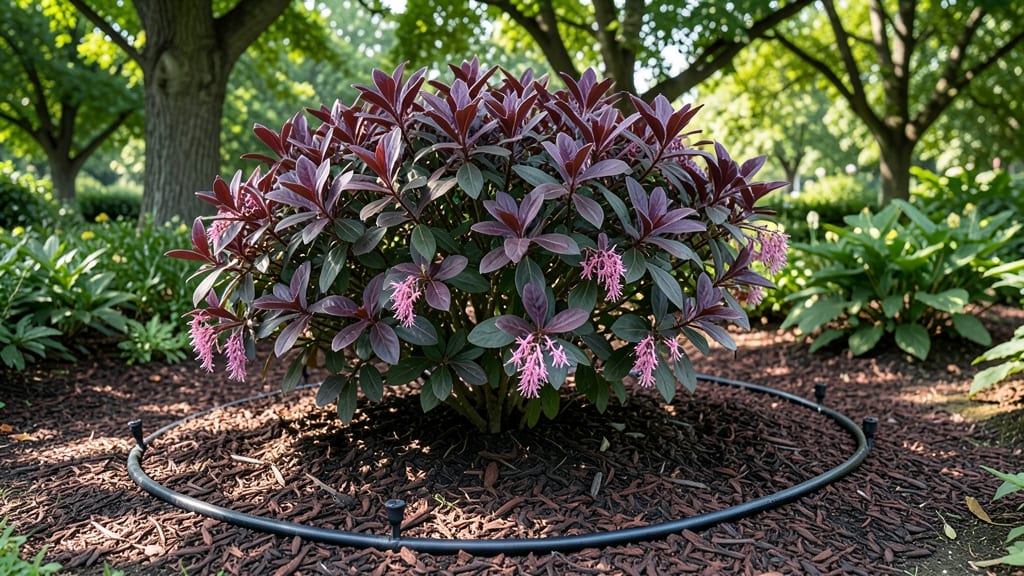
Chinese fringe flower (Loropetalum chinense) will grow in shade but performs best with partial shade to full sun exposure, yielding fewer flowers and slower growth in low-light conditions. It handles dappled light well but may develop thinner leaves without sufficient brightness.
This adaptable shrub can survive in deep shade, but its vibrant purple foliage and abundant blooms rely on adequate light. 🌿 Without enough brightness, the plant may stretch unnaturally toward light sources—a condition called etiolation—while its leaves lose their rich coloration.
I’ve noticed that even filtered morning sun (like through sheer curtains) helps maintain better foliage density compared to dense, unbroken shade. For container growers, placing plants near east-facing windows often provides the perfect balance between light exposure and protection from harsh afternoon rays.
When cultivating in shady spots, I recommend using well-draining, nutrient-rich soil with a slow-release fertilizer to compensate for reduced photosynthesis. Mulching with organic matter also helps retain moisture, which is crucial since shaded plants often dry out more slowly.
For indoor settings, a simple LED grow light (12-14 hours daily) can work wonders for maintaining bloom cycles and leaf vibrancy.
💡 In This Article
- Light Requirements for Optimal Chinese Fringe Flower Growth
- Maximizing Blooms and Foliage in Shady Conditions
Light requirements for optimal Chinese fringe flower growth
Chinese fringe flower relies on light to power its photosynthesis engine, which directly impacts chlorophyll production and flower pigmentation. In full sun (6+ hours of direct light), this plant produces anthocyanins—the compounds that give its foliage those stunning purple hues—at peak intensity.
These pigments thrive when exposed to high light intensity (10,000+ lux), which triggers stronger coloration and denser growth patterns. Without sufficient light, chlorophyll production slows, leading to paler leaves and reduced energy for blooming.
The plant's native habitat in China's subtropical forests explains its adaptability to shade, but this doesn't mean it performs equally well. In partial shade (3-6 hours of sunlight), you'll see moderate growth and occasional blooms, but the foliage loses some of its vibrant purple tones, often shifting toward green.
Deep shade (<3 hours of light) forces the plant into survival mode—etiolation occurs as stems elongate unnaturally while leaves become sparse and thin. I've observed that even mixed light conditions (dappled shade)—like under deciduous trees—can work if the plant receives at least 4 hours of filtered light daily.
What's fascinating is how light affects the blooming cycle. Chinese fringe flower produces flowers in spring and fall, periods when light intensity naturally increases. In deep shade, these cycles become erratic or nonexistent because the plant can't store enough energy.
The flower buds require strong light to develop properly, which is why shaded plants often produce smaller, fewer blooms—or none at all.
For example, a specimen in my north-facing garden bed (receiving only 2 hours of morning sun) produced only 10% of the flowers compared to identical plants in partial shade.
Color is another giveaway of light deficiency. The purple foliage results from anthocyanin production, which peaks under high light conditions. In shade, these pigments diminish, and the leaves revert to green. This isn't just aesthetic—it's a sign the plant is struggling to maintain its metabolic functions.
The good news? Even shaded plants can recover some vibrancy with proper care, like using phosphorus-rich fertilizers to boost energy storage in roots.
For those with limited light, consider the light quality as much as quantity. Blue light (400-500 nm wavelength) is particularly important for photosynthesis, while red light (600-700 nm) triggers flowering. Artificial grow lights that emit full-spectrum light can mimic natural conditions, helping maintain both foliage color and bloom cycles.
A 12-hour daily light exposure** with a balance of blue and red spectrums often works wonders for indoor specimens.