
Advice
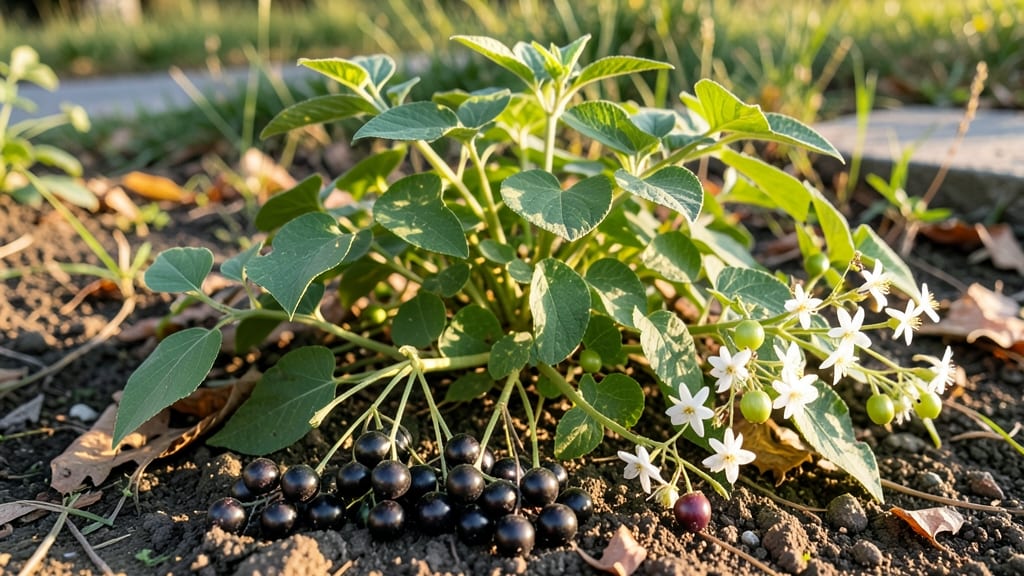
They're called nightshade because their dark berries were once believed to thrive in moonlight, a myth tied to their poisonous nature and eerie folklore connecting them to nighttime shadows and magical curses. The name stems from centuries of fear rather than botanical fact.
The term "nightshade" actually originates from Old English "nihtsceadu," where "niht" means night and "sceadu" refers to shadow. 🌙 This name wasn't just about their dark berries—it reflected the widespread belief that these plants grew best under the cover of darkness, away from sunlight.
Many nightshades, like deadly nightshade (Atropa belladonna), contain potent toxins that were historically used in poisons and folk remedies, reinforcing their sinister reputation.
Interestingly, the name persists even though modern science shows these plants grow just fine in daylight. The Solanaceae family—home to both nightshades and edible crops like tomatoes and potatoes—proves the name is more about cultural perception than botanical reality. 💫
💡 In This Article
- The Toxic Legacy of Nightshade Plants in Folklore
- Identifying Nightshade Plants: Safe vs. Dangerous Varieties
The toxic legacy of nightshade plants in folklore
The name "nightshade" carries centuries of superstition tied to these plants' deadly reputation.
In medieval Europe, the dark berries of species like Atropa belladonna (deadly nightshade) were believed to be cultivated by witches under moonlight for their hallucinogenic properties. 🌑 These berries contain atropine and scopolamine—neurotoxins that can cause paralysis and even death when ingested in sufficient quantities.
The belief that these plants thrived in darkness stemmed from their ability to grow in shaded, damp conditions where other crops struggled.
Folklore amplified their fearsome image through tales of poisoned arrows and cursed crops.
The 16th-century saw nightshades accused of causing madness and visions, with some cultures believing they could induce trance states. 💀 This reputation was so strong that even edible nightshades like tomatoes (also Solanaceae family) were initially rejected in Europe due to their association with poisonous relatives.
The name "nightshade" became a catch-all for any plant perceived as dangerous, regardless of its actual toxicity.
Botanically, the term applies to plants in the Solanaceae family with dark, shadowy berries—many of which are edible today. 🍅 The confusion arises because this family includes both deadly species (like Solanum nigrum, or black nightshade) and staples like potatoes and peppers.
The name persists as a cultural artifact, even though modern agriculture proves these plants grow equally well in sunlight. What's fascinating is how this historical fear shaped culinary taboos that lasted centuries.
One infamous example is the 18th-century case of Atropa belladonna being used in "witches' ointments" to induce hallucinations. 🌙 The plant's ability to dilate pupils (hence "belladonna," Italian for "beautiful lady") was also exploited by women to enhance their eyes, though the same compounds could be lethal.
This duality—beauty and death—cemented nightshades' place in folklore as plants of both magic and menace.
Today, the name serves as a cautionary label rather than a scientific classification. 🌱 While some nightshades remain toxic, others are dietary staples, proving how cultural narratives can overshadow botanical reality.
The term's endurance reflects humanity's enduring fascination with the duality of nature—where something as simple as a shadowy berry could inspire both fear and wonder.