
Companion Plants
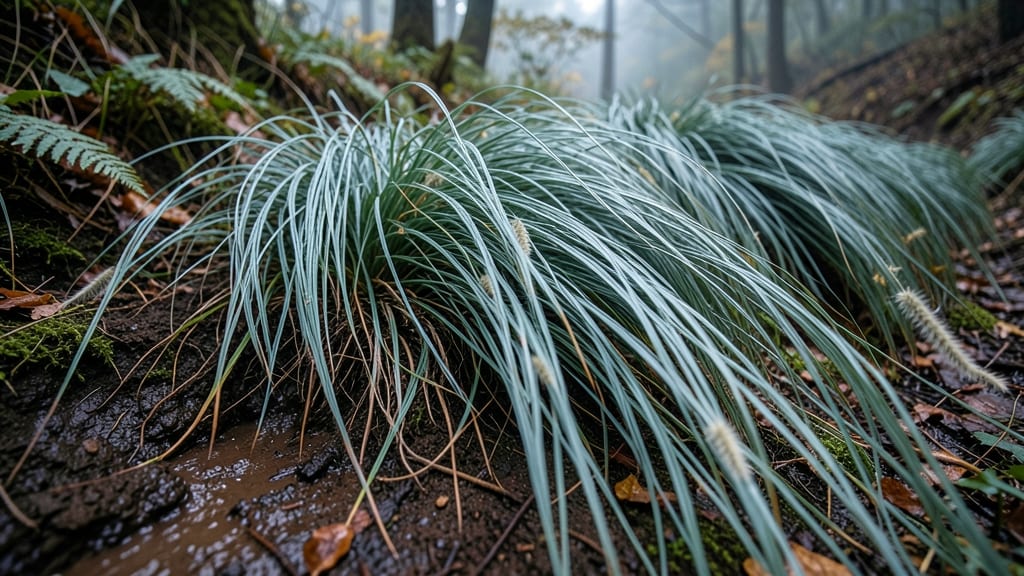
Struggling with erosion in shady areas? These 10 fast-growing, deep-rooted plants thrive in low light while stabilizing soil, preventing runoff, and adding beauty to problem spots. Perfect for slopes, banks, and understory gardens.
Virginia Creeping Phlox Ground Cover
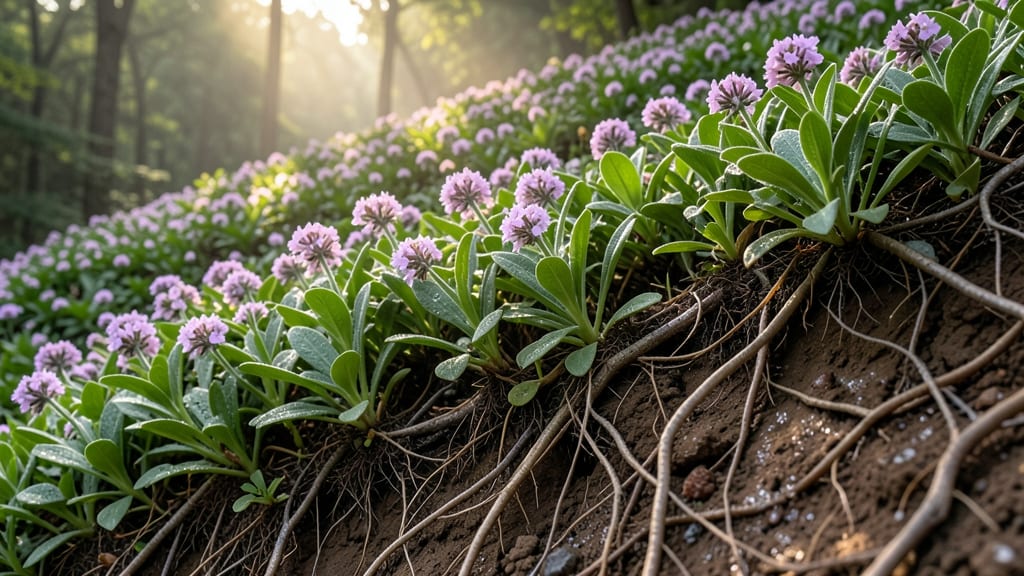
If you're battling erosion in a shady spot that seems impossible to stabilize, Virginia creeping phlox might be your secret weapon. This hardy ground cover thrives in deep shade while its fibrous roots spread aggressively to bind soil instantly—even on slopes where other plants struggle.
Plant it in well-draining soil (it tolerates dry conditions once established) and watch it form a dense, year-round green carpet that suppresses weeds and prevents runoff. The spring blooms add a bonus splash of purple, making it a dual-purpose solution for both erosion control and beauty. Ideal for beginners or busy gardeners, it requires minimal maintenance after the initial planting.
Perfect for woodland gardens, understory plantings, or any shaded area needing instant soil stabilization. 🌱
Alum Root Perennial Herbaceous Plant
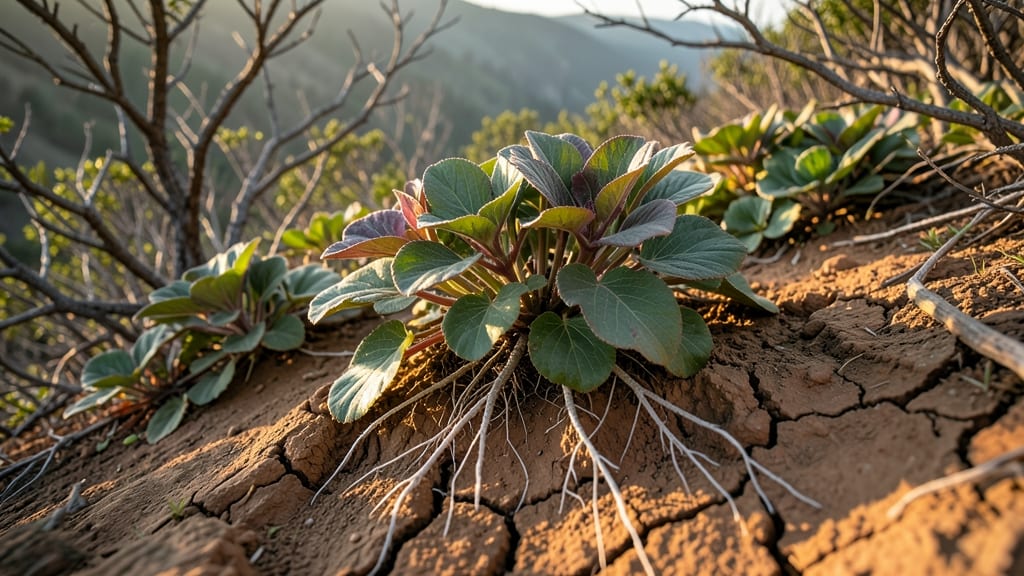
When steep slopes and compacted soil make other plants give up, alum root (Heuchera americana) steps in as the unsung hero of erosion control. Unlike shallow-rooted ground covers, its deep taproots drill through hardpan while its clumping growth naturally crowds out weeds—no mulch or competition required.
This native perennial thrives in partial shade where most plants falter, sending roots up to 3 feet deep to anchor loose soil. Plant in early spring or fall, spacing clumps 18-24 inches apart on slopes, and watch it form dense colonies within 2-3 years. Bonus: Its lance-shaped leaves add architectural interest with colors ranging from deep purple to chartreuse.
Perfect for urban gardeners with tough sites or landscapers needing low-maintenance solutions, alum root delivers both function and beauty without the fuss. 💚
Japanese Forest Grass Ornamental Grass
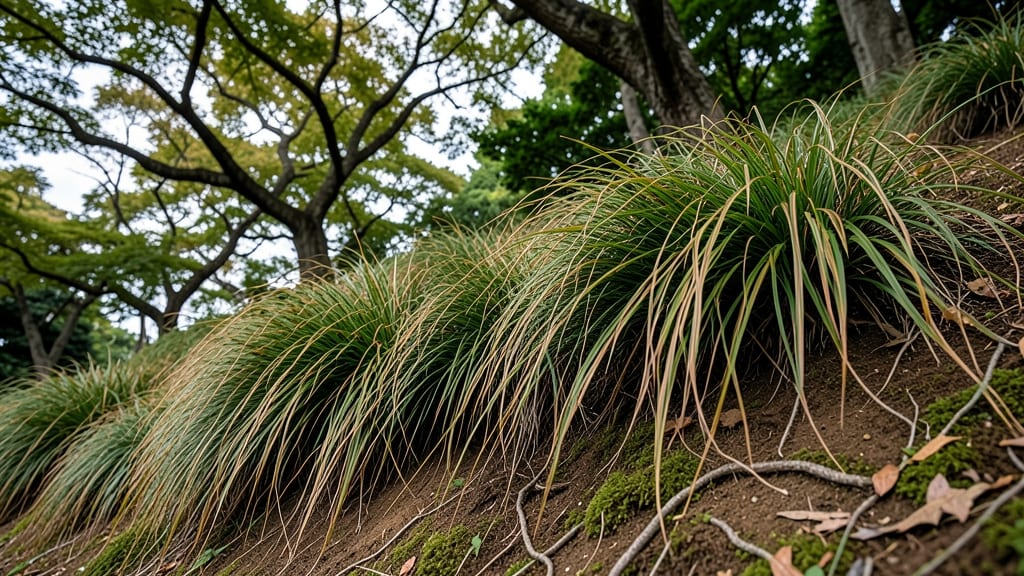
Want a low-maintenance, textural solution that stabilizes soil while adding a woodland garden feel? Japanese forest grass (Hakonechloa macra) forms arching clumps that cascade naturally over slopes, their fibrous root systems binding loose earth as they grow.
This shade-loving grass thrives in partial to full shade, making it perfect for understory plantings where sunlight is limited. Its golden-green blades add movement and contrast to borders, while the dense roots prevent erosion on banks and gentle slopes. Water occasionally once established—it’s drought-tolerant once settled. 🌿
Ideal for gardeners who love naturalistic designs or need a low-fuss erosion solution without sacrificing beauty. The cascading habit also softens hard edges like retaining walls or patios. 💚
Dwarf Fothergilla Shrub with White Blooms
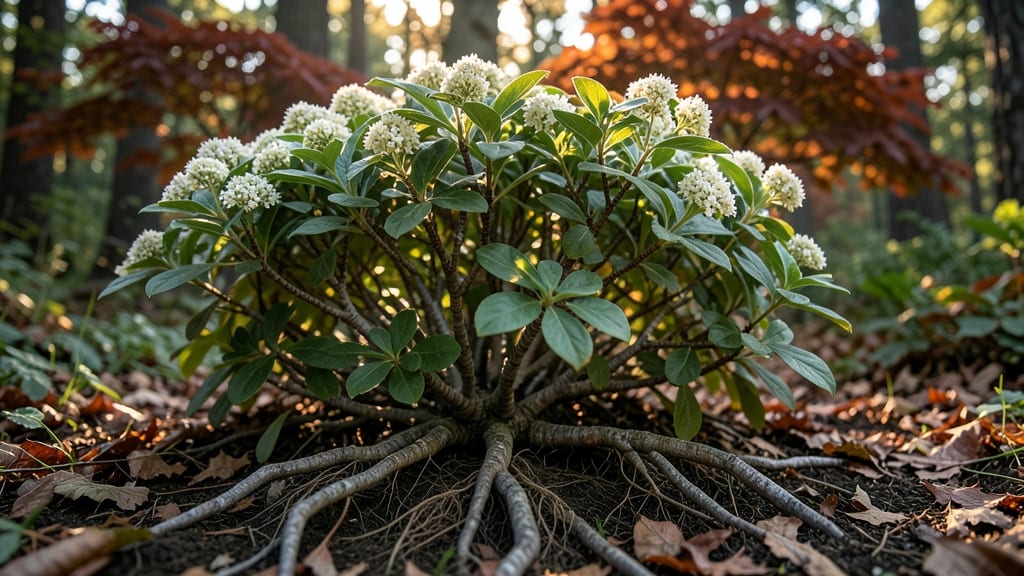
If your shady understory needs both beauty and stability, dwarf fothergilla (Fothergilla gardenii) delivers with its deep, anchoring roots and stunning seasonal display. Unlike fast-spreading ground covers, this slow-growing shrub builds strength over time, making it ideal for long-term erosion control in wooded areas or beneath trees.
Plant it in partial to full shade with moist, well-draining soil, and enjoy its white bottlebrush flowers in spring followed by fiery fall foliage in shades of orange and red. The shrub’s dense growth habit naturally resists runoff while providing year-round structure. Space plants 3-4 feet apart for optimal coverage and minimal competition.
Perfect for gardeners who want a low-maintenance yet visually striking solution—it thrives in USDA zones 5-8 and pairs beautifully with native understory plants. 🌻
Creeping Juniper Evergreen Ground Cover
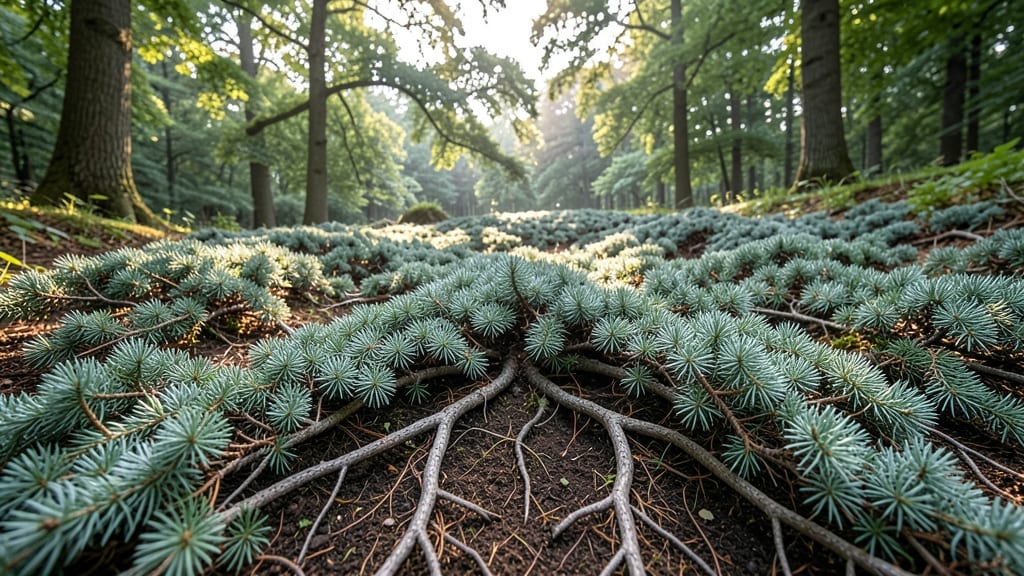
Tired of erosion problems in shady spots where most plants refuse to thrive? Creeping juniper is the rugged, evergreen solution you’ve been missing. Unlike delicate ground covers, this hardy shrub thrives in full to partial shade while its sprawling stems root at every node, creating an instant, dense mat that locks soil in place—even on steep slopes.
What makes it stand out? Its salt-tolerant and drought-resistant nature means it handles coastal conditions or dry shade like a champ. Plant stems directly into the soil at 12-inch intervals, and within a season, you’ll have a lush, weed-suppressing carpet that stays green year-round. Prune occasionally to maintain thickness, but otherwise, it’s a set-it-and-forget-it erosion fighter.
Perfect for coastal gardens, rocky slopes, or any shady area needing instant stabilization, creeping juniper delivers both function and texture without the fuss. 🌿
Goat's Beard Tall Ornamental Grass
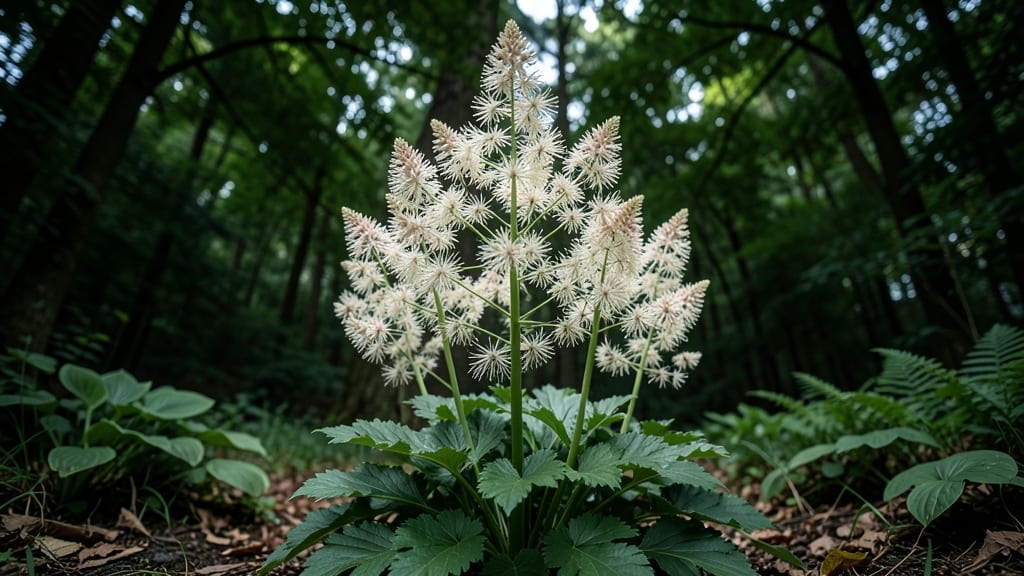
Looking for a dramatic vertical statement that fights erosion while adding texture to your shady garden? Goat's beard (Aruncus dioicus) delivers with its tall, feathery plumes that rise above other plants, creating natural windbreaks and visual interest in rain gardens or woodland borders.
This clump-forming perennial thrives in partial to full shade, making it perfect for understory plantings where other grasses struggle. Its deep fibrous roots spread aggressively to stabilize soil, while the arching stems (up to 5 feet tall) prevent runoff by breaking water flow. Plant in moist, well-draining soil—it’s drought-tolerant once established—and watch it thrive in USDA zones 3-8 with minimal care.
Perfect for gardeners who want year-round structure (even after the plumes fade to seed heads) and low-maintenance beauty that works in moist or wet shade. The feathery texture also pairs beautifully with ferns and hostas. ✨
Inkberry Holly Evergreen Shrub
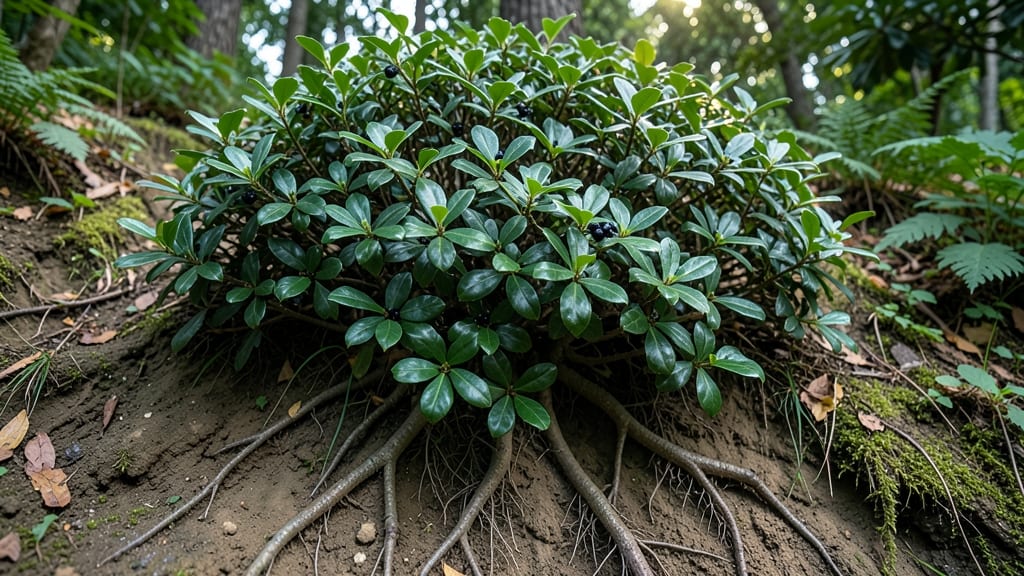
Looking for a native evergreen that handles shade and erosion like a pro? Inkberry holly (Ilex glabra) is your go-to shrub for shaded slopes and stream banks, thanks to its dense, mounding growth and shallow but extensive root network that locks soil in place year-round.
This adaptable plant thrives in partial to full shade, making it perfect for understory gardens where sunlight is scarce. Its glossy, dark green leaves provide year-round structure, while small red berries add seasonal interest for wildlife. Unlike deep-rooted plants, inkberry's wide-spreading roots create a natural mat that prevents runoff—ideal for gentle slopes or areas prone to water pooling.
Perfect for native plant enthusiasts or gardeners seeking a low-maintenance solution, inkberry tolerates wet soil and urban conditions while requiring minimal pruning. Plant in groups for maximum erosion control and a polished, evergreen look. ✨
Sweet Woodruff Fragrant Ground Cover
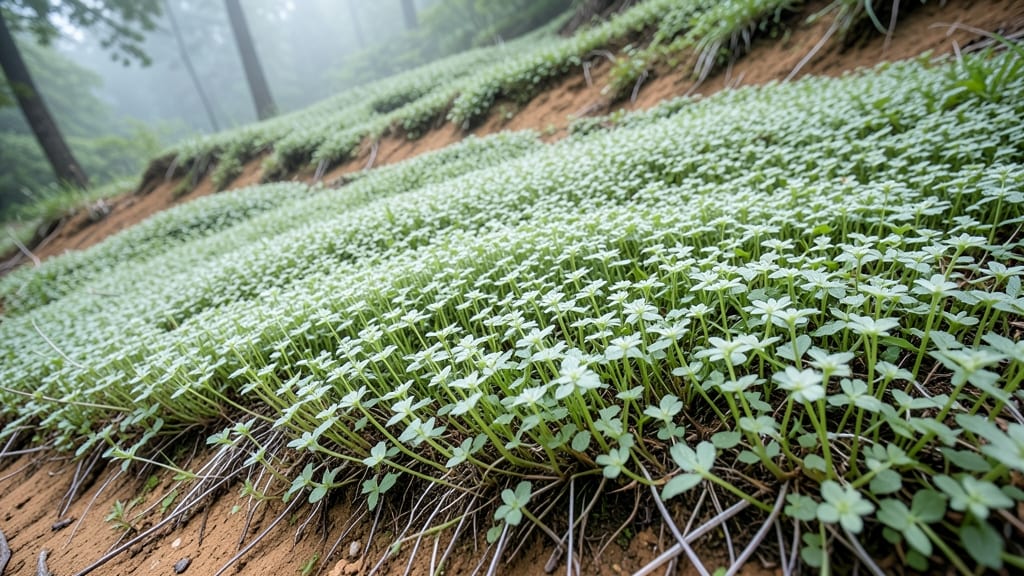
For a fragrant, low-maintenance solution that transforms shady erosion hotspots into lush, weed-free carpets, sweet woodruff (Galium odoratum) is the quiet hero you’ve been overlooking. Unlike aggressive spreaders, this delicate ground cover forms a dense, self-mulching mat that suppresses weeds while its fibrous roots gently bind loose soil—perfect for gentle slopes or woodland edges where other plants struggle.
Plant it in deep shade where sunlight barely reaches, and enjoy its star-shaped white flowers in spring followed by a sweet, vanilla-like scent when crushed. It thrives in moist, well-draining soil and spreads slowly but steadily, making it ideal for understory plantings or as a living mulch alternative. While it won’t anchor steep slopes like deeper-rooted plants, its year-round green coverage keeps soil protected from rain and wind.
Best for gardeners who want a no-fuss, fragrant ground cover that adds beauty without the maintenance—ideal for woodland gardens, shady borders, or any spot needing a soft, green blanket. 🌿
Coral Bells Heuchera Perennial
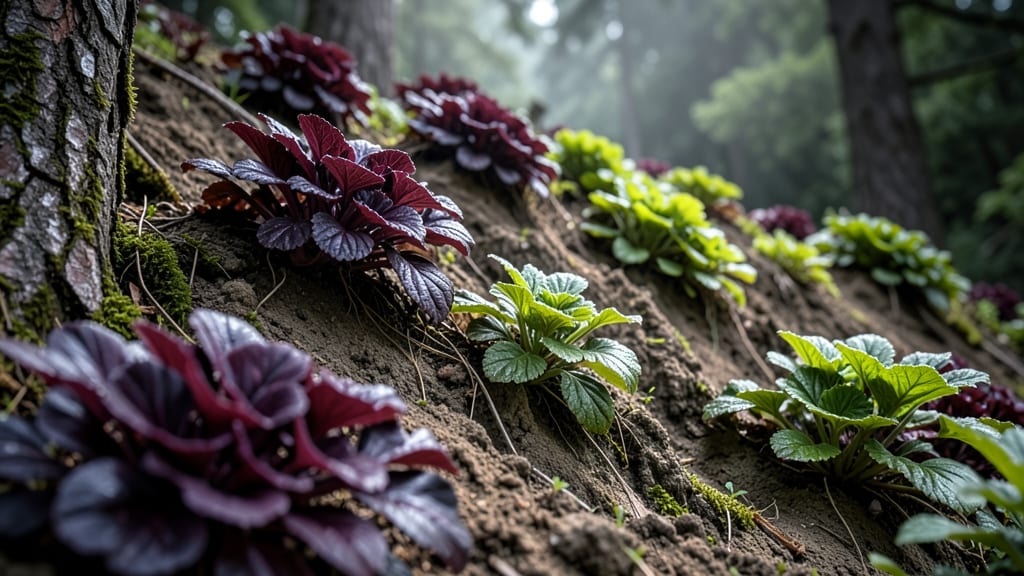
Turn a shady, eroding slope into a vibrant focal point with coral bells (Heuchera), where stunning foliage colors—ranging from deep purple to lime green—distract from soil instability while doing the hard work for you. Unlike fast-spreading ground covers, Heuchera's clumping growth creates natural terraces that slow water flow, while its moderate root depth (6-12 inches) anchors loose soil without requiring deep penetration.
Plant in partial shade with well-draining soil, spacing clumps 12-18 inches apart on slopes. The delicate white flowers in spring add a bonus touch, but the real magic is the year-round foliage that thrives with minimal water once established. Choose varieties like 'Palace Purple' for dramatic color or 'Lime Rickey' for a bright contrast—both perform equally well in erosion-prone areas.
Perfect for gardeners who want beauty and function without high-maintenance upkeep, coral bells are ideal for rock gardens, woodland edges, or any shady slope needing both stabilization and visual appeal. 💚
Willow Grass for Wet Shade Areas

When soggy, shaded spots seem impossible to stabilize, willow grass (Miscanthus sinensis) becomes your erosion-fighting superstar. Unlike other plants that wilt in wet conditions, its arching, feathery stems root wherever they touch, creating a natural, self-anchoring mat that locks soil in place—ideal for stream banks, low-lying areas, or any spot prone to water pooling.
This ornamental grass thrives in full to partial shade and moist, well-draining soil, making it perfect for rain gardens or areas where water lingers. Plant clumps 18-24 inches apart in early spring, and within a season, you’ll see its cascading habit spread to form a dense barrier that slows runoff and prevents soil loss. Bonus: The feathery plumes add movement and texture to shady landscapes, turning erosion-prone zones into lush, functional focal points.
Perfect for landscapers tackling wet erosion spots or eco-conscious gardeners who want a low-maintenance, native-friendly solution. It’s also a great choice for urban gardens with poor drainage or along water features where other plants fail. 💚